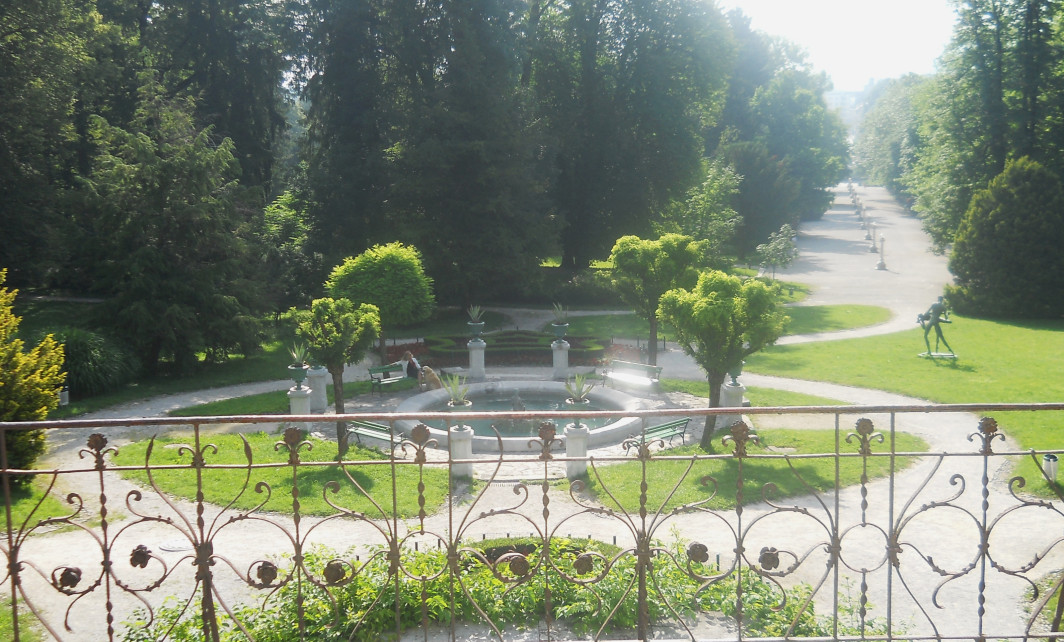
Lipica is the cradle of the Lipizzaner, the elegant white horse best known from the Spanish Riding School in Vienna. The stud farm was founded in 1580 by Archduke Charles II of Austria, who established a breeding stable on the dry Karst plateau at Lipica, not far from the Adriatic, to supply horses for the Habsburg court. More than four centuries later it is still a working stud farm, and the same bloodlines are bred, trained and shown on the grounds. The setting is part of the appeal: old stables and a neoclassical manor house set among oak-lined avenues, paddocks and gently rolling pasture, with the horses, many of them still dark as foals before they turn white with age, grazing or moving between training areas in the morning light. A visit usually combines a guided walk through the historic stables and grounds with a chance to see the horses in training or in a display. A classical riding performance, often described as a tale of Lipica, presents the high-school movements that made the breed famous, including controlled leaps and the stately steps of dressage that trace their roots to the riding academies of Baroque courts. Programmes and schedules change with the season, so check what is running on your day. Lipica also offers carriage rides, riding lessons and a golf course for visitors who want to stay longer.
How to visit
Lipica is near the town of Sežana, just a few kilometres from the Italian border and about an hour and a quarter by road from Ljubljana. Public transport is awkward, so most visitors drive or join a day tour that combines the stud farm with the Škocjan Caves, Piran or the coast. The ticket we link to covers entry to the grounds and the guided visit, and shows and extras can be added depending on the season.
What to expect
Allow two to three hours for a standard visit. The guided walk covers the historic stables, the museum-style displays on the history of the breed, and the paddocks, and gives a good sense of how the horses live and are trained. Spring and summer usually have the fullest programme, with performances on selected days, while the quieter months have fewer events and some activities may pause, so it is worth checking in advance rather than assuming a show will be on.
The estate is largely flat and easy to walk, with cafes and a restaurant on site, and horse-drawn carriage rides can be arranged for people who prefer to sit.
Making the most of it
Arrive in the morning, when the horses are most active, and bring sun protection in summer because the Karst plateau is open and exposed. Children who love animals will enjoy the foals in the early part of the year. Combine Lipica with Škocjan Caves for a full day on the Karst, or with Piran for a cultural and coastal day that includes seafood on the Adriatic.
If you love horses, ask about riding programmes and longer stays; Lipica takes its heritage seriously, and the staff are proud to talk about the breed. Wear flat, comfortable shoes for the gravel paths, and if you plan to ride or take a carriage, ask about availability when you arrive, since sessions can fill up on busy weekends and holidays.
What to expect
The experience
A guided walk through the historic stables and paddocks, with performances, training sessions and carriage rides depending on the season.
Best time
Morning, when the horses are most active, in spring or early summer for the fullest programme.
How long
Two to three hours; a full day when combined with Škocjan Caves or the coast.
Tips
Check which shows are running on your day, and bring sun protection because the plateau is open and exposed.
Quick picks
- Best for
- Horse lovers and anyone curious about the origins of the Lipizzaner.
- Families
- A reliable hit with animal-loving children, especially when foals are in the paddocks.
- Couples
- A relaxed, elegant day out, followed by lunch on the Karst or at the coast.
- Pair with
- Škocjan Caves, Piran, or Postojna Cave and Predjama Castle.
- Time needed
- Half a day.
Good questions
When was Lipica Stud Farm founded?+
In 1580, by Archduke Charles II of Austria, to breed horses for the Habsburg court.
Do I need a car to visit Lipica?+
A car makes it easiest, but day tours from Ljubljana combine Lipica with other Karst or coastal stops.
Is there a show every day?+
No. Performances and programmes depend on the season, so check the schedule for your date before you go.
Why are Lipizzaner horses white?+
They are born dark, usually bay or black, and turn grey and then white as they mature, typically by the age of six to ten.
How far is Lipica from Ljubljana?+
About an hour and a quarter by road, near Sežana and the Italian border.