The Imperial War Museum in Lambeth is one of London's most affecting museums, a place that explains how conflict has shaped Britain and the wider world since the First World War. It occupies the former Bethlem Royal Hospital, whose columned portico and green dome make a calm contrast with the subject matter inside. A vast central atrium holds large objects, including a Spitfire, a V-2 rocket and other aircraft hanging overhead, while the galleries around it work through the First World War, the Second World War and later conflicts. The First World War gallery is built around personal stories, trench life and the experience of those at home, and the Second World War gallery follows the war from the Blitz to the home front and the fighting overseas. The Holocaust Galleries are among the most significant in Britain, using documents, objects and testimony to explain the persecution and murder of Jewish people and others, and are suitable for older teenagers and adults rather than young children. This guided option covers the main galleries and helps you cope with the museum's scale and emotional weight.
The museum is large, and without a plan it is easy to try to see too much. A guided tour brings structure and context, selecting the most telling objects and explaining the story behind them, from letters and uniforms to propaganda posters and everyday items. If you visit independently, choose one or two galleries and allow time for reflection.
The Secret War gallery and the exhibition on conflict since the Second World War add depth for those who want it, and the atrium makes a dramatic setting for photography. Some content is distressing, so consider the ages of children in your party before you go; the museum itself gives guidance on its galleries.
Getting there is easy. Lambeth North on the Bakerloo line is a short walk away, and Waterloo and Elephant and Castle are both within about fifteen minutes. The museum is on Lambeth Road, within a pleasant walk of the South Bank, so it combines naturally with a day on the river. The nearby Geraldine Mary Harmsworth Park has green space for a break. Cafes in the museum are useful, and the shop has a strong selection of history books.
For the best visit, arrive early in the day and allow at least half a day if you are exploring the main galleries, longer if you want to see everything. Check opening times and any gallery closures before you set off, since parts of the museum may be rearranged between visits, and read the inclusions of the option you choose so that you know what is covered.
The museum has good accessibility, with lifts and step-free routes, and staff can advise on what is available. Pair the visit with the Churchill War Rooms for a fuller picture of Britain's wartime story, with the museums' galleries complementing one another, or follow it with a river walk to clear your mind.
Pace yourself and take breaks in the cafe or the park outside, because the content is demanding. The shop and bookshop are good for gifts. Families with older children can use the museum's trails as a gentle way to open conversations about the past.
What to expect
The experience
A guided tour of the main galleries at the Imperial War Museum, covering the First and Second World Wars and the Holocaust Galleries.
Best time
Early in the day on a weekday, which leaves time to absorb the galleries.
How long
Three to four hours for the main galleries.
Tips
Choose a manageable number of galleries, note that some content is distressing, and check the opening times and gallery closures before you go.
Quick picks
- Best for
- History lovers and anyone who wants to understand modern conflict.
- Families
- Suitable for older children and teenagers; some galleries are distressing and the Holocaust Galleries are not for young children.
- Couples
- A reflective, absorbing rainy-day visit.
- Pair with
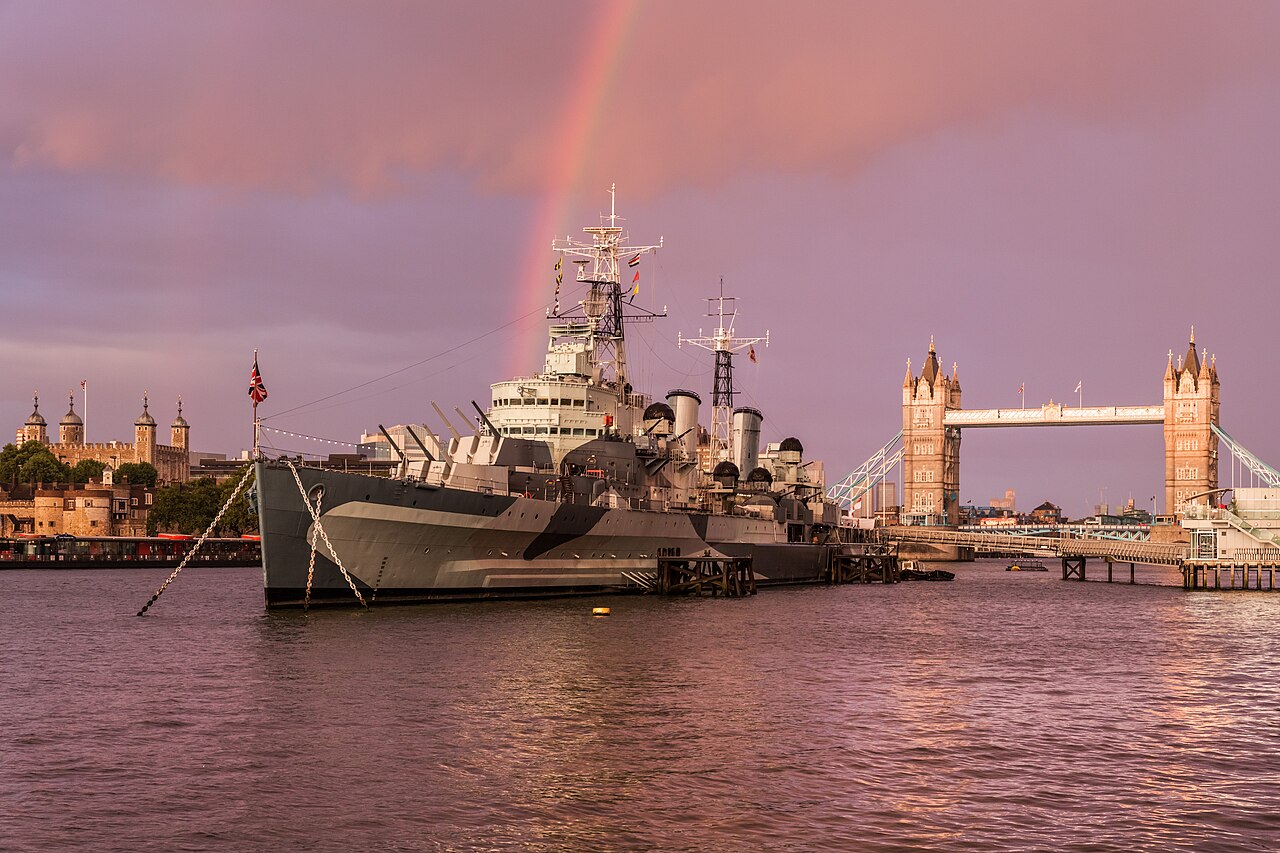
- The Churchill War Rooms, HMS Belfast and a walk along the South Bank.
- Time needed
- Half a day.
Good questions
Where is the Imperial War Museum?+
On Lambeth Road in south London, a short walk from Lambeth North station and about fifteen minutes from Waterloo.
What does the tour cover?+
The First World War, the Second World War and the Holocaust Galleries.
Is it suitable for children?+
For older children and teenagers. Some content is distressing, and the Holocaust Galleries are not suitable for young children.
How long should I allow?+
Half a day for the main galleries.
Is the museum accessible?+
Yes, with lifts and step-free routes. Staff can advise on specific needs.