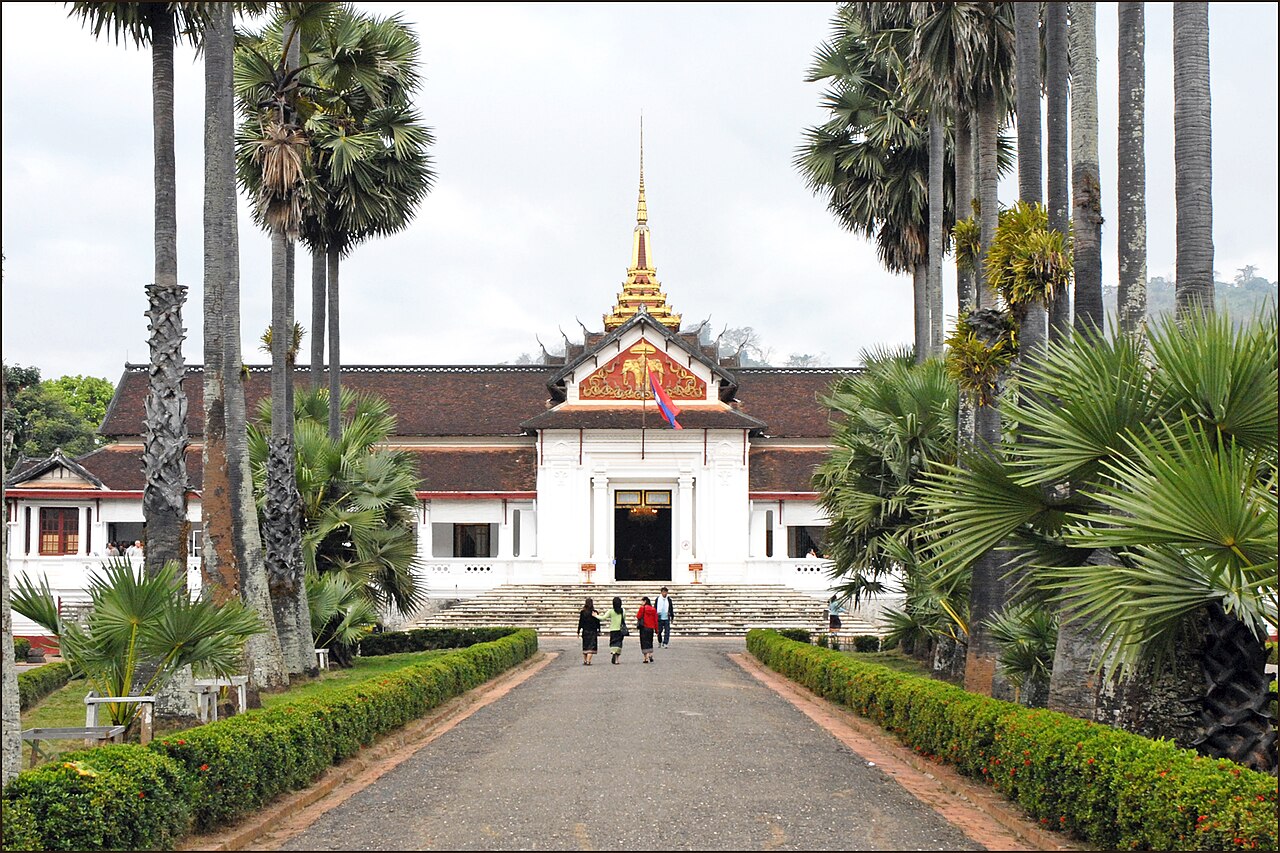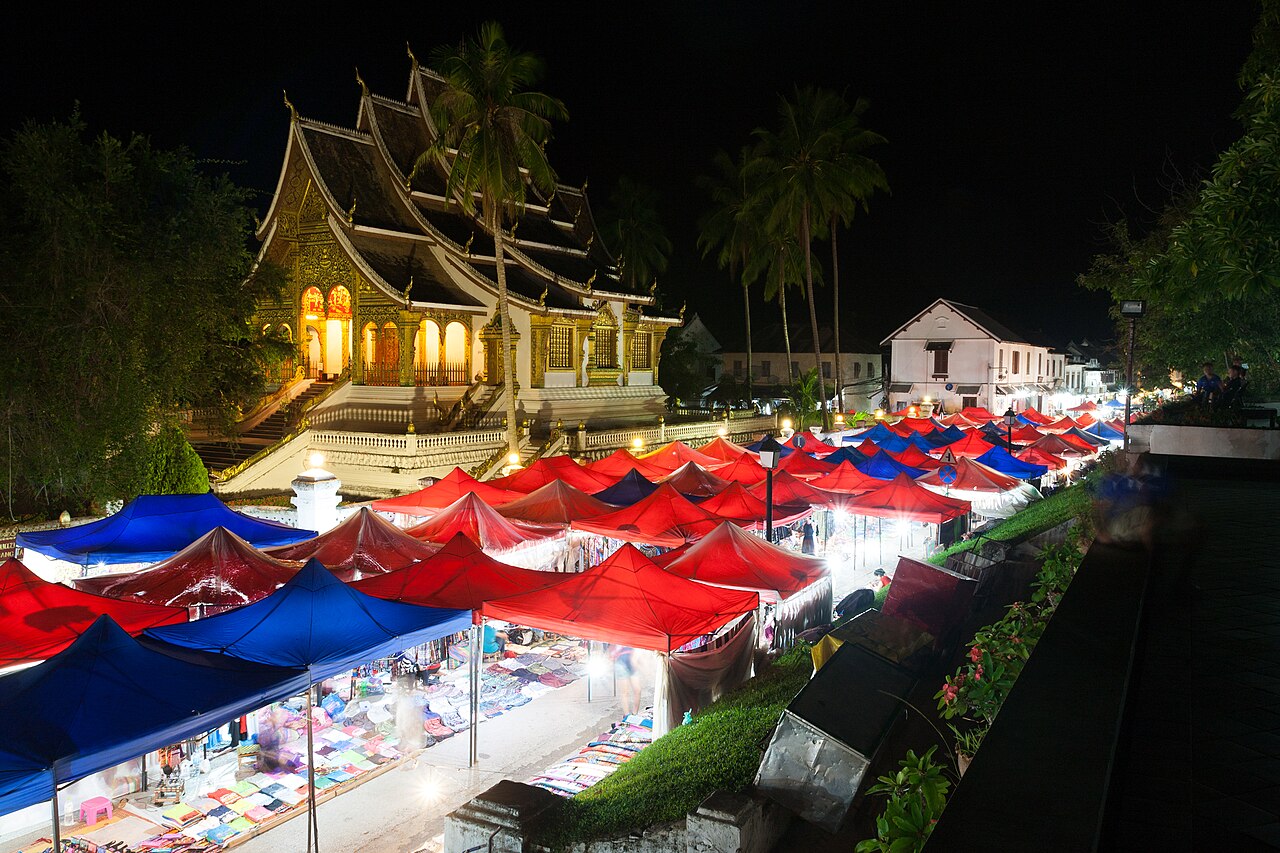
Wat Mai Suwannaphumaham, usually shortened to Wat Mai, which means the New Monastery, stands on the main street of Luang Prabang just before the Royal Palace Museum, and it is the most richly decorated temple in the old town's central stretch. The main hall was built in the late eighteenth century and took its present name after a restoration in the early nineteenth century. It has the layered, sweeping roofs typical of Luang Prabang architecture, and the front wall is covered in gilded relief panels that show scenes from village life and the story of the Vessantara Jataka, one of the best-loved tales of the Buddha's previous lives, set in gold against deep red. The rest of the compound includes a cloister, a monks' residence and shaded grounds that are pleasant on a hot day. The temple has long had royal and ceremonial associations in the city, and the revered Pha Bang image is traditionally brought here during the Lao New Year in April. It is open daily during the day, with a modest charge for foreign visitors, and it takes about thirty to forty-five minutes to see at a relaxed pace. It is very close to the Royal Palace Museum, Mount Phousi and the night market, which makes it easy to fit in on a walk.
The facade is the star. The carved and gilded wooden panels glow in morning light and are beautifully lit in the late afternoon, when the gold turns warm. Look closely and the reliefs tell a story: elephants, hunters, household scenes and episodes from the Vessantara tale, in which a prince gives away everything he owns, even his children, in an act of perfect generosity.
The panels are a good introduction to the visual language you will see in other temples in town, and they make Wat Mai a helpful warm-up before the larger, more famous Wat Xieng Thong.
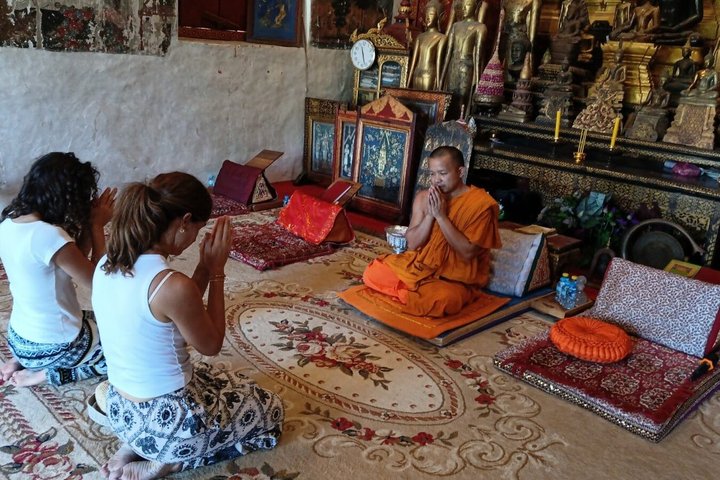
Wat Mai is a living monastery, so treat it as one. Cover your shoulders and knees, take off your shoes and hat at the door of the hall, and speak quietly. Women must not touch monks or novices, and visitors should not point their feet at Buddha images. Do not buy antiques offered by touts, since taking old religious objects out of the country can cause legal problems. The monks live and study in the compound, and the cloister is quiet except for the occasional chanting, which visitors can listen to respectfully from a distance.
Time your visit well. Morning is calm, with soft light on the facade, and the early part of the day is also when monks return from their alms round. The late afternoon works too, and the gold looks especially deep. Because the temple is on the road to the Royal Palace Museum, it is easy to combine the two in a single outing of about two hours, and you can end the day with the climb up Mount Phousi and dinner at the night market.
If you visit in April around the Lao New Year, the temple becomes a centre of ceremony and water blessings, and it is crowded but joyful, so allow extra time and keep your belongings close.
It is small, so do not expect hours of exploring. Its value is the beauty of the facade and what it explains about Lao Buddhist art, and for most visitors thirty to forty minutes is enough. Bring a little cash for the entrance, a camera with a lens that handles gold and shadow, and respect. It is also one of the easiest temples to reach on foot from almost any old town hotel, and the setting makes it a good pause on a hot day, with a quiet bench and a view of the facade.
What to expect
The experience
A short self-guided visit to the main hall with its gilded relief facade, the cloister and the grounds of a working monastery, entered from the main street.
Best time
Morning or late afternoon, when the light warms the gold; in April the temple is busy with New Year ceremonies.
How long
About thirty to forty-five minutes.
Tips
Cover shoulders and knees, remove shoes and hat, keep quiet, do not touch monks, and carry a little cash for the entrance fee.
Quick picks
- Best for
- Anyone who wants to see Lao temple art up close without a long visit.
- Families
- Short enough for children, with colourful panels to spot; remind them to stay quiet and respectful.
- Couples
- A beautiful stop on an old town stroll, especially in late afternoon light.
- Pair with
- The Royal Palace Museum next door, then Mount Phousi at sunset.
- Time needed
- Thirty to forty-five minutes.
Good questions
What does Wat Mai mean?+
Wat Mai means the New Monastery. The temple was built in the late eighteenth century and took its present name after a restoration in the early nineteenth.
What is special about the facade?+
It is covered in gilded relief panels on a red background that depict village life and the Vessantara Jataka, one of the best-known stories of the Buddha's past lives.
What should I wear?+
Cover your shoulders and knees, and remove shoes and hats before entering the hall. Women should not touch monks or novices.
Is there an entrance fee?+
Yes, a modest fee is charged to foreign visitors. Bring small cash in kip and check the hours at the gate, as they can change.
Where is Wat Mai?+
On the main street, Sisavangvong Road, about a five-minute walk from the centre and just before the Royal Palace Museum.