Wat Visounnarath, often spelled Wat Visoun or Wat Wisunalat, was founded in the early sixteenth century under King Visounnarath and is among the oldest temples in Luang Prabang. It stands a short walk south of Mount Phousi, away from the busiest part of the main street, and in the quiet it feels more like a working village temple than a sightseeing stop. The sim, or ordination hall, was rebuilt after fires and wars and has a two-tiered roof, finely carved wooden window railings and a large seated Buddha at the centre, while ancient statues and carved stone steles are kept inside. In the grounds stands That Makmo, a rounded, half-dome stupa about 35 metres tall that locals nickname the watermelon stupa because of its shape. Tradition says it was built by the king's wife, and it collapsed in the early twentieth century before being restored in the 1930s. The temple has been through a lot: the revered Pha Bang image was housed here for part of its history, and the compound was burned by armed raiders in the nineteenth century and later repaired. It is open daily during the day, with a modest charge for foreign visitors. The compound takes about forty minutes to explore and is quiet enough to enjoy at a relaxed pace.
The watermelon stupa is the reason most people come, and it is worth the walk. Its smooth, rounded dome is unlike the pointed spires you see in the rest of town, and in the soft light of early morning or late afternoon the whitewash looks almost gold. Take time to walk around the base, notice the bands of decoration and the small shrines, and look at the old trees that shade the compound.
The sim beside it holds a collection of Buddha images, some very old, and the carved wooden railings in the windows are among the finest in the city, which makes the interior worth a look even if you only have a few minutes.
The best way to see it is on foot or by bicycle, as part of a loop that takes in Mount Phousi, the Royal Palace Museum and the old town in the late afternoon. From the base of Mount Phousi it is a gentle ten to fifteen minute walk along a quiet road past cafes and guesthouses, and the route is shaded in places.
The neighbouring Wat Aham is close by and worth a short stop too, so the two make a pleasant pairing for a slow morning. If you are cycling, lock your bike near the gate, and check the shade of the trees before you leave your seat.
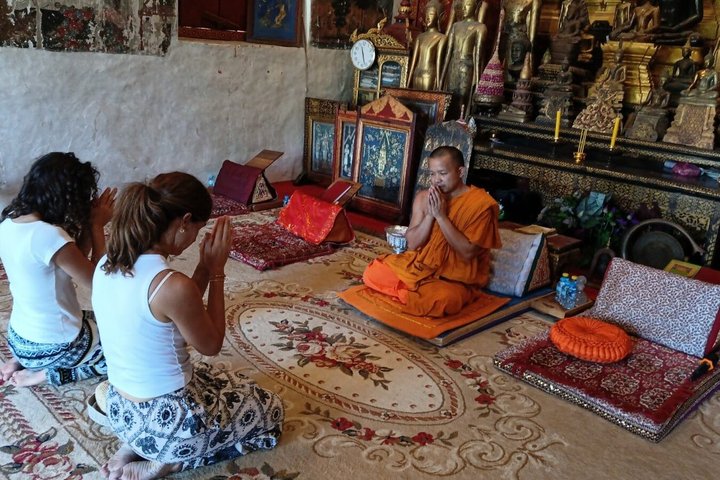
As with all temples here, dress respectfully. Cover your shoulders and knees, remove shoes and hats at the sim, and keep voices low. Do not touch monks, and women should avoid handing items directly to them. Do not climb on the stupa or the platforms. Antique dealers sometimes offer old statues near temples, but taking them out of the country is not allowed, so politely decline.
Plan around light and heat. Morning is quiet, and the stone is cool, while the middle of the day is hot and bright. Late afternoon brings golden light on the stupa and a calmer mood after the tour groups leave. The site is easy to visit in half an hour, but photographers and history lovers can happily spend longer.
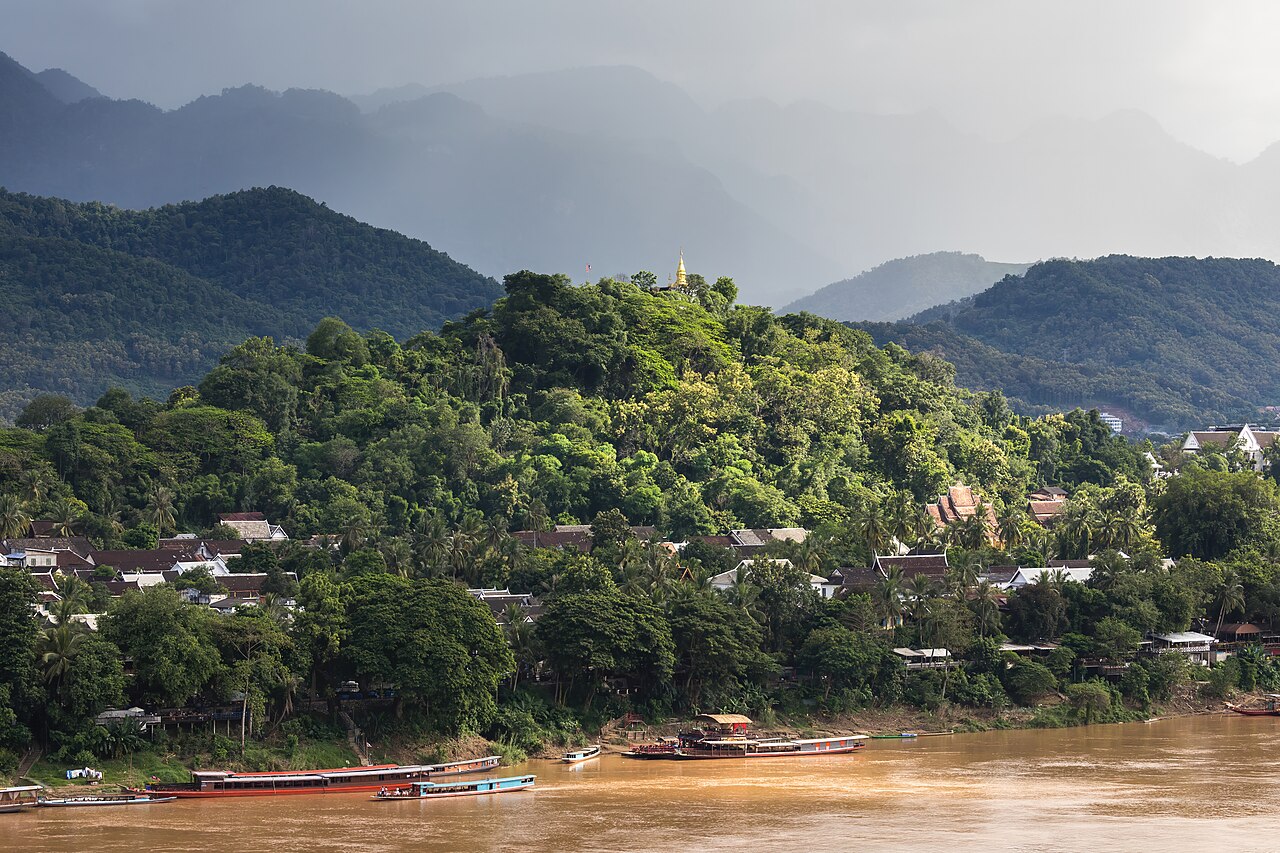
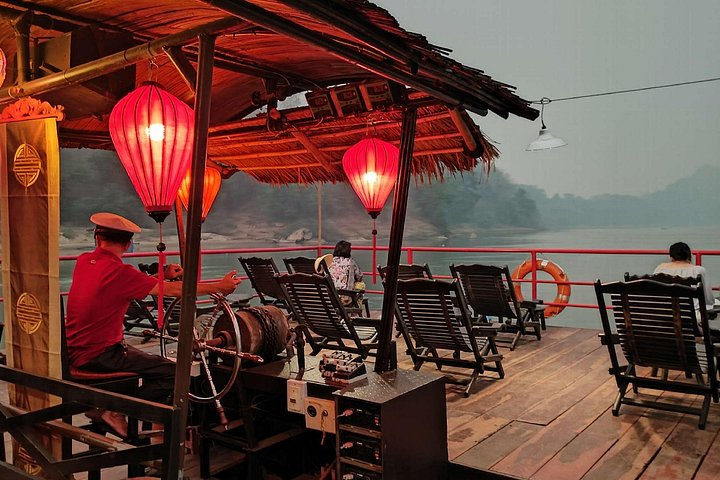
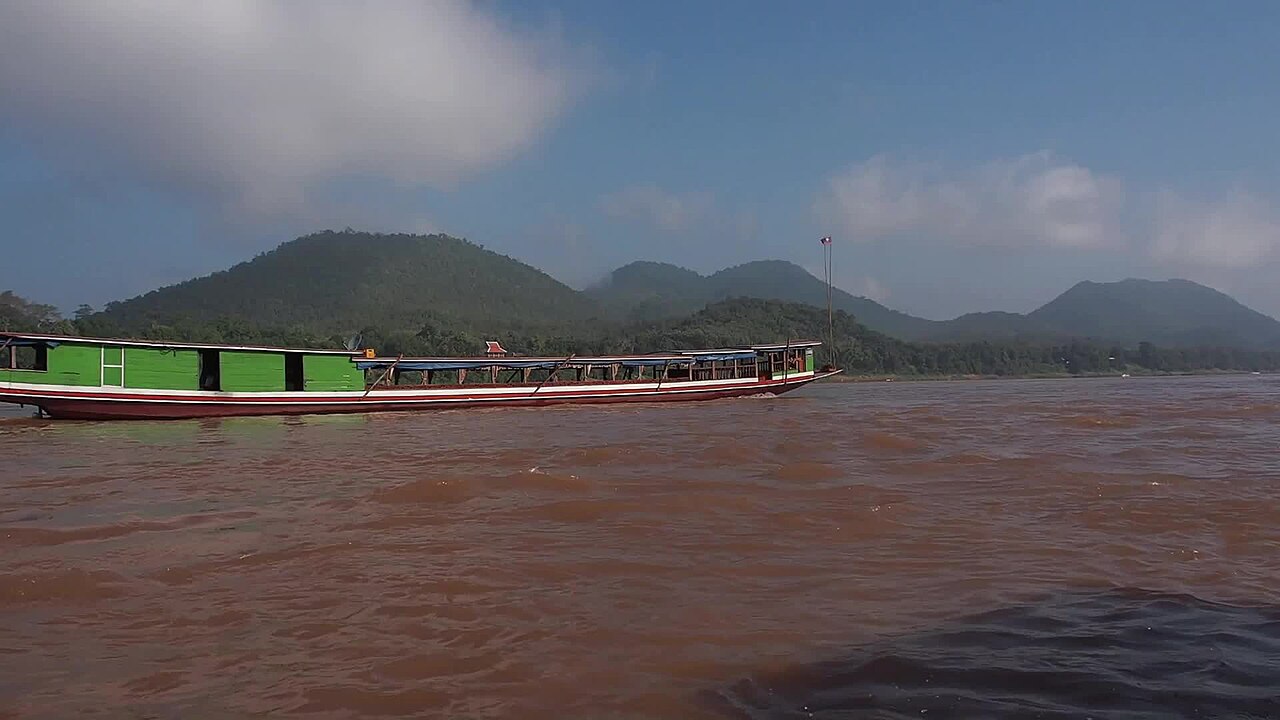
It also pairs well with a Mekong sunset cruise or a riverside dinner afterwards. A visit here helps balance the more crowded sights in the centre, and it is often the temple people remember most because it feels unhurried and real. Bring a little cash for the entrance and some water for the walk, and take your time.
What to expect
The experience
A self-guided visit to the carved wooden sim, the old Buddha images and the large half-dome stupa in a quiet compound south of Mount Phousi.
Best time
Early morning or late afternoon, when the light is soft and the compound is quiet.
How long
About thirty to forty-five minutes, a little longer with Wat Aham next door.
Tips
Cover shoulders and knees, remove shoes and hats at the sim, do not climb on the stupa, and bring a little cash and water for the walk.
Quick picks
- Best for
- Visitors who like old temples, quiet compounds and photogenic stupas.
- Families
- A gentle walk and an unusual stupa for children to spot; keep them respectful around the sim.
- Couples
- A calm late-afternoon stroll when the stupa glows, ahead of a sunset cruise or dinner.
- Pair with
- Wat Aham next door, Mount Phousi and a riverside dinner.
- Time needed
- Thirty to forty-five minutes.
Good questions
Why is it called the watermelon stupa?+
That Makmo has a rounded, half-dome shape, and locals nickname it the watermelon stupa. It stands about 35 metres tall in the temple grounds.
How old is Wat Visounnarath?+
It was founded in the early sixteenth century under King Visounnarath, which makes it one of the oldest temples in Luang Prabang. It has been damaged and restored several times since.
How do I get there from the centre?+
It is a gentle walk or a short bicycle ride south of Mount Phousi, about ten to fifteen minutes from the base of the hill along a quiet road.
What should I wear?+
Cover shoulders and knees and remove shoes and hats before entering the sim. Women should not touch monks or novices.
Is there an entrance fee?+
Yes, a modest fee is charged to foreign visitors. Bring small cash, and confirm the hours at the gate as they can change.