Luang Prabang is one of the easiest places in Southeast Asia to eat well, because the town is small, the markets are central and the food has two strong influences: Lao village cooking and a French colonial habit of baguettes, coffee and pastries. Eating here is slow and social, and the best meals tend to be simple. Here is how to build a good few days of eating, from a street breakfast to a long dinner by the river.
Start with the morning market
The Morning Market opens just after the alms round ends, at about six, and runs until around half past ten. It is the best place to see what local cooks buy, from river fish and herbs to bamboo shoots, banana flowers and chilli pastes, and it is a good breakfast stop. Look for sticky rice parcels, grilled Lao sausage, coconut pancakes, noodle soup and strong sweet coffee, and eat where the food is cooked in front of you. Go straight after watching the alms-giving ceremony, and you will be back at your hotel before the heat builds.
Know the Lao staples
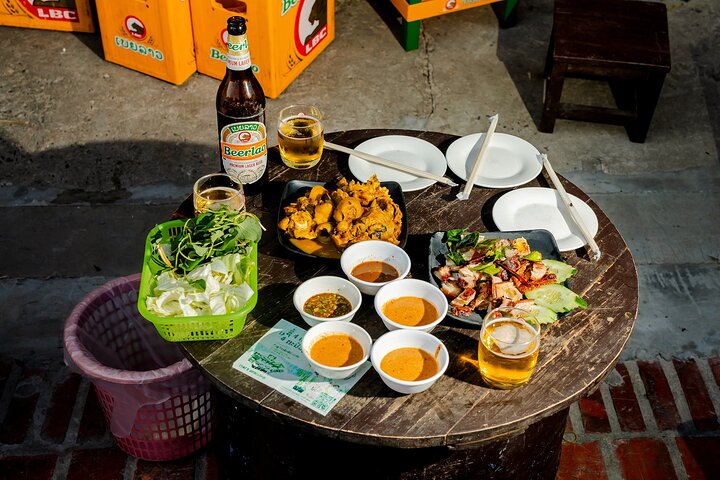
Sticky rice is the base of almost every meal, eaten by hand, rolled into a small ball and used to scoop up other dishes. Jeow, a family of dips and pastes made from chilli, herbs, roasted aubergine, tomato or dried buffalo skin, is the everyday companion. Larb, a minced meat salad with lime, herbs and toasted rice powder, is the national dish, and spicy green papaya salad is a fixture. The signature local dish is or lam, a smoky stew of meat, aubergine, lemongrass and a peppery wood, and another local speciality is crispy dried river weed, served in sheets with sesame and a dipping paste. Ask what the day's fresh dishes are, and order a few to share.
Try Luang Prabang noodles
The town has its own style of noodle soup, with a savoury, slightly sweet broth, minced pork and tomato, usually topped with herbs and crispy garlic. Noodle shops open early and close when the broth is finished, so go in the morning.
Eat at the night market
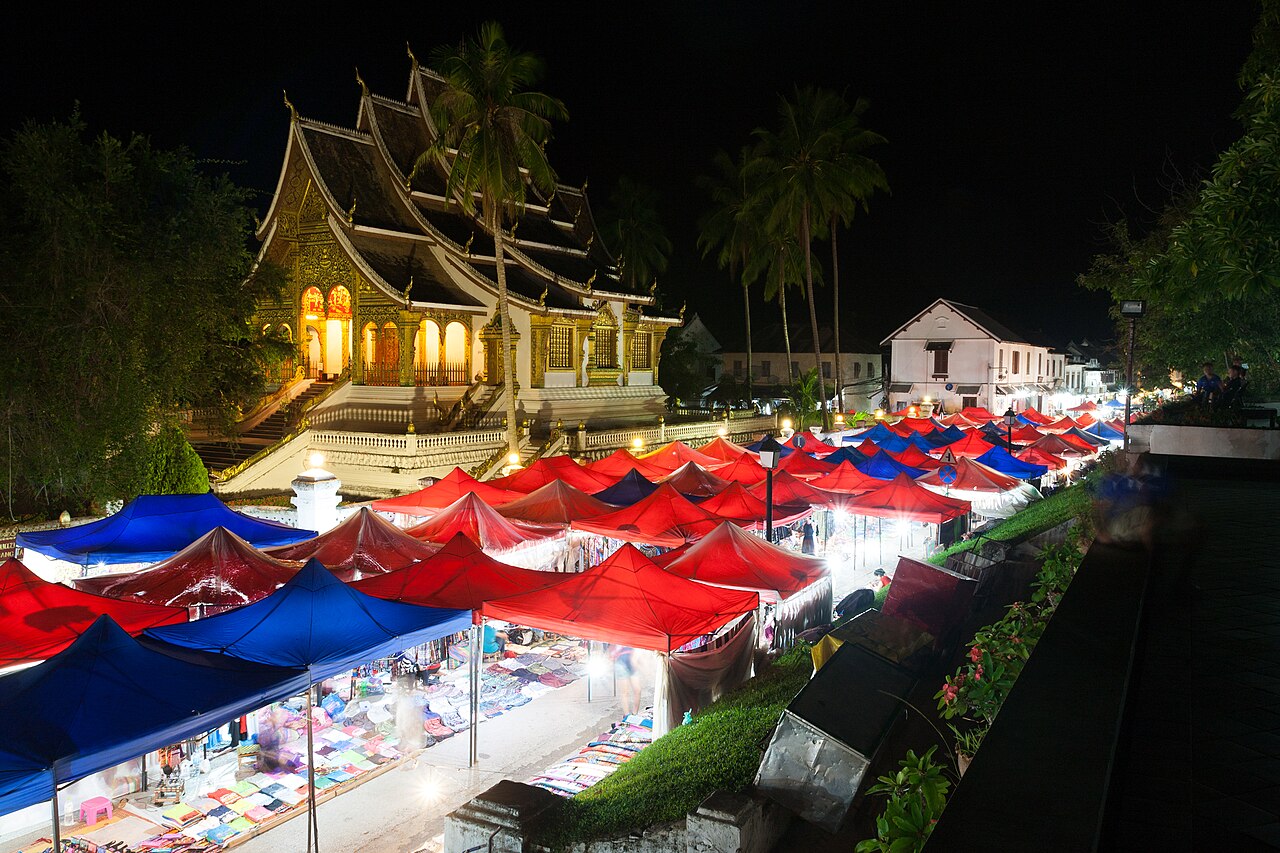
From late afternoon the lane behind the main night market street fills with food stalls. The famous vegetarian buffet stalls let you fill a plate for a fixed price and are a cheap and filling choice, while grilled fish, skewers, sausages and fresh spring rolls are cooked to order along the same lane. A lot of travellers eat here on their first night. Choose busy stalls, ask for food served hot and keep small notes handy. If you want a sit-down dinner afterwards, the cafes and restaurants on the side streets are a short walk away.
Take a cooking class or a food tour
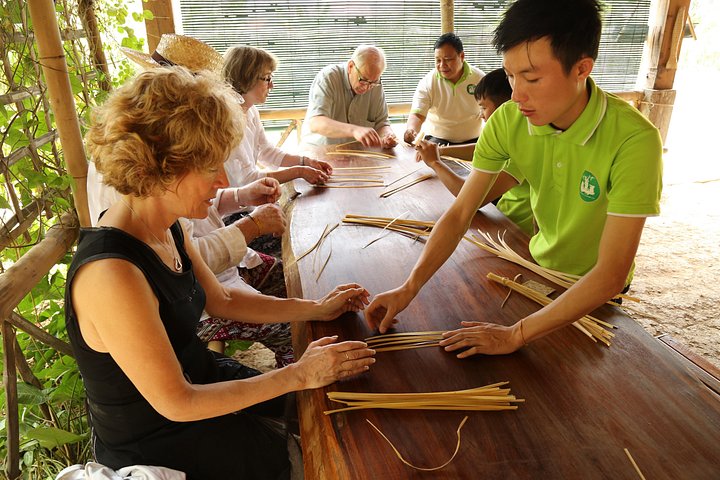
A class teaches you how the flavours fit together, and many begin with a market visit to choose ingredients. The cooking class we link is a half-day bamboo weaving and cooking experience, and the evening food tour is a guided walk with many small tastings, which is the easiest way to sample a lot of dishes without choosing blind. Both fill up in the busy season from November to March, so book a day or two ahead.
Try a Lao barbecue
Sindat is the Lao table barbecue, where you grill meat on a domed pan and cook vegetables and noodles in the broth that collects around the rim. It is a fun group meal and a good way to spend an evening with friends or family. Several restaurants in the old town serve it, and the meal is leisurely, so go hungry and with time.
Coffee, bakeries and the French legacy
Laos grows excellent coffee in the highlands in the south of the country, and cafes in town serve it strong, often with condensed milk if you ask. The French influence shows in the baguettes and pastries sold at bakeries and street stalls, and a baguette with fillings is a staple quick lunch. A slow coffee on a riverside terrace is one of the pleasures of the town, and cafes with garden courtyards are a good refuge during the heat of the day.
Drinks
The local beer is crisp and light and is the usual choice with a meal, and fruit shakes are made fresh at many stalls. Rice whisky, called lao-lao, is distilled in villages such as Ban Xang Hai, which many river trips to the Pak Ou Caves include as a stop. It is strong, so taste a little before buying a bottle. Bars in town tend to close fairly early compared with other Southeast Asian cities, so plan your evening around an early dinner, a stroll at the market and a quiet drink on a terrace.
Eating well and staying well
Choose busy places with a high turnover, favour freshly cooked dishes served hot, and be careful with raw salads and ice in the first days. Bottled or filtered water is the usual choice. If you are vegetarian, the night market buffet is easy, but ask about fish sauce and shrimp paste in other dishes, since they are common ingredients.
A simple eating plan
Day one: watch the alms round, have breakfast at the Morning Market, then noodles for lunch, and finish with the night market buffet. Day two: a morning class or a market tour, a baguette lunch, a sunset cruise and a Lao barbecue. Day three: a riverside coffee, a long lunch after Kuang Si Falls and a relaxed dinner at a restaurant with Lao dishes you have learned about. Where you stay shapes your food days too: a hotel in the old town puts the markets, bakeries and noodle shops within a short walk, while a riverside hotel adds a terrace for breakfast with a view.