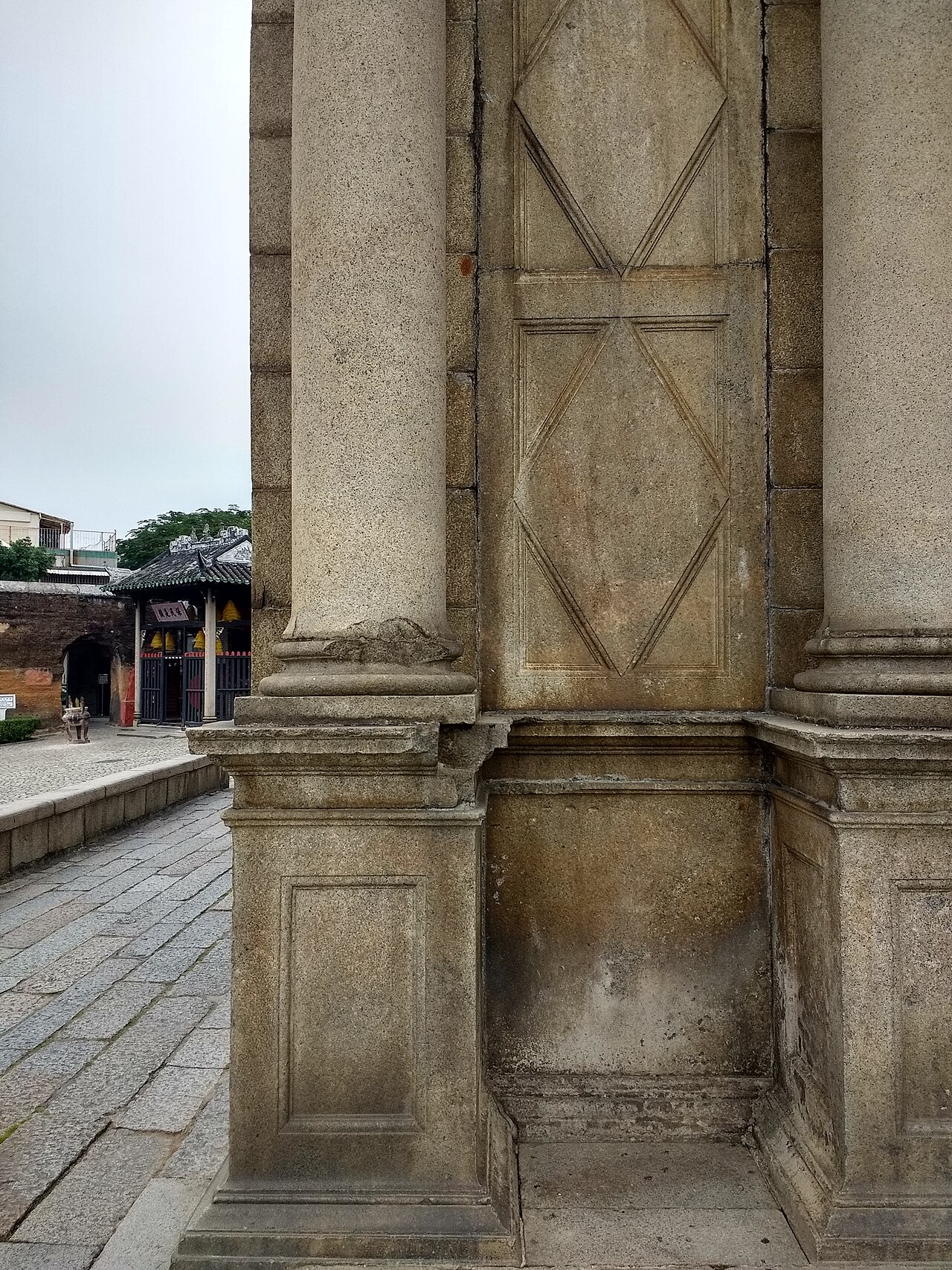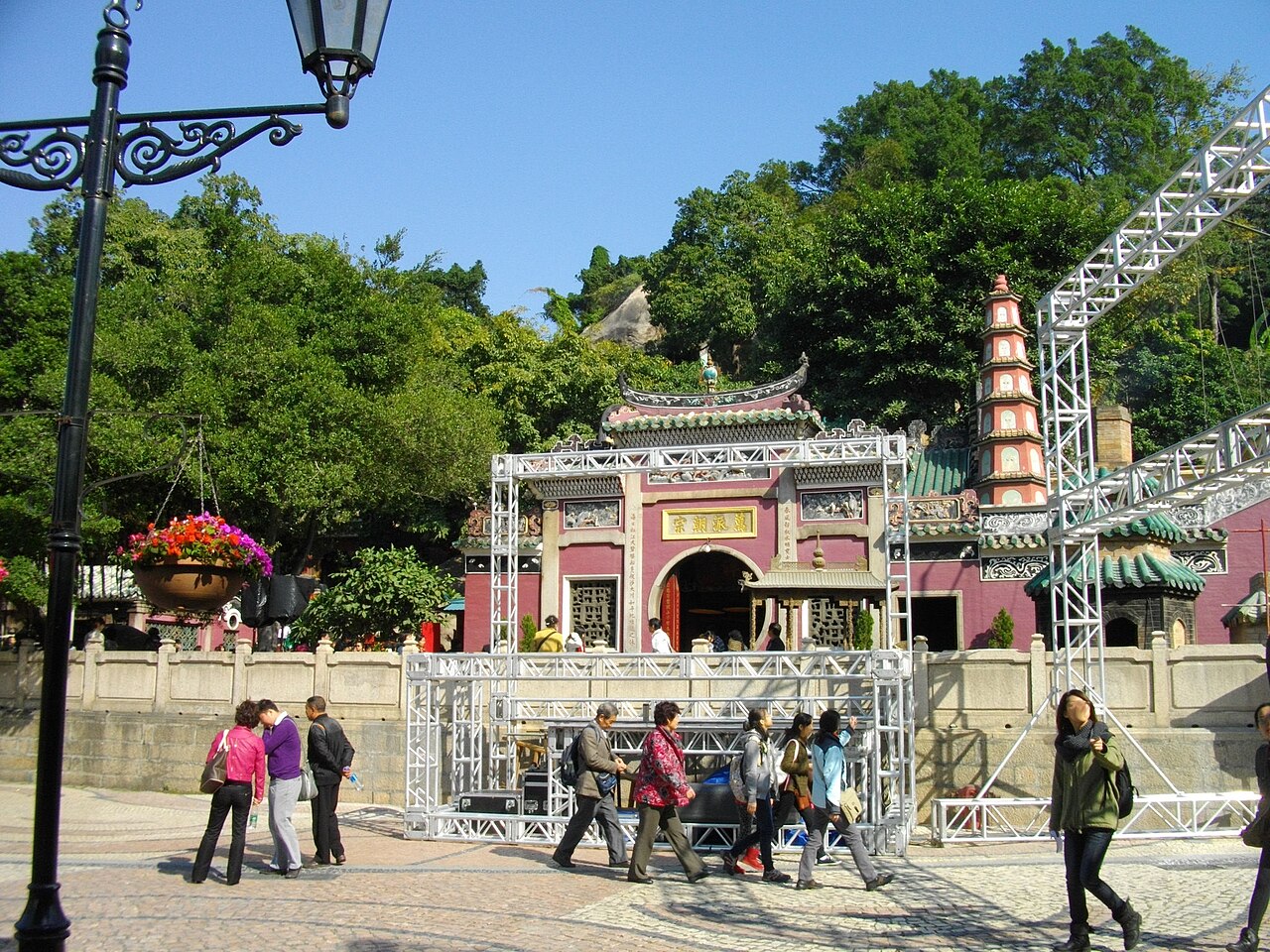
A-Ma Temple is one of the oldest and most atmospheric temples in Macau, set on the slope of Barra Hill beside the old harbour. It is dedicated to A-Ma, the sea goddess known elsewhere as Tin Hau or Mazu, who is honoured by fishing and seafaring communities along the Chinese coast. Tradition holds that the earliest temple on the site dates back several centuries, and the name Macau itself is often traced to A-Ma-Gau, meaning the bay of A-Ma. The complex climbs the hillside in a sequence of pavilions, prayer halls and courtyards, with boulders carved with inscriptions, red paper lanterns and giant coils of incense hanging from the roofs. Locals still come to pray, so the temple is a living place of worship as well as a heritage site. It is part of the Historic Centre of Macao and free to visit, and it feels very different from the colonial squares on the other side of town.
How to visit
The temple is at the southern end of the peninsula, at Barra, a short taxi ride from Senado Square or a pleasant half-hour walk along the harbour road. Buses stop in front of the temple square, and the nearby Maritime Museum and Moorish Barracks are easy to add. There is no ticket, and the temple is generally open every day, although opening hours are best checked locally. The paths are stepped and uneven, so it is not ideal for wheelchairs.
What to expect
You enter through a gate and a forecourt, then climb through the shrines, each tucked against the granite hillside. Burning incense is the most striking feature, with spiral coils suspended from the roof that smoulder for days. Visitors are welcome to look around, but this is a place of worship, so be respectful: keep your voice low, avoid blocking worshippers and ask before photographing people at prayer. At the top, you can see over the harbour and the surrounding streets.
Making the most of it
Go in the morning, when the light is soft and the temple is quieter, and combine the visit with Barra Square, Lilau Square and the Mandarin’s House on a walk through the older, south-western part of the peninsula. Around the Chinese New Year and the festival of the goddess in the spring, the temple becomes very busy and the atmosphere is intense, with offerings and crowds. If you are interested in the story behind the rituals, a local guide can explain the symbolism.
Good to know
Smoke from incense can be heavy, so people with respiratory sensitivities should take care. Dress modestly, in covered shoulders and knees if possible, and carry small change if you want to make an offering.
What to expect
The experience
A free, self-guided walk up a hillside temple complex of shrines, courtyards and incense coils.
Best time
Morning, when it is calmer and the light is soft, and avoid festival days if you want quiet.
How long
About an hour, longer with the nearby museum and squares.
Tips
Be respectful of worshippers, dress modestly, wear shoes with grip for the steps and carry small change for offerings.
Quick picks
- Best for
- Visitors who want to see Chinese tradition in Macau and a living temple rather than a museum.
- Families
- Children enjoy the incense coils and the climb, but the steps and smoke need care.
- Couples
- A quiet morning visit followed by a walk through Barra Square and Lilau Square.
- Pair with
- Lilau Square, the Mandarin’s House and the Maritime Museum, all within a short walk.
- Time needed
- Allow about an hour.
Good questions
Who is A-Ma?+
A-Ma is the goddess of the sea, also called Tin Hau or Mazu, and is honoured by fishing and seafaring communities along the Chinese coast. Macau’s name is often traced to the Portuguese version of A-Ma-Gau, the bay of A-Ma.
Is there an entry fee for A-Ma Temple?+
No, it is free to visit. If you wish to make an offering or burn incense, you can buy it locally for a small amount.
How do I get to A-Ma Temple from Senado Square?+
A taxi takes about ten minutes, or you can walk for around half an hour along the harbour road. Local buses also stop at the temple square.
Can I take photographs?+
Yes, in general, but this is an active place of worship, so be discreet and ask before photographing people who are praying. Avoid flash near altars.
Is the temple suitable for wheelchairs or prams?+
The temple is built on a hillside with steps and uneven paths, so it is difficult for wheelchairs and prams. The forecourt is easier to reach than the upper shrines.