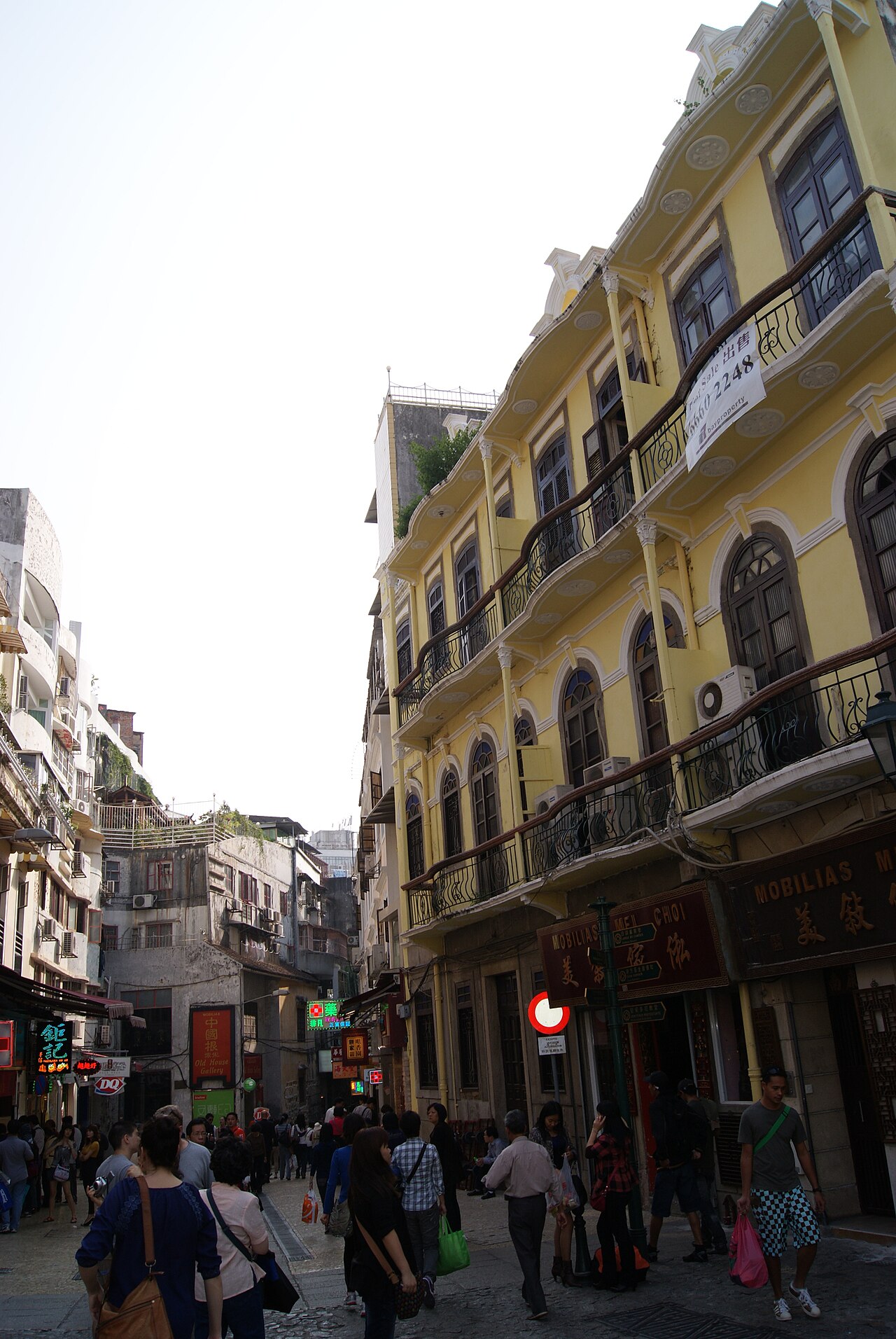
Senado Square, or Largo do Senado, is the living room of old Macau. It is a broad pedestrian plaza laid with the wave-patterned black-and-white stone paving that Portuguese cities made famous, and it is surrounded by pastel-coloured buildings in cream, yellow and pink with green shutters. At its head stands the former Leal Senado building, once the seat of the municipal government, and nearby are the Holy House of Mercy and a cluster of churches and temples, all part of the UNESCO-listed Historic Centre of Macao. A fountain sits in the middle, shops and bakeries line the sides, and on most days the square hums with visitors, locals and street performers. It is free, always open and impossible to miss, which makes it the natural starting point for any walk through the historic centre. From here, the lanes lead uphill to the Ruins of St. Paul’s and downhill to the main shopping streets.
How to visit
The square is in the middle of the peninsula, with taxis and buses stopping on the main road nearby and many hotels within walking distance. There is no ticket and no fixed opening hours for the square itself, although shops and the surrounding buildings keep their own hours. Some of the nearby heritage buildings, including churches, have been temporarily closed or have limited access, so check the tourism office page for the latest status before you plan a detailed route.
What to expect
The square is lively all day and spectacular at night, when the buildings are lit and the crowds are thinner. The streets leading off it are lined with bakeries selling almond biscuits, egg tarts and jerky, plus souvenir shops and traditional cafes. Look up at the colonial facades and down at the paving, which was designed to look like waves, and pause at the fountain for a photograph. Allow at least half an hour, or longer if you want to browse the shops.
Making the most of it
Start here and walk uphill along Rua de Sao Paulo to the Ruins of St. Paul’s, then continue to the Macao Museum or the Monte Fort, and finish with a meal in one of the old-town restaurants. The square is also a good place to join a local walking tour, which can add context about the churches and the architecture. Early mornings are calmer and better for photographs.
Good to know
The area is mostly flat and easy to walk, although cobbles can be uneven. Pickpockets operate in crowded tourist spots anywhere in the world, so keep your bag closed and in front of you. In summer, carry water and take shade breaks.
What to expect
The experience
A free, self-guided stroll around a pedestrian square of colonial buildings, bakeries and shops.
Best time
Early morning for calm and good photographs, or at night when the facades are lit.
How long
Half an hour to an hour, longer with snack stops.
Tips
Start here and walk up to the Ruins of St. Paul’s, check which nearby churches are open, and keep your bag secure in crowds.
Quick picks
- Best for
- First-time visitors and anyone who wants to feel the Portuguese character of old Macau.
- Families
- Flat, car-free and full of snacks, so easy for children, but busy at midday.
- Couples
- A relaxed evening stroll when the square is lit and the day-trippers have left.
- Pair with
- The Ruins of St. Paul’s ten minutes uphill, and A-Ma Temple on a separate half-day walk.
- Time needed
- Allow 30 to 60 minutes.
Good questions
What is Senado Square?+
It is the central pedestrian plaza of old Macau, known for its wave-patterned stone paving and pastel colonial buildings. It is part of the UNESCO-listed Historic Centre of Macao.
Is there an entry fee?+
No, the square is free and open all the time. Individual buildings around it have their own opening hours and rules.
How far is Senado Square from the Ruins of St. Paul’s?+
It is about a ten-minute walk, uphill along Rua de Sao Paulo. The route is lined with shops and snack stalls.
What can I eat around Senado Square?+
The streets nearby sell almond biscuits, egg tarts, dried meat snacks and Portuguese-style pastries. Cafes and small restaurants cover Macanese and Cantonese dishes.
Are the churches around the square open?+
Some are open and some have been closed temporarily for works, so the status changes. Check the tourism office page before you plan a church-by-church route.