Filipino food is one of the great undersung cuisines of Asia, and Manila is the best place to try all of it. The city brings together dishes from every region of the islands, the Chinese cooking of Binondo, Spanish-influenced feast food and a huge street-food culture, and you can eat well on almost any budget. Here is how to approach it.
Start with the classics
Adobo, chicken or pork braised in vinegar, soy sauce, garlic and pepper, is the national dish and a good first order. Sinigang is a sour soup of pork, shrimp or fish, soured with tamarind, and is the comfort food that most Filipinos grow up on. Kare-kare is a rich stew of oxtail and vegetables in a peanut sauce, served with shrimp paste on the side. Sisig, chopped pork with chilli and calamansi that is often served sizzling on a hot plate, is the perfect partner for a cold beer. Lechon, spit-roasted pig with crackling skin, is the centrepiece of every celebration, and you can find lechon at restaurants and food stalls across the city. Lumpia, crisp spring rolls, and pancit, stir-fried noodles, are available everywhere.
Eat your way through Binondo
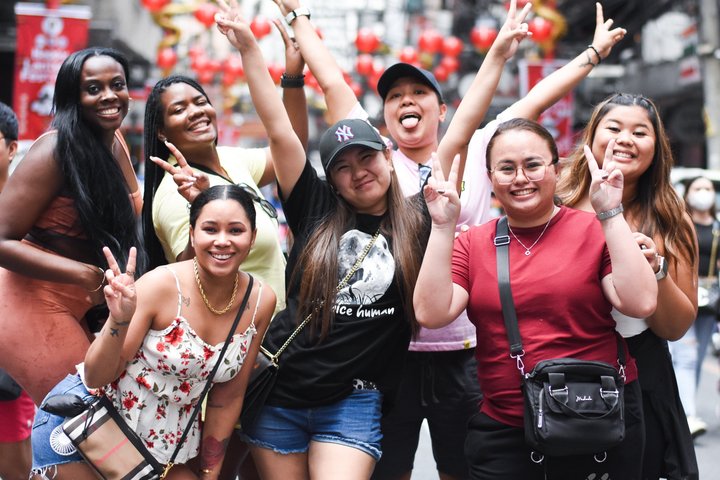
Binondo, the oldest Chinatown in the world, is the single best food district in Manila. Around Ongpin Street and the lanes beside Binondo Church you will find dumpling houses, noodle shops, bakeries selling hopia, the flaky pastry filled with mung bean or ube, siopao, the steamed bun, and restaurants that serve everything from dim sum to roast duck. A guided food tour is the easiest way to taste a lot in a few hours, and it is worth taking early in your trip, because the guide will explain what you are eating and where to return. Arrive hungry and go in the morning or around lunch, when the shops are at their busiest.
Street food, sensibly
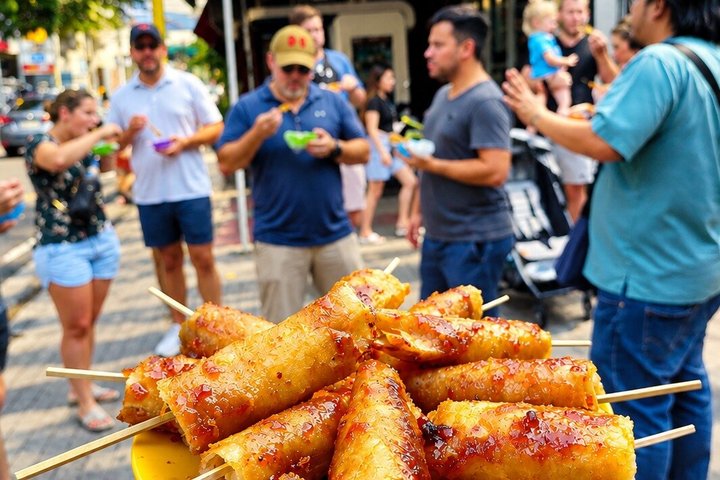
Manila’s street food is part of daily life, from isaw, grilled chicken intestines, and kwek-kwek, deep-fried quail eggs in orange batter, to fish balls on a stick, banana cue and turon, fried bananas with caramel. Taho, warm silken tofu with syrup and tapioca pearls, is a classic morning snack sold by walking vendors. Choose busy stalls where the food is cooked fresh and served hot, carry small notes and hand sanitiser, and start gently if your stomach is sensitive. A street food tour is a good, safe introduction and leaves you with the confidence to try more.
Sweet things and breakfast
Halo-halo, a tall glass of shaved ice with sweet beans, jellies, fruit, leche flan and ube ice cream, is the great Filipino dessert and the best way to cool down on a hot afternoon. For breakfast, try a silog meal, garlic rice with a fried egg and a choice of tapa, longganisa sausage or fried fish, or fresh pandesal bread rolls from a neighbourhood bakery. Local coffee, including strong Batangas barako, is excellent, and calamansi juice is the national soft drink.
What to drink
San Miguel is the classic beer, and Red Horse is the stronger local favourite. Rum is made in the Philippines, and Tanduay and Ginebra San Miguel gin are the common spirits. In Makati, the Poblacion district comes alive at night with bars, cocktail rooms and live music, and craft cocktails and beer have taken off across the city. Drink bottled water and avoid ice from unknown sources.
Markets and where to go
On weekends Makati hosts popular food markets, including the Salcedo Saturday Market and the Legazpi Sunday Market, where you can try dishes from every region and buy fresh fruit and snacks. For a restaurant meal, look for the regional specialists around Makati, Quezon City and Bonifacio Global City, and consider a meal in one of the restored colonial houses in Intramuros. Day trips are also great for food: in Tagaytay, try bulalo, a beef-marrow soup that is perfect on a cool ridge, and buko pie, a coconut custard pie.
Practical tips
Meals are generous, so share dishes and order a variety. A service charge is often included in restaurant bills, so tip small amounts for good service. Vegetarian options are limited in traditional Filipino cooking, though Chinese and modern restaurants offer more. If you have allergies or dietary restrictions, ask your hotel or tour guide to help you communicate with the kitchen, and be especially careful with seafood and peanuts.