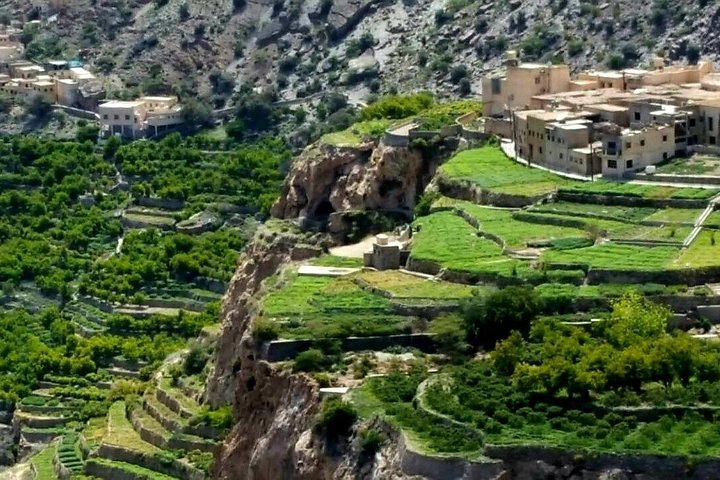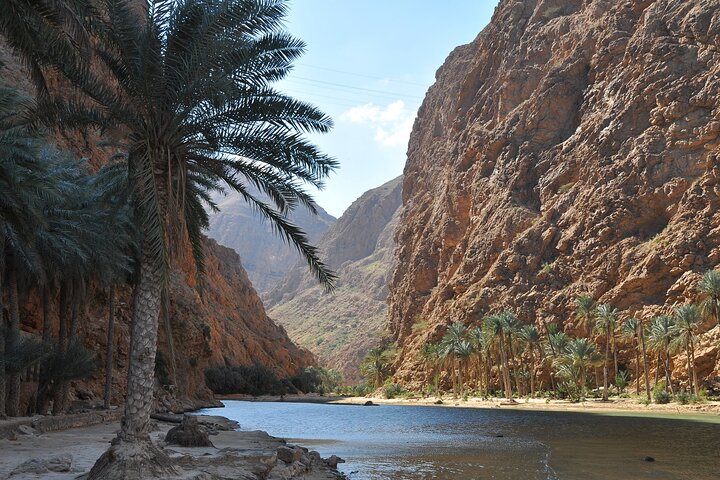
Jebel Akhdar means “Green Mountain”, and after the dry brown ranges around it the name makes sense. This high plateau in the Hajar Mountains, at roughly two thousand metres, is a patchwork of terraced orchards fed by ancient irrigation channels, where villagers grow pomegranates, apricots, walnuts, peaches and, above all, damask roses. In spring the terraces are scented with blossom and the rose harvest is distilled into rosewater in small village stills, a tradition that has gone on for generations. The air is cooler than on the coast by many degrees, and the views over rugged canyons are some of the most striking in northern Oman. The plateau is about two hours from Muscat by road, which makes it one of the easier mountain trips from the capital. The final climb is a steep, winding road, and access to the top is controlled: visitors normally need a four-wheel-drive vehicle and there is a checkpoint at the foot of the mountain, so most people go with a driver or an organised tour rather than driving themselves. The trip is often combined with Nizwa, which lies at the base of the mountain, making a rewarding day of fort, souq and orchards.
What to see
On the plateau, the villages of Saiq and Wadi Bani Habib are the highlights. Saiq has the best known viewpoints, with sweeping views across the canyon rim, while the abandoned stone houses of Wadi Bani Habib sit dramatically on a cliff and can be reached on foot. A walk along the terraces, following the narrow water channels, shows you how people have farmed this slope for centuries. Small shops and roadside stalls sell rosewater, dried fruit, walnuts and honey, and they make good, easy souvenirs.
Choosing your timing
The plateau is cooler than the coast all year, so it is a welcome escape in the warmer months, but spring is the most special time, when the roses bloom and the orchards are in flower. The rose harvest is usually in spring, and dates vary from year to year, so ask locally if it matters to your plans. Winter nights can be cold, and the plateau can be foggy or cloudy, so bring a warm layer and do not expect the weather in Muscat to match.
Planning the day
Most visitors do the trip as a full day, leaving Muscat early, driving up the mountain in the morning and stopping at Nizwa on the way down. An overnight stay lets you walk the terraces without hurrying and see the stars from a viewpoint, and there are a few mountain hotels and guesthouses on the plateau.
Dress modestly in the villages, ask before photographing local people and their gardens, and carry water, sun protection and shoes with grip for the stony paths. Because road access can change, it is sensible to check that the route is open with your driver or tour operator before you go.
If you can spare the time, ask your driver to stop at a village shop for a glass of fresh pomegranate juice or a handful of walnuts, which is a simple way to taste what the terraces produce. The slow pace of life on the plateau is part of the appeal, so build in time to sit, look at the view and let the cool air do its work.
What to expect
The experience
A scenic drive into the mountains with stops at viewpoints, terraced orchards and a village, often combined with Nizwa.
Best time
Spring for the roses and blossom, or any time between October and April for pleasant walking.
How long
A full day of about eight to ten hours including the drive, or an overnight stay on the plateau.
Tips
Bring a warm layer and shoes with grip, and expect a four-wheel-drive vehicle and a checkpoint at the base of the mountain.
Quick picks
- Best for
- Travellers who want cool air, mountain views and a glimpse of traditional village farming.
- Families
- A good family day if children enjoy scenery and short walks, though the winding road can upset small stomachs.
- Couples
- Quiet viewpoints and cool evenings make an overnight stay especially romantic.
- Pair with
- Nizwa Fort and souq, or Jebel Shams on a longer mountain itinerary.
- Time needed
- One full day, or two with an overnight stay.
Good questions
How long does it take to reach Jebel Akhdar from Muscat?+
The plateau is about two hours from Muscat by road, longer if you stop at Nizwa or the viewpoints on the way.
Do I need a four-wheel-drive vehicle?+
Yes. The road up the mountain is steep and access is controlled, with a checkpoint at the base, so most visitors go with a driver or an organised tour.
When are the roses in bloom?+
The rose harvest is in spring, but the timing varies from year to year. If it matters to your plans, ask a local operator or your hotel before you go.
Is it cold on the plateau?+
It is cooler than the coast all year and can be cold at night in winter, so bring a warm layer and check the weather on the day.
Can I visit on the same day as Nizwa?+
Yes. Nizwa lies at the foot of the mountain, and many tours combine the fort and souq with a drive up the plateau.