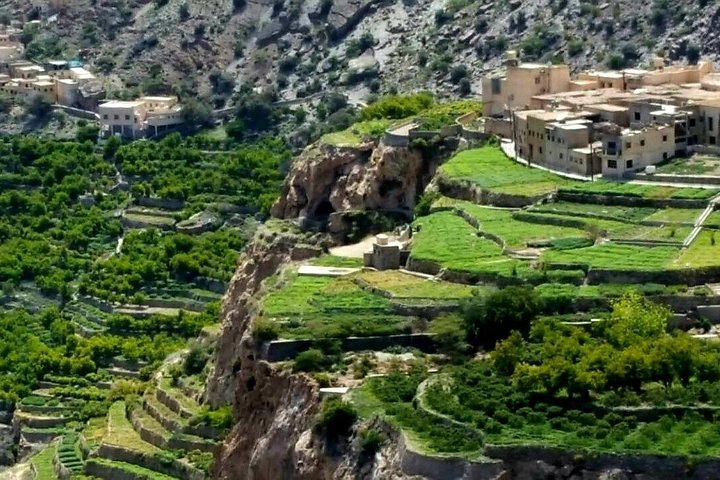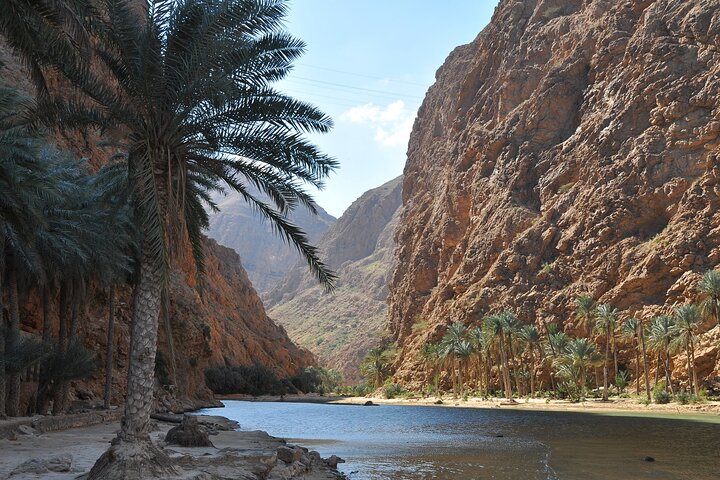
Misfat Al Abriyeen is one of the best preserved mountain villages in Oman. It sits on a rocky slope at the foot of Jebel Shams, and its stone and mud houses are built tightly into the hillside, with narrow lanes that twist between walls and under arches. Below the village, terraced gardens of date palms, bananas, mangoes and pomegranates are watered by ancient falaj channels that run beside the paths, and the shade and the sound of running water make a wonderful contrast to the dry mountains above. It feels like a place that has changed little in centuries. A few kilometres away, Al Hamra is a much older town of mud-brick houses, some of them hundreds of years old and many now empty or restored. Its lanes and palm groves give a sense of how Omani towns once looked, and a small house museum nearby, known as Bait Al Safah, shows traditional crafts and daily life. Together, Misfat and Al Hamra make an easy cultural stop on the way to or from Jebel Shams or Nizwa. They suit slow, curious walkers who like to look at doors, walls and gardens, and who enjoy talking to people along the way. They are lived-in communities, so a respectful pace and quiet voice go a long way.
Getting there
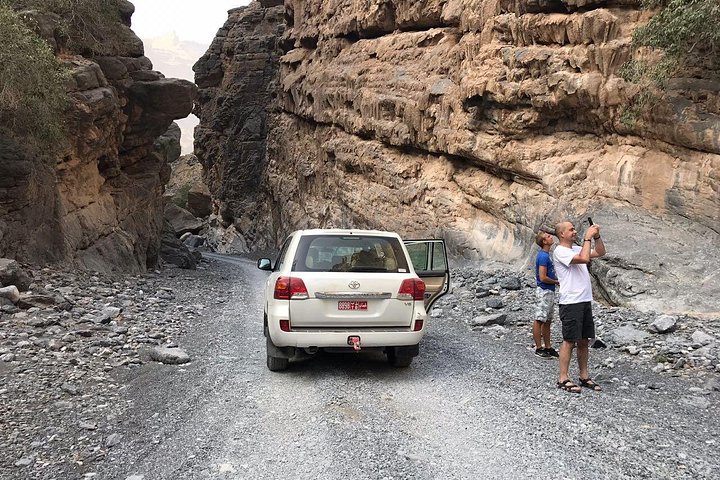
Misfat and Al Hamra lie roughly two and a half hours from Muscat in the interior, between Nizwa and Jebel Shams. A guided day trip is the simplest way to reach them, usually combined with Nizwa Fort or the Jebel Shams viewpoints. The last stretch to Misfat is a narrow road, so a driver who knows it is a big help.
Walking in Misfat
The village is best explored on foot, following the falaj channels through the palm gardens and up through the lanes. A guide can explain how the water is shared among families and how the houses were built to catch breezes and avoid the sun. Wear grippy shoes because the stones are uneven and steep in places, and take a hat for the exposed parts of the climb.
Al Hamra and its museum
The old town is a short drive away. The Bait Al Safah house museum, run by local families, shows traditional crafts, cooking and farming, and sometimes offers demonstrations or refreshments. Opening times vary, so check when you book.
Respect for local life
Both places are working villages, so dress modestly, keep your voice low, and ask before photographing people or private gardens. Do not step into the gardens or onto the falaj channels. A small purchase from a local shop or stall is a kind way to say thank you.
Making the most of it
Go in the cooler months from October to April, start early to catch soft light, and combine the villages with Jebel Shams or Nizwa for a full day. In summer the village is hot by midday, but the palms provide welcome shade.
A few extras
There are small guesthouses and cafés in the area for tea or lunch, and some visitors choose to stay a night to enjoy the quiet evenings and the stars above the mountains. Bring cash for small purchases, a refillable water bottle and a light scarf, which is useful for sun, dust and modesty. Mornings are the best time for photographs.
What to expect
The experience
A guided visit to a terraced mountain village and an old mud-brick town, mostly on foot, usually as part of a longer interior day trip.
Best time
Between October and April, in the morning when the light is soft and the lanes are cool.
How long
About two to three hours on the ground, within a full day trip of eight to ten hours.
Tips
Wear grippy shoes, cover shoulders and knees, and ask before photographing people or homes.
Quick picks
- Best for
- Culture lovers and photographers who enjoy old villages and traditional irrigation.
- Families
- Best with older children who like walking and exploring.
- Couples
- A quiet, atmospheric day among palms, stone walls and mountain views.
- Pair with
- Jebel Shams, Nizwa Fort or Bahla Fort on the same interior route.
- Time needed
- A half day on the ground within a full-day trip.
Good questions
What is Misfat Al Abriyeen?+
A traditional mountain village at the foot of Jebel Shams, known for its stone houses, narrow lanes and terraced gardens watered by falaj channels.
What is Al Hamra known for?+
An old town of mud-brick houses near Jebel Shams, with palm groves and a small house museum called Bait Al Safah.
How far are they from Muscat?+
About two and a half hours by road in the interior, between Nizwa and Jebel Shams.
Can I visit independently?+
Yes with a hire car, but a guided day trip makes the narrow roads and the village walk easier and adds local context.
What should I wear?+
Modest clothing covering shoulders and knees, comfortable shoes with good grip and a hat for the sun.