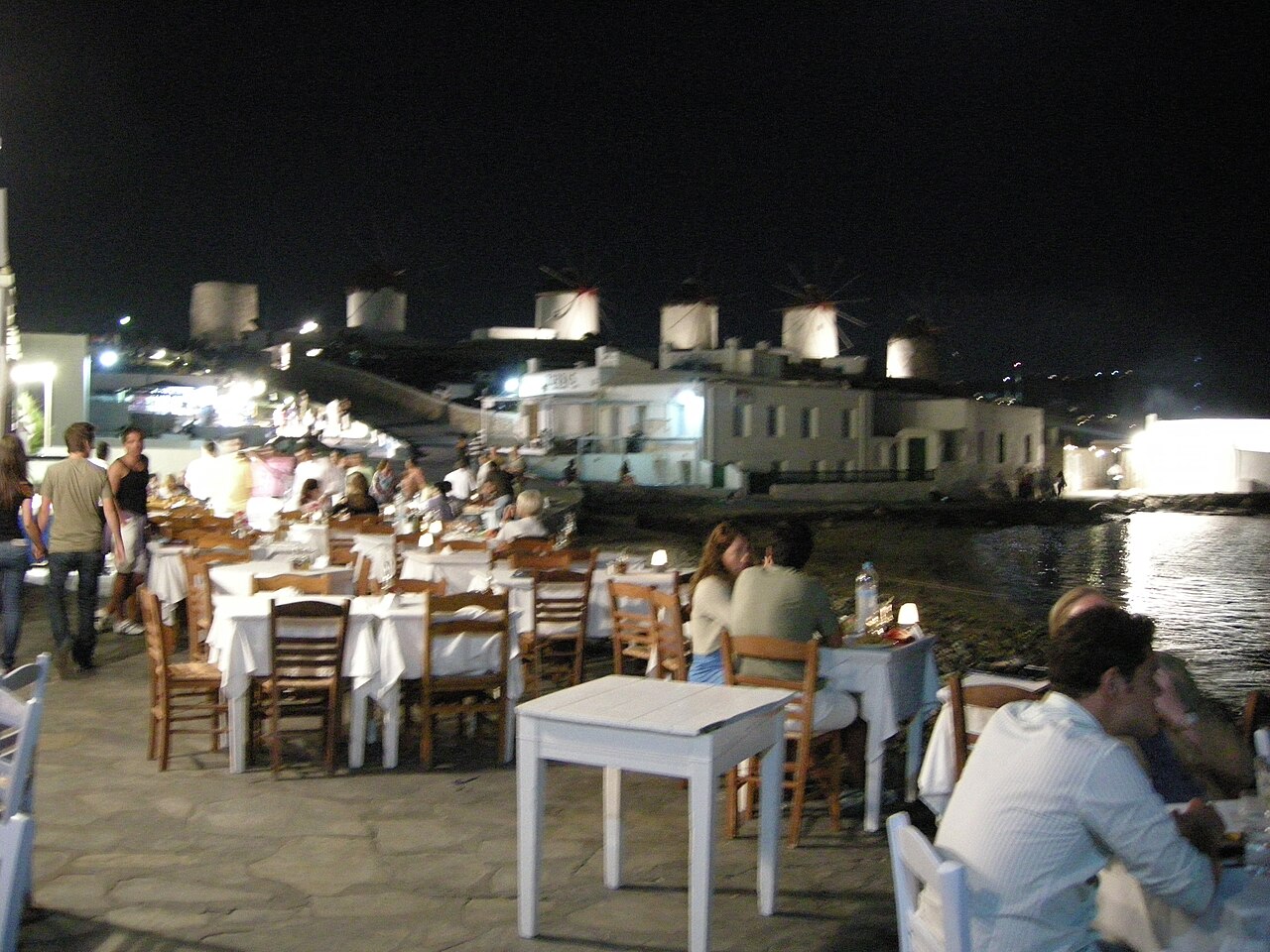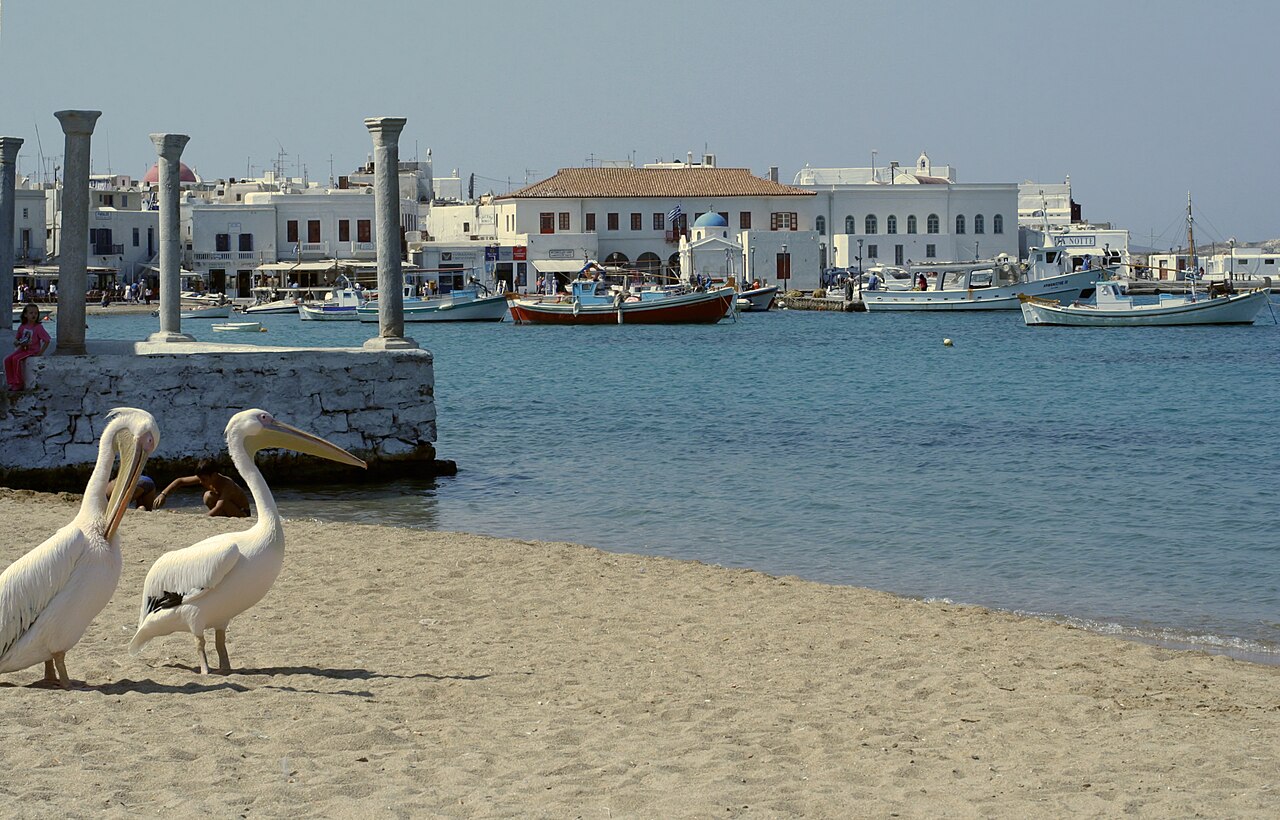
Mykonos has a reputation for expensive cocktails and late nights, and it is true that dinner can cost more here than almost anywhere in Greece. Behind that reputation is a modest island cuisine, built around what a dry, windy rock in the Cyclades can produce: pork, cheese, honey, almonds, capers, olive oil and fish. If you eat where locals eat, taste a few specialities and book the busiest places early, you can eat very well without paying beach-club prices.
The island’s specialities
Look for louza, a thinly sliced, air-cured pork flavoured with spices, which is the island’s signature charcuterie. Kopanisti is a sharp, creamy, peppery cheese that is often served with bread and tomato, and you will also find softer fresh cheeses and harder aged ones. Amygdalota are small, chewy almond sweets, often scented with rose or orange water, and honey, capers and olives turn up in salads and on the side of nearly every table. Savoury pies, including a local onion pie, are common in bakeries. Fresh fish and seafood are the other staples, usually sold by weight, so ask the price before you order.
Taste your way in
The easiest way to meet these flavours is on the mykonos food tour, a small-group walk through the lanes of Mykonos Town with several tasting stops at local shops and tavernas. It works well on your first day because it doubles as an orientation walk and a light lunch. If you prefer to cook, a small-group cooking class lets you prepare a Greek meal with a local host and then eat it together, and the sunset option moves it to the end of the day. For something slower, a countryside wine tour takes you out of town to taste Aegean wines, often with cheese and olives, and shows the quiet inland side of the island.
How meals work
Greeks eat late. Lunch is often after two in the afternoon, and dinner rarely starts before half past eight, although in Chora and the beach areas you will find tables from seven. Meals are shared: order several small plates, a salad, something grilled and a bottle of local wine or a jug of the house white, and let the table fill gradually. A bakery breakfast of a pie or a sweet pastry with strong coffee is cheap and filling. In summer a long lunch by the sea and a lighter dinner suits the heat, while in cooler months the reverse often works better.
What to book ahead
From June to September, reserve dinner in Chora, Little Venice and the sunset spots well in advance, and book any tasting tour, cooking class or wine tour a few days ahead, because small groups sell out. Beach clubs at Paradise and Super Paradise also fill their front rows early, and table service means a food and drink bill on top of any sunbed charge. In April, May and October most places are open and easier to book, and in winter many restaurants and bars close, though bakeries, cafés and local tavernas stay open and offer a quieter, cheaper way to eat.
Eating in the quieter parts of the island
You do not need to eat in town every night. Ano Mera has a village square with traditional tavernas, a good place for a long lunch after the monastery. Beach tavernas on the quieter coasts serve grilled fish, salads and cold drinks with your toes in the sand, and the beaches on the north coast are often less crowded than the party coves in the south. Ask your hotel or host where they eat when they are off duty, and follow the advice. Locals usually know the places that serve honest food at fair prices.
Drinks
Greek wine has improved enormously, and island whites from the Aegean, particularly Assyrtiko and Athiri, suit seafood and the summer heat. Tsipouro is a clear spirit served in small glasses with meze, and it is smoother than it looks. Cocktail bars in Chora and Little Venice make the most of sunset, with prices to match, so a single drink at golden hour can be a better value than a full evening. Tap water is safe but not always pleasant, so buy bottled water, and always drink plenty of it in summer.
A simple plan
Start with a food tour on day one, take a cooking class or wine tour on a slower day, and keep one evening for a sunset drink in Little Venice followed by dinner in a quiet lane. Add one long lunch in Ano Mera and one on a beach, and you will have tasted most of what the island offers without chasing the most expensive tables.