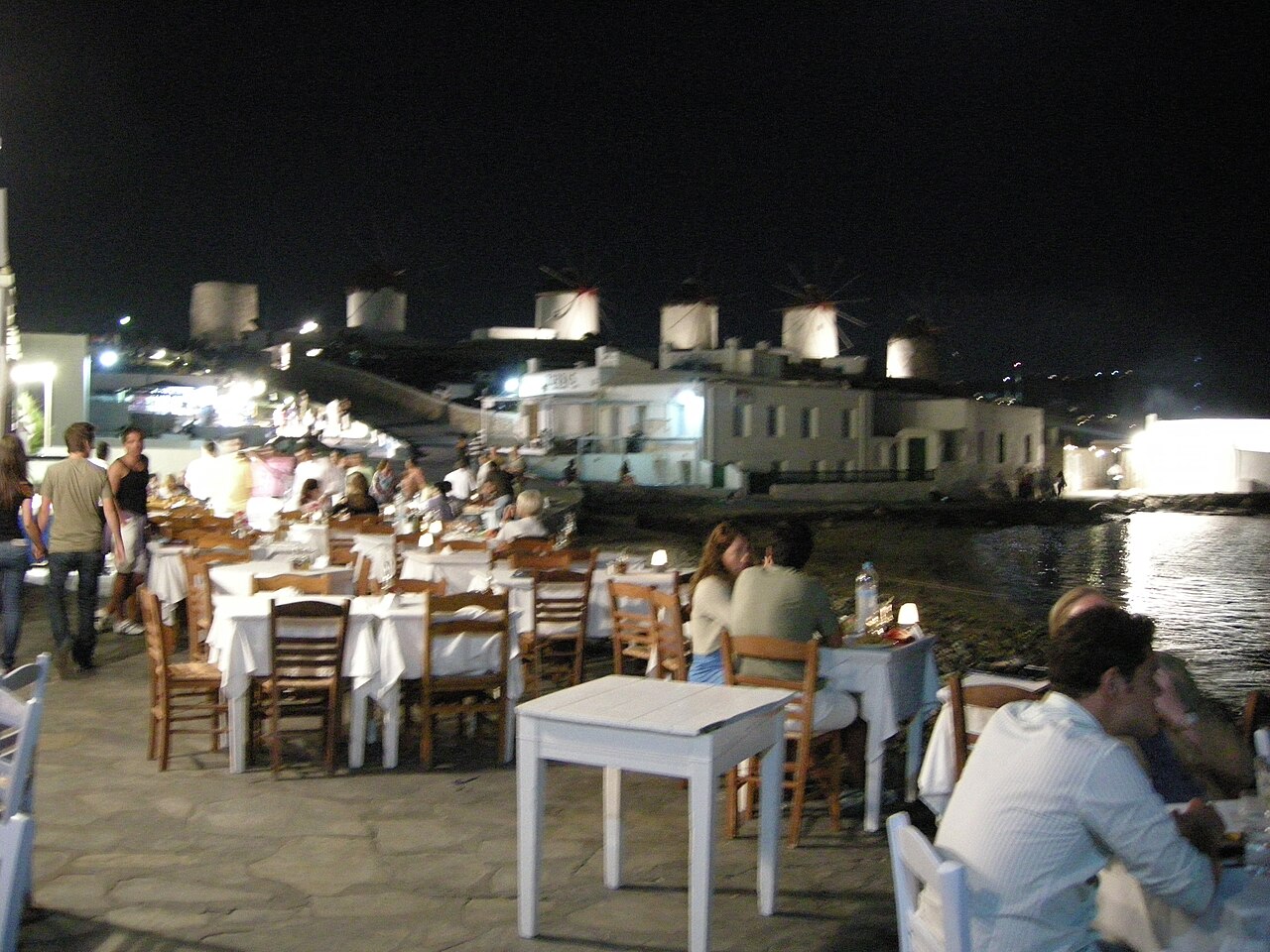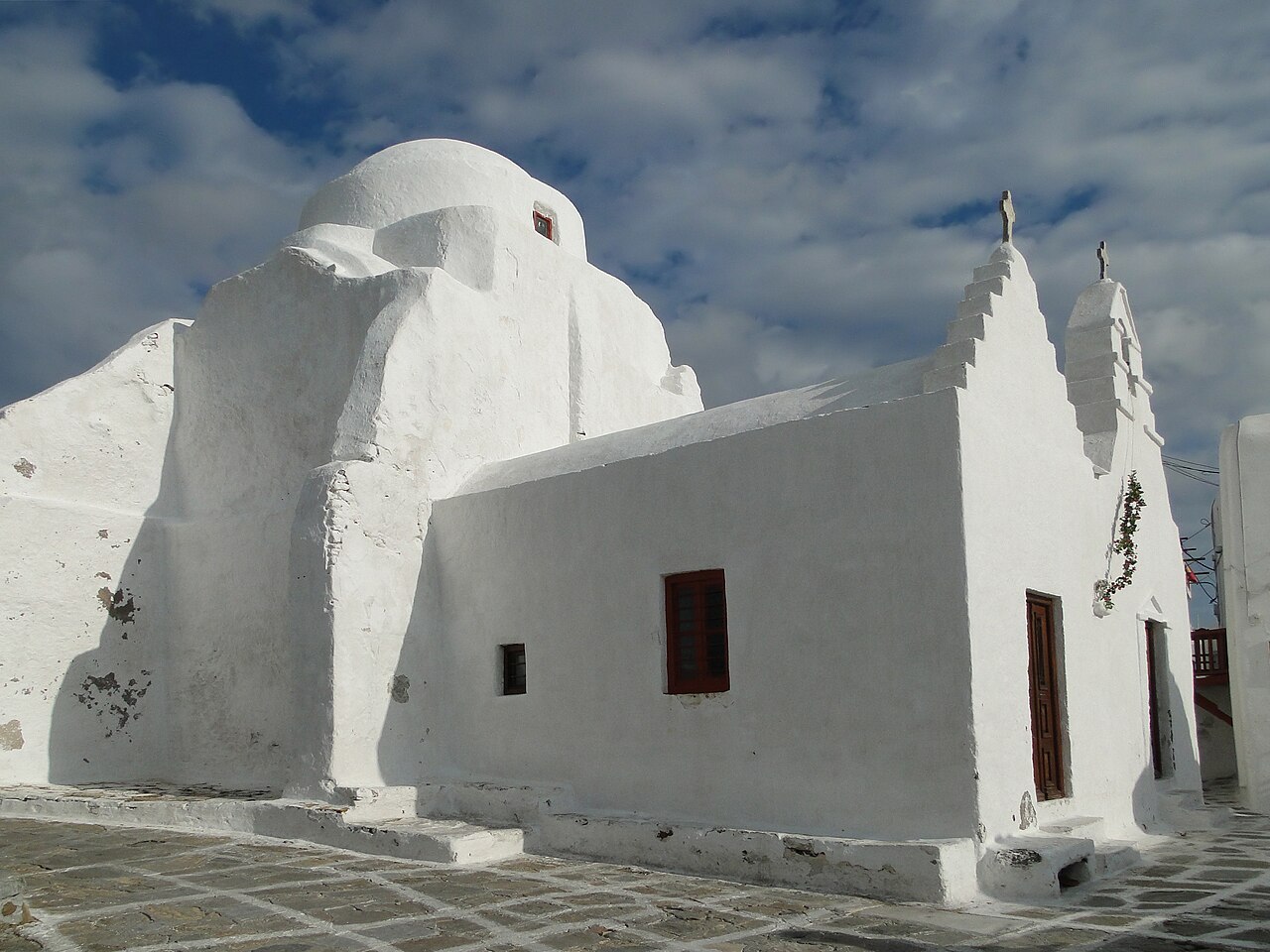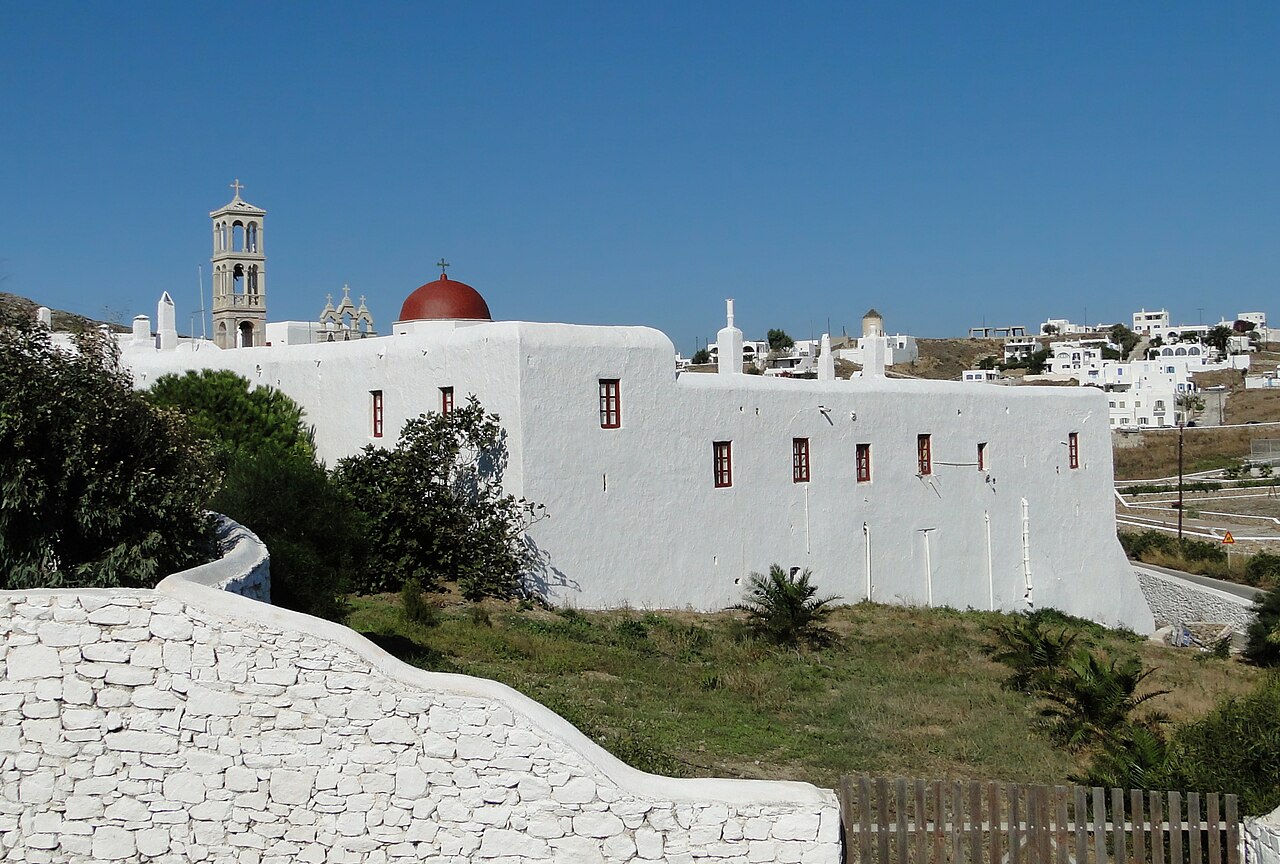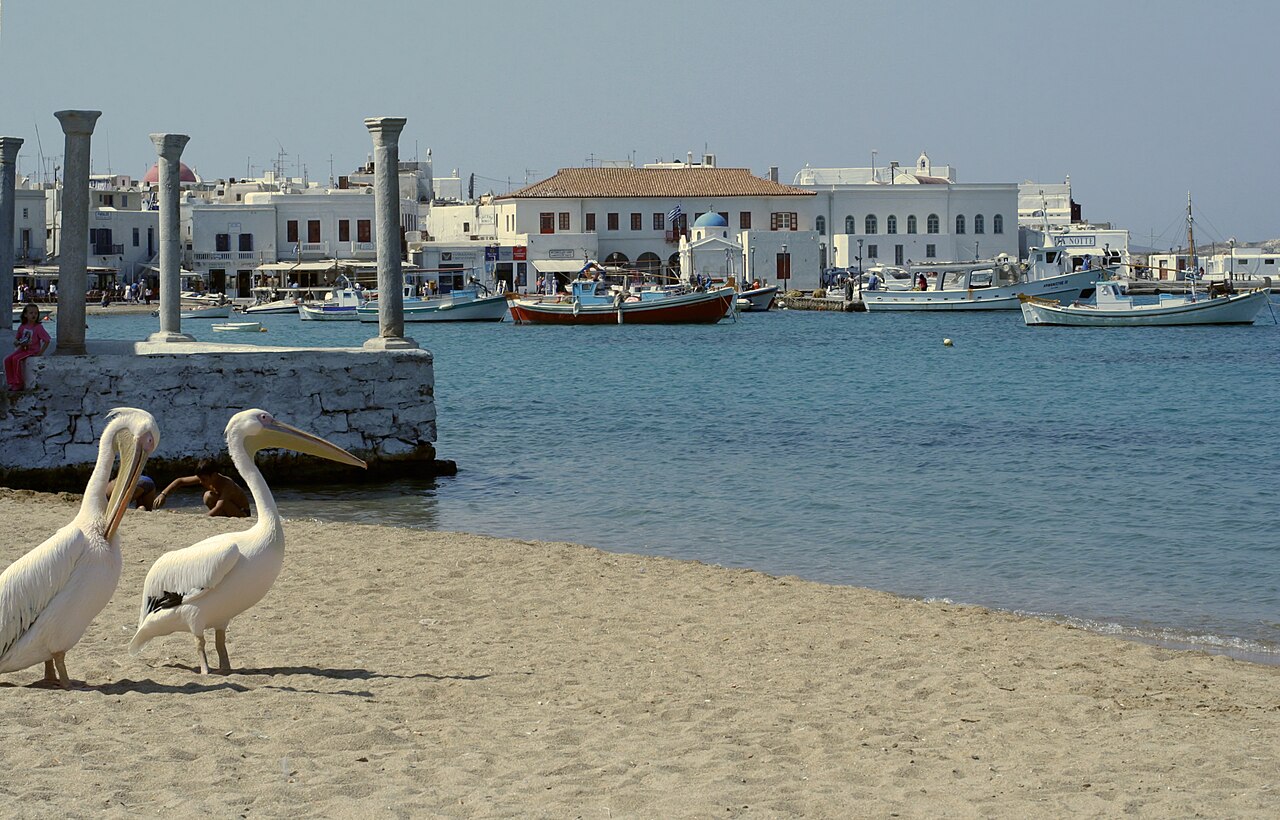
Chora, also called Mykonos Town or Hora, is the heart of the island and its best sight in any season. The town spreads around the bay of the Old Port in a deliberately confusing tangle of narrow lanes, said to have been laid out to baffle pirates, and lined with cube-shaped white houses, blue and red doors, wooden balconies, bougainvillea and dozens of tiny chapels. The main walking route takes in the harbour front and Manto Square, with its bust of Manto Mavrogenous, the heroine of the War of Independence, then the shopping street of Matoyianni, the windmills on the ridge, the waterside houses of Little Venice and the church of Panagia Paraportiani in the old Kastro quarter. In summer the lanes are packed until the small hours. From November to March the town belongs to its residents again: many boutiques and bars close, but bakeries, kafeneia, local tavernas and everyday shops stay open, and you can wander for hours in near silence.
How it works
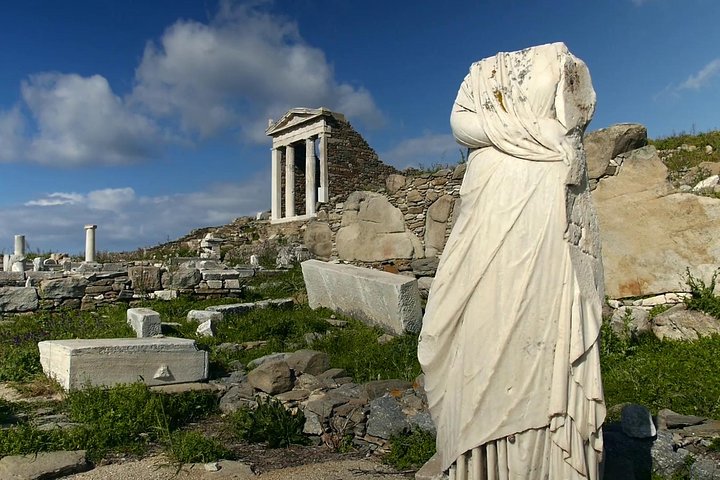
Chora is free to explore and entirely on foot, since cars cannot enter the old lanes. The Archaeological Museum sits by the Old Port at the northern end of town, and from there the harbour front leads to Manto Square, Matoyianni and the lanes that run down to Little Venice. A loop takes two to three hours with stops, and you will almost certainly get lost at least once, which is part of the fun.
Season by season
From about April to October the shops, cocktail bars and restaurants are open and the lanes stay busy into the small hours, so walk early and book dinner ahead in July and August. From late autumn to around Easter, expect a working island town rather than a resort: many of the famous shops, cocktail bars and restaurants close, and opening days can be irregular in deep winter.
The upside is light, space and the chance to see daily life: fishermen mending nets, locals at the kafeneio, church bells on Sunday. Days are often mild and bright, but the north wind can be strong, so carry a warm layer.
Making the most of it
Walk early for the empty lanes and soft light on the white walls, and come back towards sunset for Little Venice and the windmills. Look out for the pelicans by the harbour, step into any chapel that is open, and stop for coffee where the locals sit. Combine the walk with the Archaeological Museum on any day except Tuesday.
What to expect
The experience
A free, self-guided wander through car-free whitewashed lanes, small squares, chapels and the harbour front of the island’s main town.
Best time
Early morning for empty lanes and soft light, and again in the late afternoon for sunset over Little Venice and the windmills.
How long
Two to three hours for a relaxed loop with coffee and photo stops, longer if you add the Archaeological Museum.
Tips
Wear shoes with grip because the paving can be slippery after rain, and do not worry about getting lost, since every downhill lane eventually reaches the sea.
Quick picks
- Best for
- First-time visitors who want to see the Mykonos of postcards, and anyone who enjoys wandering without a plan.
- Families
- Children like the maze of lanes, the cats and the pelicans by the harbour, and the walk is short enough to break up with snacks from a bakery.
- Couples
- Quiet winter lanes, a sunset drink by the water and dinner in a local taverna make an easy romantic evening.
- Pair with
- Little Venice and the windmills at sunset, and the Archaeological Museum by the Old Port.
- Time needed
- Half a day, or two shorter walks at either end of the day.
Good questions
When is Mykonos Town at its best?+
From about April to October everything is open and the nightlife runs late, while winter suits those who want atmosphere rather than nightlife. In winter many bars and boutiques close, but the lanes, chapels and harbour are peaceful and local tavernas and cafés stay open.
How long does it take to walk around Chora?+
A loop of the main sights takes two to three hours at an easy pace. The town is compact, but the maze of lanes makes it easy to spend longer.
Why are the streets of Mykonos Town so confusing?+
The tangle of narrow lanes is traditionally said to have been designed to confuse pirates and shelter houses from the wind. Today it is part of the charm, and most lanes lead back to the sea.
Can you drive in Mykonos Town?+
No, the old town is pedestrian only. Park on the edge of town or use a taxi, then explore on foot.
Who was Manto Mavrogenous?+
Manto Mavrogenous was a heroine of the Greek War of Independence who came to Mykonos in 1821 and devoted herself and her fortune to the cause. Her bust stands in Manto Square by the harbour.