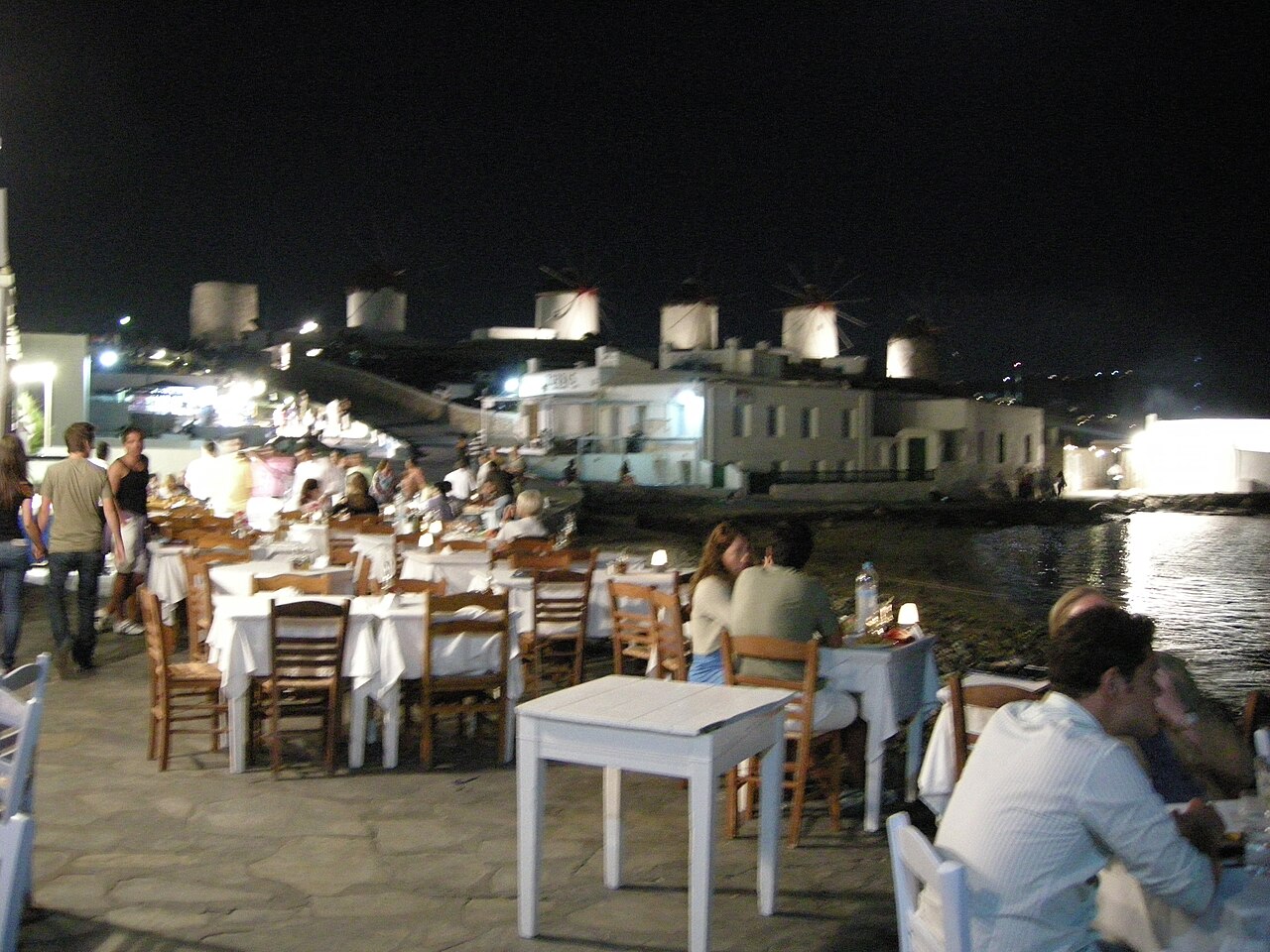
Little Venice and the windmills are the image most people have of Mykonos before they arrive, and they live up to it. Along the western edge of Chora, a row of eighteenth-century captains’ and merchants’ houses was built with its foundations in the sea, so the colourful wooden balconies hang directly over the water and the waves break against the walls on windy days. Just to the south, on a low ridge above the bay, stands the line of whitewashed windmills, built in the Venetian era to grind the island’s grain and now its trademark. The two sit a few minutes apart, and together they make the classic sunset view of the island, with the sun dropping into the sea beyond the windmills and the lights of Little Venice coming on below. In summer the bars along the water are packed shoulder to shoulder for that moment. Out of season some of them close, but the view is the same and you may have the windmill ridge almost to yourself.
How it works
Both are free and open to wander at any time. From Manto Square or Matoyianni, follow the lanes west towards the sea; you will come out in Little Venice, and a short path leads south up to the windmills. The windmills are seen from the outside, and the area around them is open ground with uneven rock, so take care in the dark and in strong wind.
Season by season
From April to October the waterfront bars are open and the sunset crowd builds an hour or more before dark, so arrive early to claim a spot. In winter sunsets come earlier and the light is often clearer than in the summer haze, which makes this the best time for photographers.
Waves can splash over the waterfront in a north wind, which is spectacular to watch from a safe distance but soaking if you stand too close. A handful of cafés and bars stay open in the cooler months, with opening varying by week, so treat a drink by the water as a bonus rather than a plan.
Making the most of it
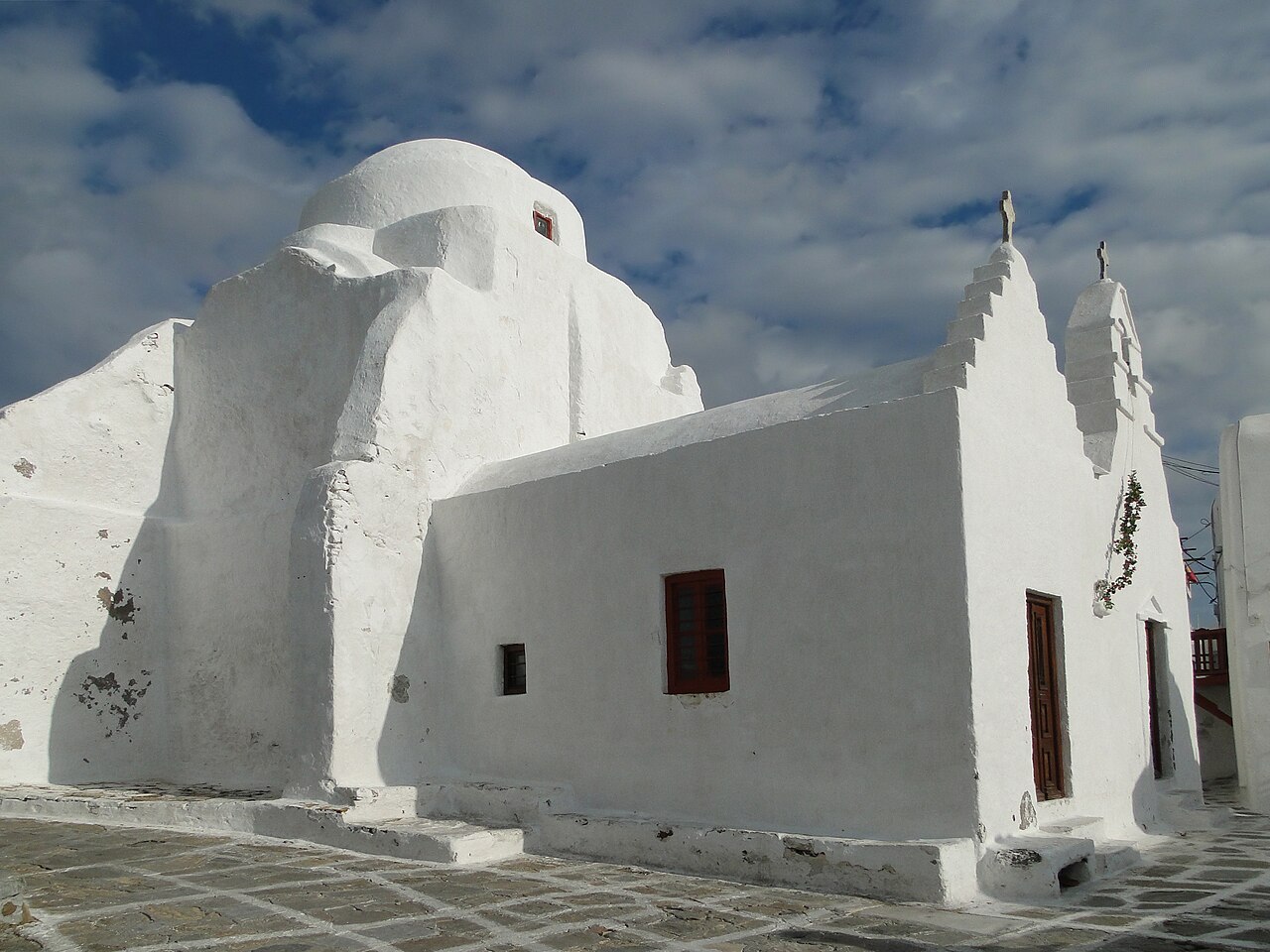
Arrive half an hour before sunset and walk up to the windmills first for the wide view across the bay, then come down to the waterfront as the lights come on. Early morning is just as beautiful and almost empty. Panagia Paraportiani is at the northern end of Little Venice, so the three sights make a natural short loop.
What to expect
The experience
A free walk along the waterfront houses of Little Venice and up to the row of whitewashed windmills on the ridge above.
Best time
The half hour before sunset, or early morning for the same view with almost nobody else around.
How long
An hour is enough to see both and watch the sunset, longer if you stop for a drink.
Tips
Climb to the windmills first for the wide view, then walk down to the water as the lights come on, and keep back from the edge when the north wind sends waves over the wall.
Quick picks
- Best for
- Sunset lovers, photographers and every first-time visitor who wants the classic Mykonos view.
- Families
- Children enjoy watching the waves hit the houses and running up to the windmills, but hold small hands near the water and on the rocky ground.
- Couples
- This is the island’s most romantic spot, and it is far more peaceful out of season.
- Pair with
- Panagia Paraportiani at the end of Little Venice and an evening wander through Chora.
- Time needed
- One to two hours around sunset.
Good questions
Can you go inside the windmills of Mykonos?+
The windmills on the ridge are seen from the outside. You can walk freely around them, and they make the best viewpoint over Little Venice and the bay.
When is the best time to see Little Venice?+
Sunset is the classic time, when the sun drops behind the sea and the windmills. Early morning is equally lovely and almost empty.
Is Little Venice open in winter?+
The waterfront itself is always open to walk. Some bars and restaurants close for the winter, so check before planning a sunset drink there.
How far are the windmills from Little Venice?+
They are a few minutes’ walk apart. A short path leads from the southern end of Little Venice up to the windmill ridge.
Why is it called Little Venice?+
The houses are built right on the water with their foundations in the sea, which reminded visitors of Venice. They date from the eighteenth century and once belonged to captains and merchants.