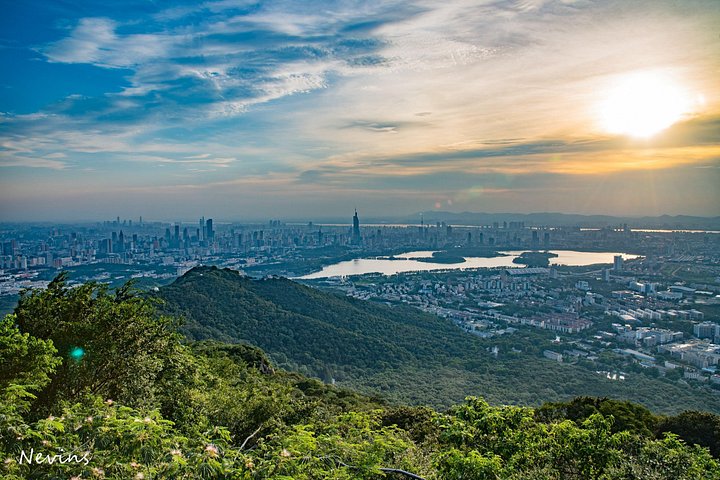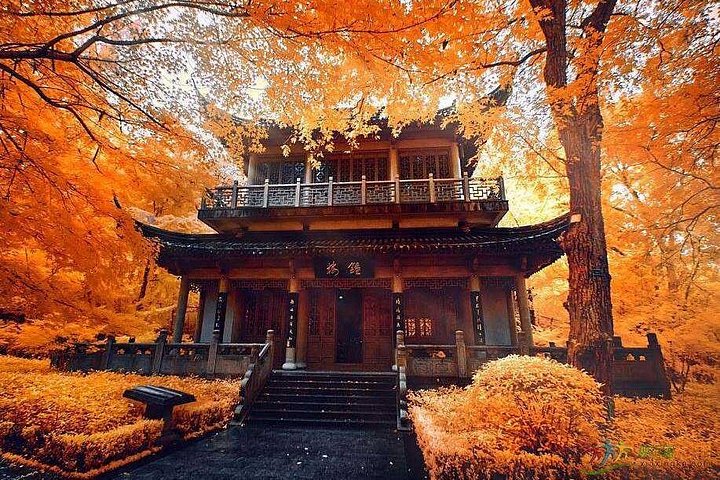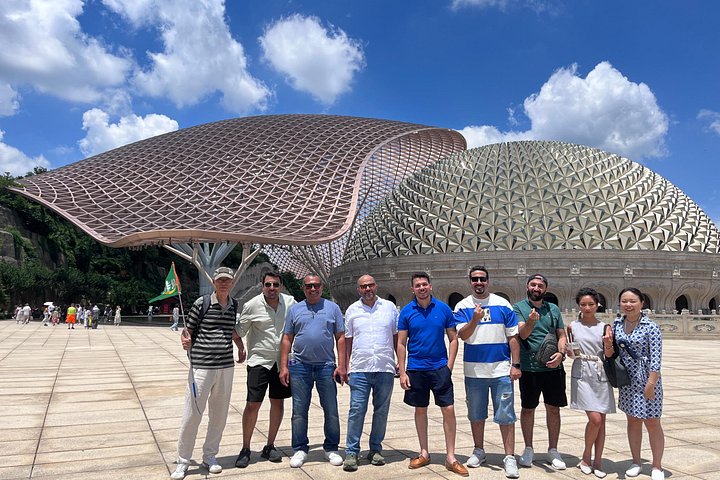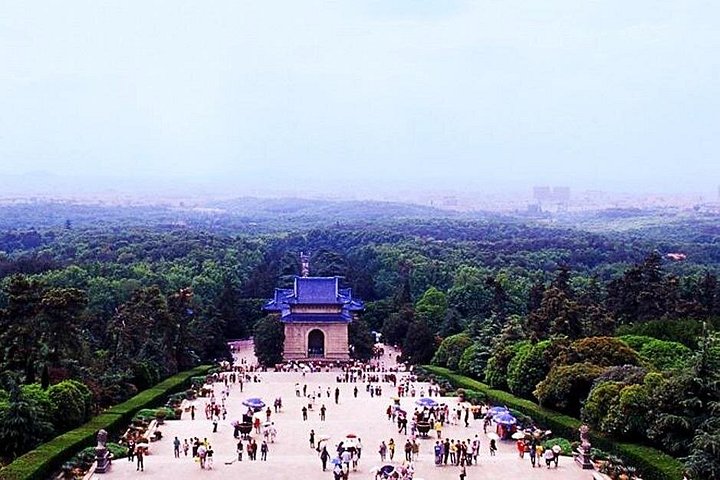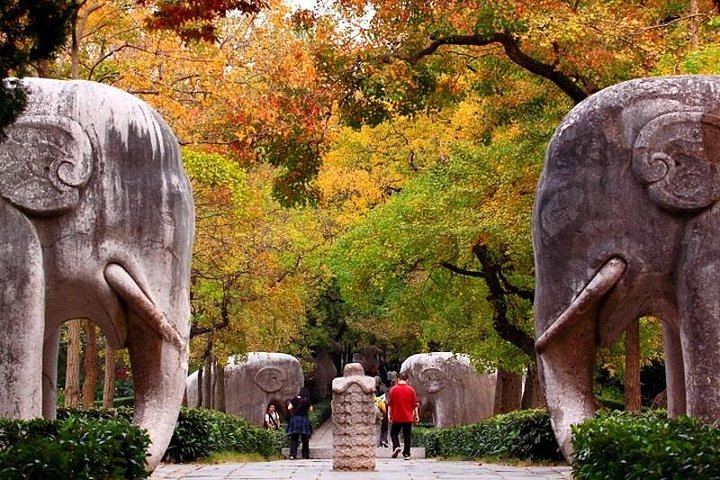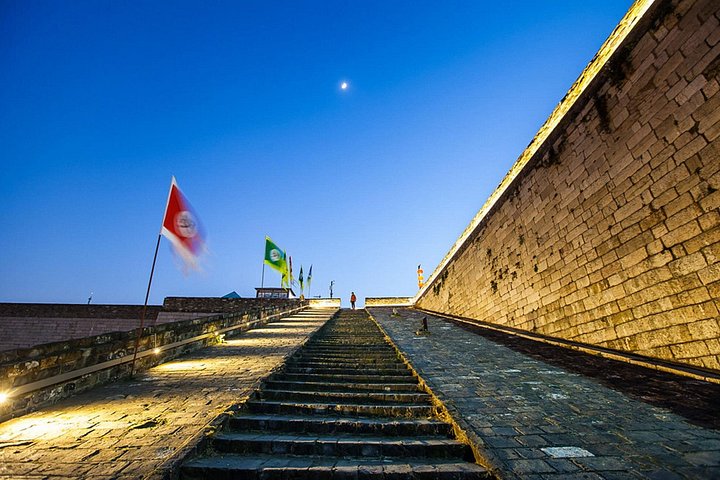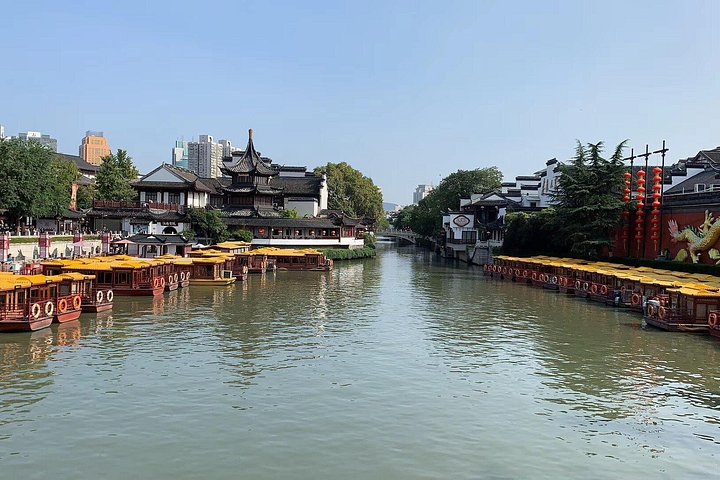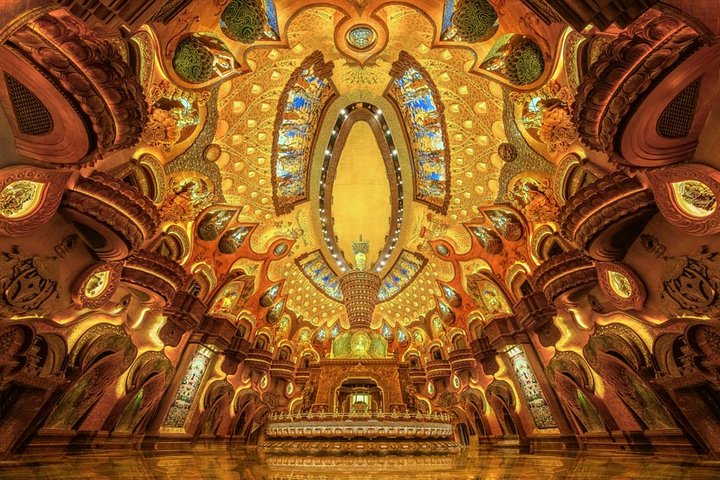
Niushou Mountain, or Ox Head Mountain, rises south of Nanjing and has been a place of Buddhist practice for well over a thousand years. Its name comes from the twin peaks that early residents thought resembled the horns of an ox, and its slopes hold the sites of old temples, the tombs of Southern Tang rulers and many quiet walking paths. In recent years the mountain has been developed into a large cultural park centred on Buddhist architecture, with halls, pagodas, courtyards and a monumental complex that houses sacred relics. The scale is impressive and the design mixes traditional forms with modern materials, producing broad stone terraces, high gateways and tall, gilded halls. The setting is peaceful, with trees, hills and long views that make it feel far from the city centre. The park is a favourite for those interested in religious architecture, in peaceful scenery or in the long Buddhist heritage of the Yangtze region. The Dabao'en Temple connection is also part of the story, since the mountain is associated with the site of a famous Ming-era temple and its glazed pagoda that once stood in the city. The private tours linked here let you visit the park with a driver and a guide, a useful arrangement because the grounds are large and public transport is limited. For those who enjoy gentle hiking and contemplative places, it makes a restful half-day escape.
How to visit
The linked product is a half-day private tour to the Niushoushan Cultural Park, so check the details for the meeting point, the duration and what is included, such as admission and transport. Opening hours and entry rules for individual halls and relics areas vary, and some sections may be closed for maintenance or on certain days, so it is worth asking the operator what to expect.
What to expect
You arrive by car, walk through a grand entrance plaza and follow stone paths between halls and courtyards. A guide can explain the meaning of the statues, the layout of the pagoda and the monastic traditions. Many visitors climb to a viewpoint, sit in a courtyard or take part in a quiet moment in a hall. The scale means you walk a fair distance, and there are steps in places, so comfortable shoes are important.
How to get the most from it: go on a clear day when the views and the light on the gilded roofs are at their best, and avoid peak holiday periods when crowds can be heavy. Dress modestly for temples, with shoulders and knees covered, and follow the customs of worshippers, speaking softly and not photographing images where signs forbid it.
The park pairs well with a vegetarian lunch, which is often available on site. In summer, bring water and sun protection, and in winter wear warm layers. If you want a longer day, ask the operator about combining the park with another south-side sight.
Planning note
The park is spread over a large hillside, and the walking distances between halls are longer than they look on a map. Ask the operator whether a shuttle or cart is available inside the grounds, and plan to visit the main halls first while you are fresh. Offerings and incense are on sale at some points, but there is no pressure to buy.
What to expect
The experience
A half-day private visit to a large Buddhist cultural park with halls, pagodas and viewpoints.
Best time
Clear days outside public holidays; spring and autumn are most comfortable.
How long
Three to four hours.
Tips
Dress modestly, wear comfortable shoes and follow the customs of worshippers.
Quick picks
- Best for
- Visitors who enjoy temples, architecture and peaceful scenery.
- Families
- Open spaces suit children, with some steps and long walks.
- Couples
- Quiet terraces and views make a calm, reflective outing.
- Pair with
- Yangzhou or Qixia Temple on another day, or the city wall.
- Time needed
- A half day.
Good questions
What is Niushou Mountain?+
It is a wooded hill south of Nanjing with a long Buddhist history, now home to a large cultural park.
Do I need a guide?+
A guide is helpful for context, and a private car solves the limited public transport.
What should I wear?+
Dress modestly for temples, with shoulders and knees covered, and wear comfortable shoes.
Is there food on site?+
Vegetarian meals are often available. Ask the operator about lunch options.
When is the best time to go?+
Clear spring and autumn days are best. Avoid public holidays if you want quiet.