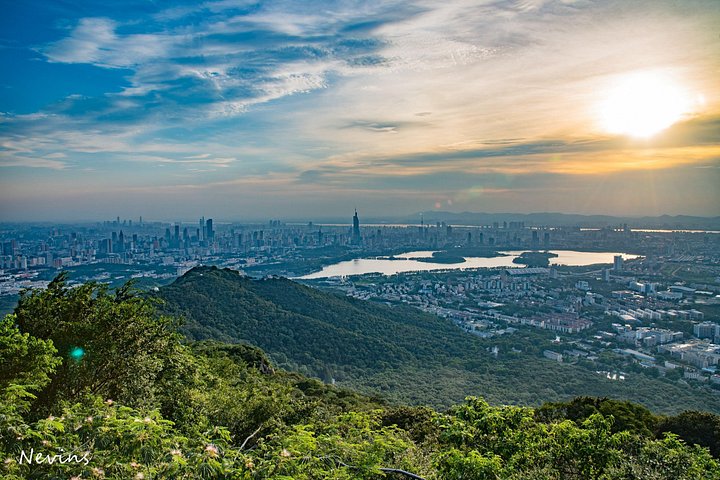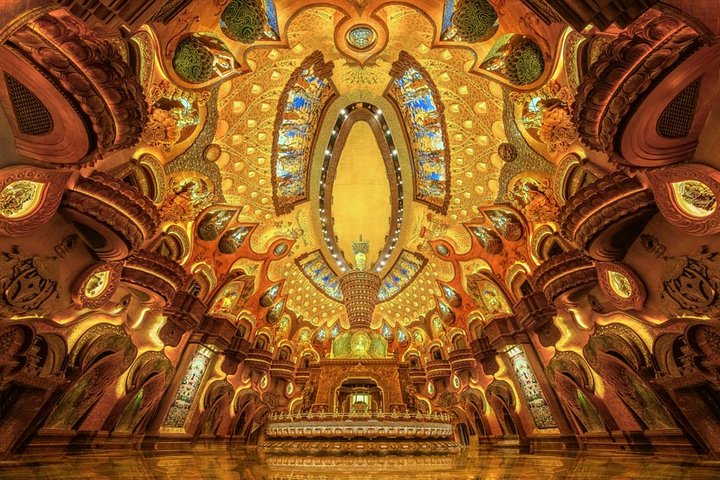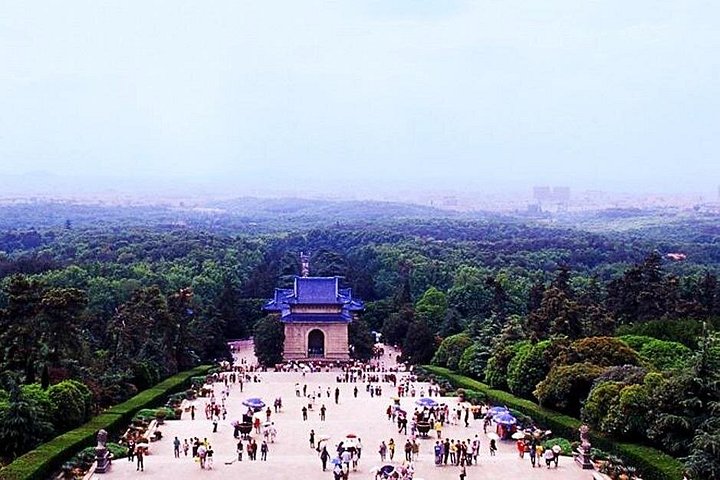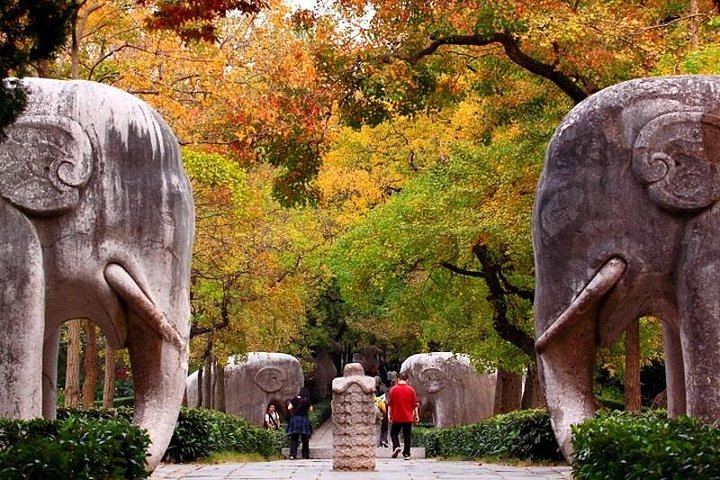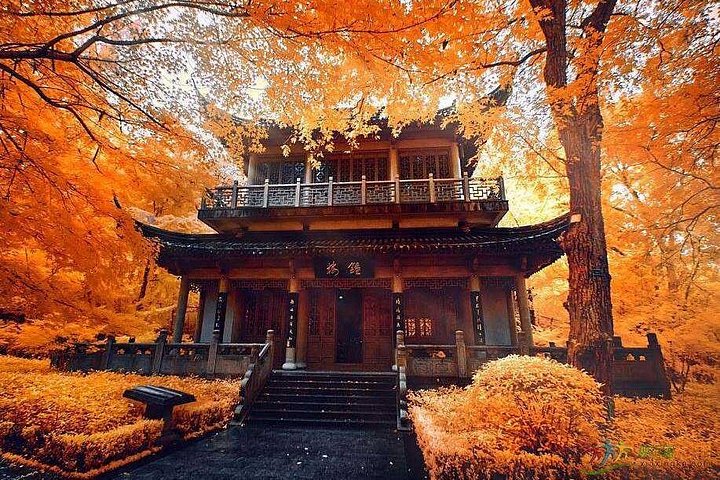
Qixia Mountain lies northeast of central Nanjing and is best known for Qixia Temple, one of the great Buddhist monasteries of south China. The temple was founded in the late fifth century, and over fifteen centuries it has been rebuilt many times, most recently in the modern era after damage in the nineteenth century. Its halls climb the slope in terraces, with incense curling through the courtyards and monks chanting in the main hall. The temple grounds hold two historic treasures. The Sarira Pagoda, a five-storey stone tower carved with Buddhist scenes, dates to the Southern Tang period in the tenth century and is among the finest early stone pagodas in the region. Behind the temple, the Thousand Buddha Cliff is a rock face carved with hundreds of niches and statues from the Southern dynasties onward, some weathered and some restored. Qixia is perhaps most celebrated for its autumn colour, when maples and other trees blaze red and gold, and the mountain draws crowds in late October and November. The half-day private tour linked here pairs Qixia with Swallow Rock, a cliff that juts into the Yangtze River and offers sweeping views of the water and the great river traffic. Together, the sights combine religion, art, scenery and river history in an easy outing from the city, suited to those who enjoy mountains and temple architecture.
How to visit
The linked product is a half-day private tour to Qixia Temple and Swallow Rock, so check the details for the meeting point, the duration and whether entrance fees are included. Qixia Temple is a working monastery, and some areas may be closed to visitors during services, so a guide can help with timing and etiquette.
What to expect
You walk through the temple gate and follow a path up the terraced halls, with the pagoda and the cliff carvings a short distance beyond. Expect stairs and uneven stone, so comfortable shoes matter. Swallow Rock is a short drive away, where paths lead to viewpoints over the Yangtze, with ships and bridges in the distance. The sites involve moderate walking, and a driver saves energy between them.
How to get the most from it: for autumn colour, visit during the peak, usually late October to November, though the exact timing varies each year and crowds can be heavy. Weekdays are far calmer. In other seasons, the temple is quiet and the green slopes are pleasant. Dress modestly for the temple, speak softly and follow the customs of worshippers.
Photographers should look for the pagoda carvings in side light and for river views from Swallow Rock. Bring water and layers, as the mountain can be cooler than the city. The excursion can be combined with a vegetarian lunch at the temple, which is a popular choice.
Planning note
In the peak autumn weeks, the roads and car parks near the mountain can be congested, so ask the operator about an early start, which also helps with photography. Rain can make the stone steps slippery, and the weather on the river at Swallow Rock can be windier than in the city, so a light waterproof layer is a good idea.
What to expect
The experience
A half-day private tour to a hillside monastery and a Yangtze viewpoint.
Best time
Late October to November for maples; weekdays year-round for calm.
How long
About four hours.
Tips
Go on a weekday in autumn, dress modestly and wear comfortable shoes.
Quick picks
- Best for
- Autumn colour seekers, temple lovers and scenery fans.
- Families
- Open paths suit children, with stairs in places.
- Couples
- Tranquil terraces and river views.
- Pair with
- Linggu Temple or Niushoushan on another day.
- Time needed
- A morning or afternoon.
Good questions
When was Qixia Temple founded?+
It was founded in the late fifth century and has been rebuilt many times since.
What is the Sarira Pagoda?+
It is a stone pagoda from the Southern Tang period, carved with Buddhist scenes.
When are the autumn colours?+
They usually peak in late October to November, though timing varies and crowds are heavy.
What is Swallow Rock?+
It is a cliff that juts into the Yangtze River and offers wide views of the river.
Is it a working monastery?+
Yes. Follow local customs, dress modestly and keep your voice low in the halls.