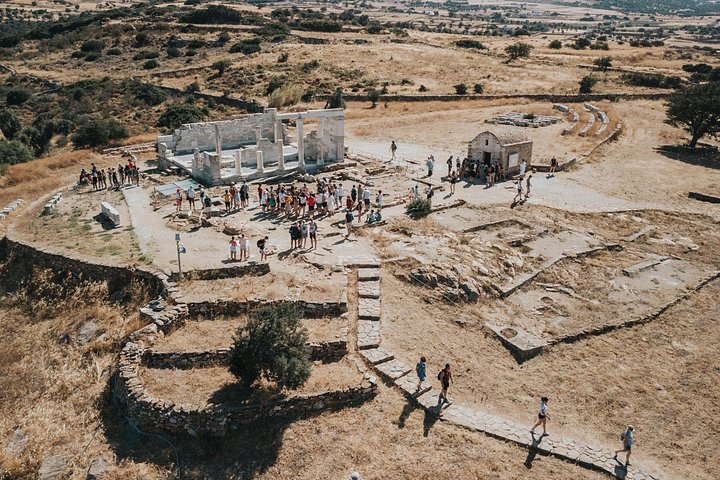
Among the ancient sites of Naxos, the Temple of Demeter at Sangri is the one that feels most complete. It stands in open farmland about eleven kilometres from town, on a low rise called Gyroulas, in a landscape of barley, olives and stone walls that suits a sanctuary of the goddess of grain. The temple was built around 530 BC from locally quarried Naxian marble and was notable for its unusually large marble roof slabs. Archaeologists reconstructed much of it in modern times, and an on-site museum displays finds from the excavation. It is smaller and quieter than the Portara and rewards visitors who like to see how a temple was assembled, not just how it ended.
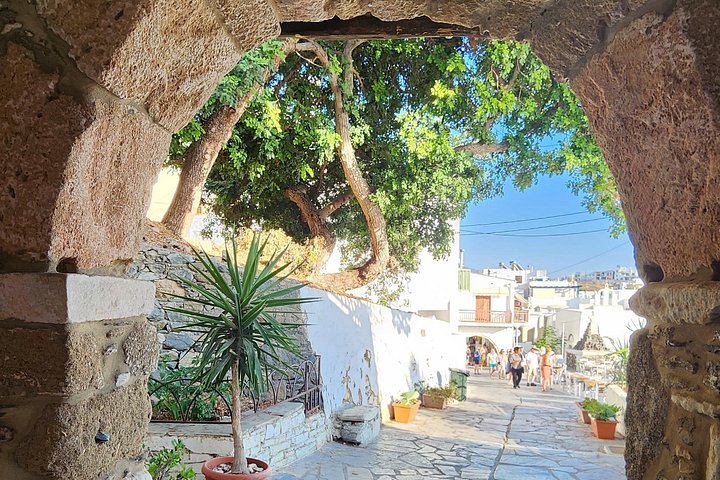
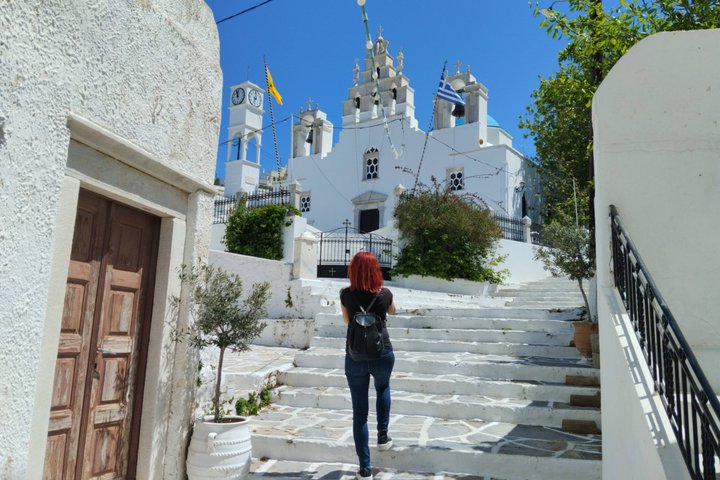
Most visitors see it as part of a shared half-day or day tour with a title such as Authentic Naxos: Demeter Temple, Apeiranthos, Filoti and Chalki. These tours usually combine the temple with a drive through the mountain villages, so you also get Apeiranthos, Filoti, Halki and the interior's olive groves, stopping for coffee or a taverna lunch along the way.
The advantage is that you do not need a car, and the guide can explain how the sites relate to one another. Confirm the route, group size and lunch arrangements when you book, as operators vary.
If you prefer to go alone, you will need a hire car or a taxi, and you should check opening hours locally, since archaeological sites in Greece keep seasonal schedules and often close one day a week. The site is exposed, so wear a hat and carry water in summer. Spring is the best time to visit, when the fields around the temple are green and covered in wild flowers.
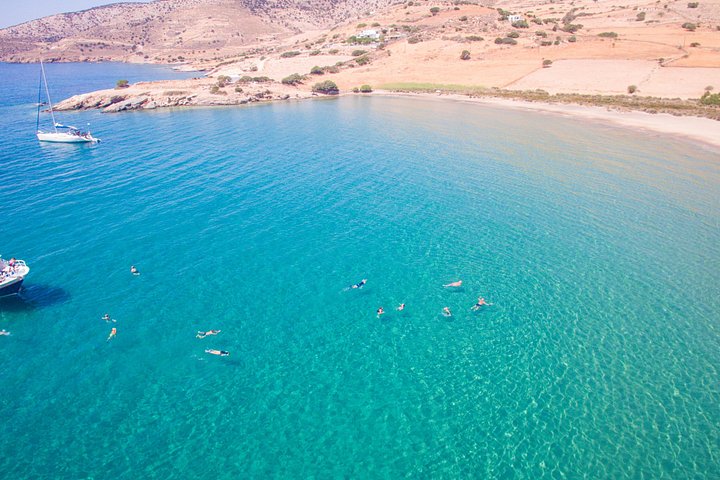
Allow an hour at the temple and the museum, and then continue to the villages. A visit is worth planning at the start of the trip because it introduces the interior and helps you decide where to return, whether for a hike, a cooking class or a quiet afternoon in a village square. The sanctuary is a short drive from the beaches of the south-west, so it also fits neatly into a beach day.
The setting repays attention. The temple stands among fields that are still farmed, and the grain goddess seems an apt tenant. Walk around the building to see how the large marble slabs fit together and look at the foundations to appreciate the original footprint. The museum is small but useful, with sculpted fragments and architectural pieces that explain how the temple was built and later transformed into a church.
Photographers should aim for early morning or late afternoon, when the low sun brings out the texture of the stone. Combine the visit with the quiet villages nearby for a satisfying day.
Context helps when you arrive. Demeter was the goddess of grain, harvest and the cycle of the seasons, and her sanctuaries were often placed in or near fields. The Naxians linked her with the story of her daughter Persephone, and festivals celebrating the harvest were central to ancient life. When you stand in the reconstructed building, picture farmers bringing offerings of barley and olive oil, and you will see why the site feels so rooted in the land. Read the information boards, which explain the phases of the building, from temple to early church.
What to expect
The experience
A shared guided tour by minibus or coach combining the temple at Sangri with mountain villages such as Apeiranthos, Filoti and Halki.
Best time
Spring and autumn for mild weather and green countryside; mornings in summer.
How long
Four to six hours for the tour; about an hour at the temple itself.
Tips
Bring a hat, water and sturdy shoes, and confirm lunch arrangements and the route when you book.
Quick picks
- Best for
- History lovers and anyone who wants to see the island's interior without a car.
- Families
- Good for children who can handle a few hours in a vehicle and some walking.
- Couples
- A relaxed scenic drive with lunch in a village.
- Pair with
- A beach afternoon on the south-west coast or a cooking class.
- Time needed
- Half a day.
Good questions
What is the Temple of Demeter?+
A sixth-century BC temple of the grain goddess at Sangri, partly reconstructed in modern times, with a small museum on site.
Do I need a car to reach it?+
Not if you join a shared tour. Independent visitors will need a hire car or taxi from town.
Which villages does the tour visit?+
Titles of this kind mention Apeiranthos, Filoti and Chalki, but check the itinerary with the operator.
Is the site open all year?+
Greek archaeological sites keep seasonal hours and weekly closing days, so check locally before visiting independently.
Is it suitable for children?+
Yes for most children, as the walking is easy, though summer heat can be tiring.