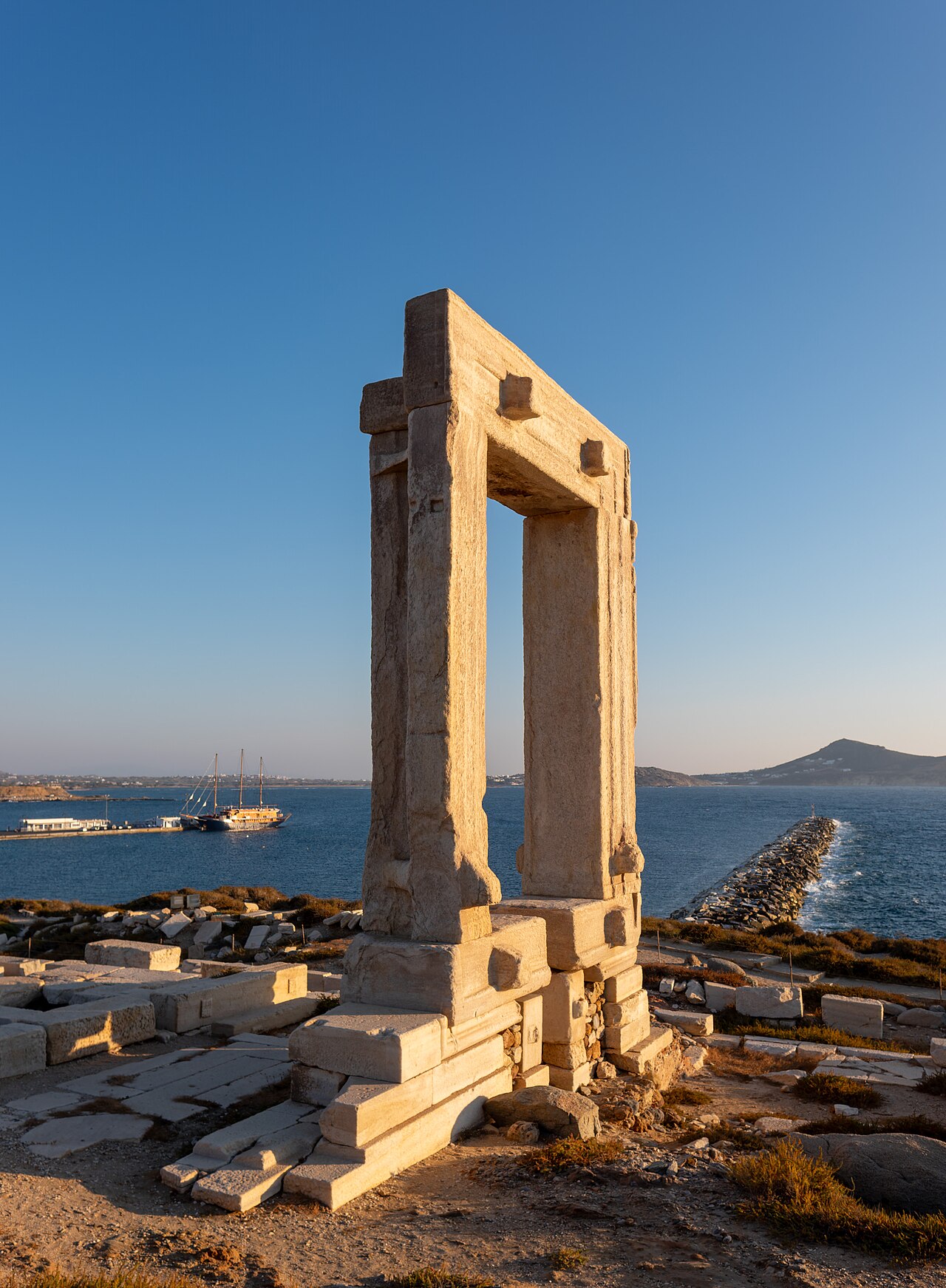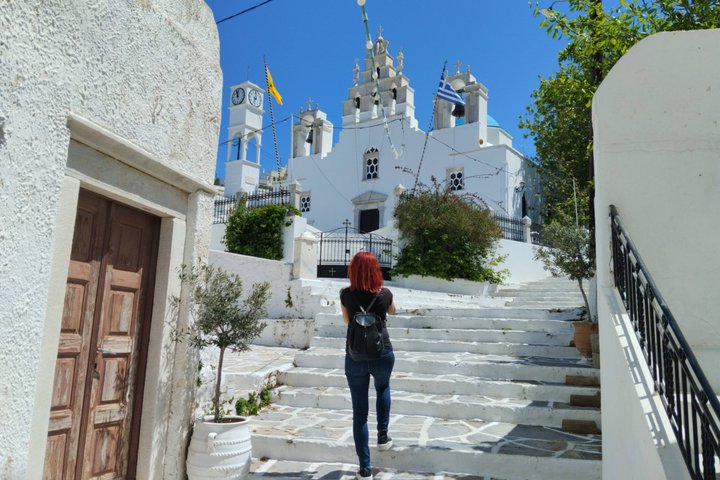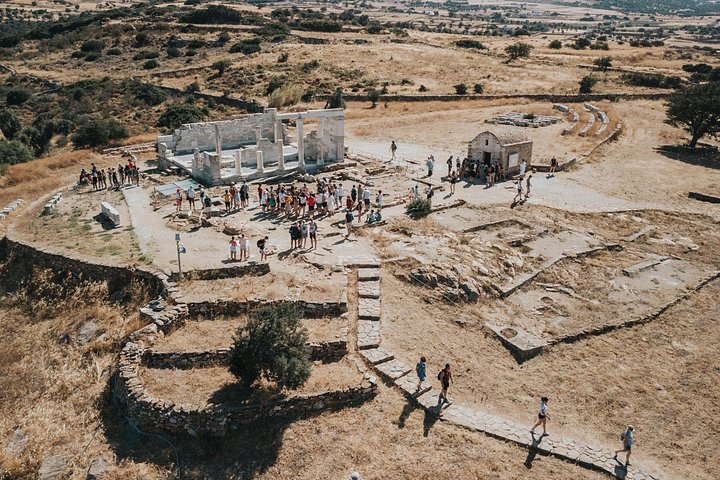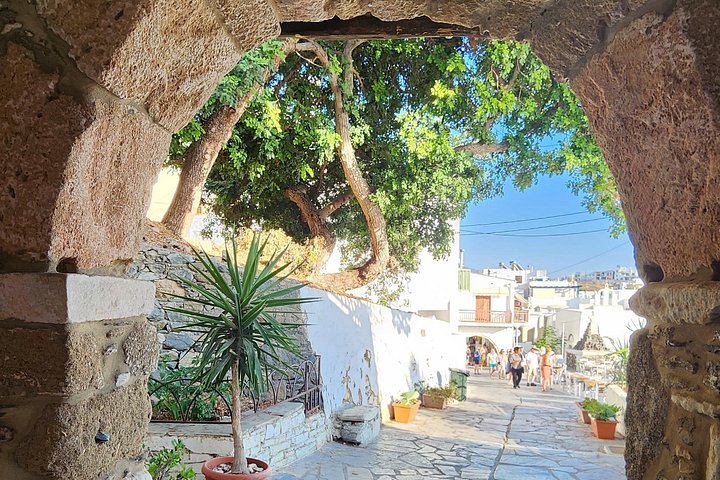
A good local guide can turn a pretty town into a place with a plot, and an evening walk in Naxos Town is the easiest way to learn it. Walks of this kind start in the old town in the late afternoon and finish near the waterfront as the light turns gold, covering the lanes of Bourgos, the Kastro quarter and views toward the Portara. The stories matter here because Naxos has a long and unusual history: myth says it was the island where Theseus left Ariadne and where the young Zeus was raised, and history adds the Cycladic marble figures, the tyrant Lygdamis, the Venetian dukes who ruled from 1207, and the Greek families who lived beside them for centuries. A guide connects those layers to the streets you are walking, pointing out the coats of arms over doorways, the arches that doubled as defences and the churches that tell you which community built them.
Check the exact route, duration and meeting point when you book, because they vary between operators and seasons. Most walks are shared tours for a small group and finish within a couple of hours, which leaves time for dinner without the stress of finding a table. Wear comfortable shoes for the uneven stone and bring a light layer, because the breeze picks up near the waterfront after sundown. In summer take water and a hat, since the walk begins while the day is still hot.
This is a good first-day activity. It gives you a mental map of the town, a short list of places to return to, and a feel for the island's character before you head to the beaches or villages. It also works well on the last evening, when you know enough to enjoy the references. Ask your guide for restaurant recommendations, since many know the family tavernas that do not advertise. If you are travelling with children, check the pace and the group size when booking, as evening walks involve steps and some late finishes.
Combine the walk with a sunset at the Portara or a waterfront dinner, and book ahead in July and August when the group sizes are small and demand is high. Because the walk follows public streets, the stops stay the same year-round, but the sunset times and the temperature shift, so plan your layers accordingly.
Sunset times shift through the year, from early evening in winter to well after eight o'clock in midsummer, so the walk is scheduled around the light rather than the clock. In June and July expect to finish after the sun has gone down, with lanterns lit in the lanes and the waterfront busy. In spring and autumn the sunset arrives earlier and the air is cooler, which many walkers prefer.
Bring a camera or a phone with a charged battery, because the combination of white walls, blue sky and the Portara silhouette makes for easy, striking pictures. If you have mobility concerns, ask the operator about the route, the number of steps and whether the pace can be adjusted.
If the weather turns, ask the operator about its policy. Light wind rarely stops a walk, but heavy rain or a storm may lead to a change of date, and a good company will tell you in advance. Keep a flexible evening in your plans, and leave the first night free of other commitments so you can attend on a day when conditions are best.
What to expect
The experience
A guided shared walk through the lanes of Chora, usually ending near the waterfront at golden hour; confirm the route and duration when you book.
Best time
Late afternoon into evening, ideally on your first or last day.
How long
About two hours, depending on the operator.
Tips
Wear comfortable shoes, carry water in summer and bring a light layer for the breeze after sunset.
Quick picks
- Best for
- Visitors who want the history and myths explained in the best light.
- Families
- Works for older children who enjoy stories and walking; check the pace and finish time.
- Couples
- A relaxed evening activity followed by dinner by the water.
- Pair with
- The Portara, the Kastro and a waterfront dinner.
- Time needed
- Two hours plus dinner.
Good questions
Where does the walk go?+
Routes vary, but they usually cover the old town lanes, the Kastro and the waterfront near the Portara. Check the meeting point when you book.
How long is the walk?+
Around two hours, though exact timings depend on the operator and the season.
Is it suitable for children?+
Older children who like stories and can walk on uneven stone usually enjoy it; younger ones may tire on the steps.
Do I need to book ahead?+
In July and August it is wise to reserve, as group sizes are small and sunset slots are popular.
What should I wear?+
Comfortable shoes with grip, sun protection in summer and a light layer for the evening breeze.