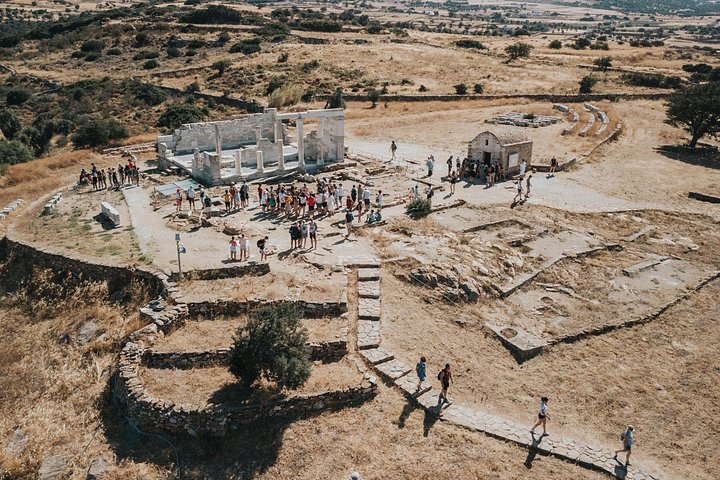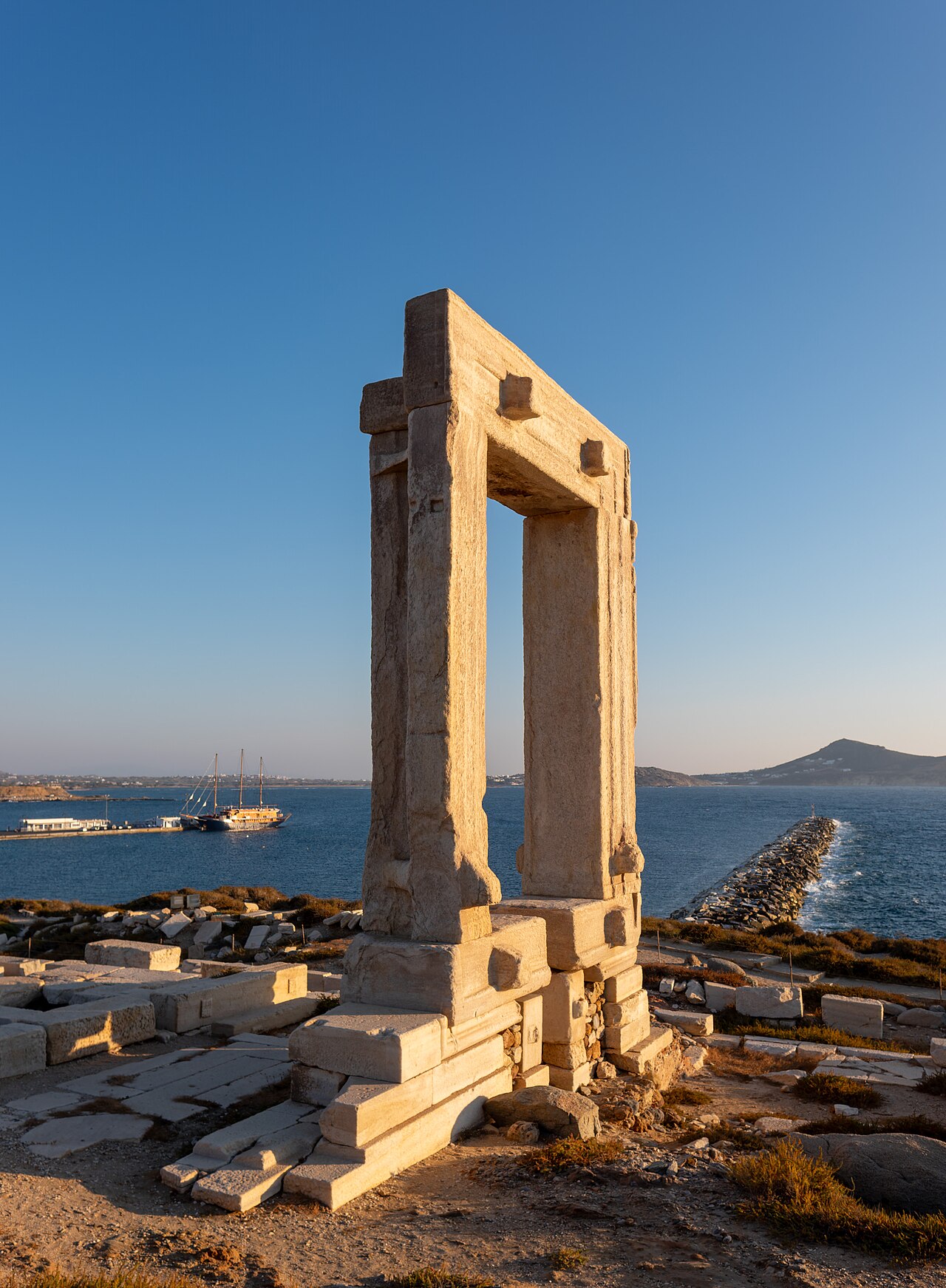
The Portara is the first thing most visitors see from the ferry deck and the last thing they photograph before leaving. It is a monumental marble doorway, the surviving entrance of a temple to Apollo begun in the sixth century BC on the little islet of Palatia, which is joined to the town waterfront by a short stone causeway. Local tradition attributes the project to the tyrant Lygdamis, who ruled Naxos in that period and dreamed of a temple that would rival the great sanctuaries of the Greek world. The footprint that survives suggests a building roughly fifty-nine metres long and twenty-eight wide, a very large undertaking for an island of that time, and the doorway alone is made of enormous marble blocks said to weigh around eighty tonnes. The temple was never finished, and over the centuries its stones were carried off for other buildings, including parts of the Venetian castle, which is why only the gate and traces of the foundations remain. What looks like an accident of history turns out to be one of the best-framed views in the Aegean: the doorway opens onto the sea, the sky and, in the right season, the sun going down.
The walk from the waterfront takes about ten minutes along the causeway, and the site is open ground without a gate, so there is no ticket queue and no entry fee to plan around. Wear shoes with grip, because the rock and marble are smooth and the path is exposed. Sunset is the famous moment, and on summer evenings the whole town seems to drift out here with a drink in hand to watch the light change, so go at least forty minutes before sunset if you want a clear space under the doorway for photographs.
For a quieter visit, arrive in the early morning, when the stone is cool, the light is soft and you will share the islet with a few joggers and photographers.
The meltemi wind can blow hard from July to September and makes the end of the causeway feel very exposed. On those days hold on to hats and bags, and keep children away from the unfenced edges. There is little shade on the islet, so bring water in summer.
If you want more than a view, the walk pairs naturally with the old town. Read a little about Lygdamis and the legend of Theseus and Ariadne before you go, because the guides and the story behind the stones are what turn a photo stop into a place with a sense of history.
Many visitors combine the Portara with a guided sunset walk or a dinner on the waterfront, and a few go back for a second look on the last night. The surrounding waterfront has cafes, bars and restaurants, so you can eat nearby without a taxi. Check with the municipality if you need current access information, as paths can be closed briefly after storms.
A few facts make the stones more interesting. The marble was quarried on Naxos itself, which was famous across the ancient world for its stone, and the doorway was built to frame the entrance to the cella, the inner chamber that would have held the cult statue. Because the temple faces the town and the sea, the alignment works as stage design as much as architecture. Later centuries added a chapel on the islet, and the stones the builders took away can still be spotted in nearby walls.
What to expect
The experience
A self-guided walk along a short stone causeway to the islet of Palatia and the standing marble doorway, with open sea views on all sides; no gate and no facilities on the islet.
Best time
Sunset for the famous view, or early morning for calm light and fewer people. Midday in summer is hot and shadeless.
How long
One to two hours including the walk and a wait for the light.
Tips
Bring water and a layer for windy evenings, wear shoes with grip, and arrive well before sunset to claim a spot.
Quick picks
- Best for
- First-time visitors and anyone who wants the single image that sums up Naxos.
- Families
- Easy for children who can walk the causeway, but keep them back from the exposed rocks on windy evenings.
- Couples
- A classic sunset stop, followed by dinner on the waterfront.
- Pair with
- A sunset walking tour, Chora's Venetian quarter or a waterfront dinner.
- Time needed
- One to two hours.
Good questions
Is the Portara free to visit?+
Yes. It is an open site on a public causeway with no gate, though you should check locally for any change in access.
How long does it take to walk to the Portara?+
About ten minutes from the waterfront along the causeway, with a few minutes more to climb to the doorway itself.
When is the best time to see the Portara?+
Sunset is the famous moment, but early morning is calmer and gives soft light for photographs.
Is the Portara the whole temple?+
No. It is the surviving marble doorway of a temple to Apollo that was never completed, plus traces of its foundations.
Is it windy on the islet?+
Often, especially in the meltemi season from July to September. Hold on to hats and bags and wear shoes with good grip.