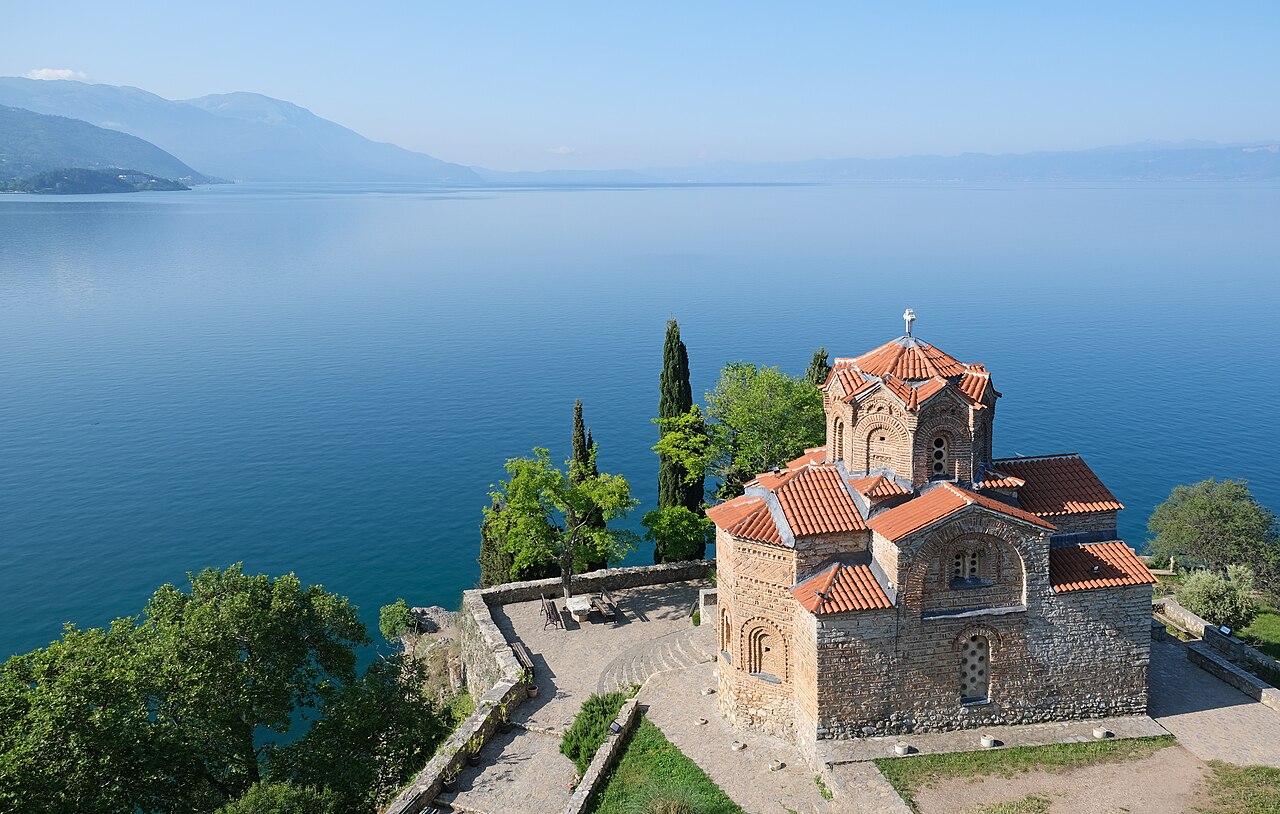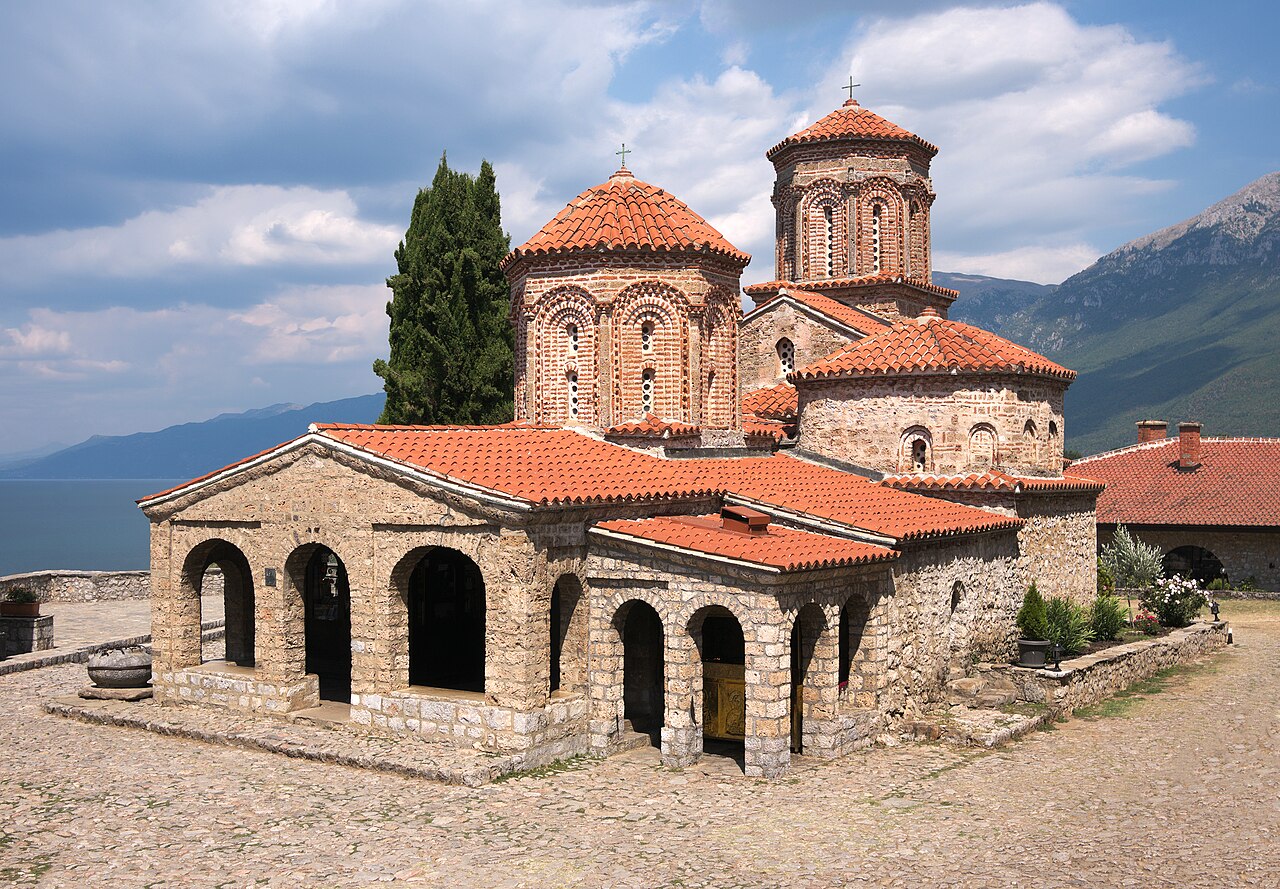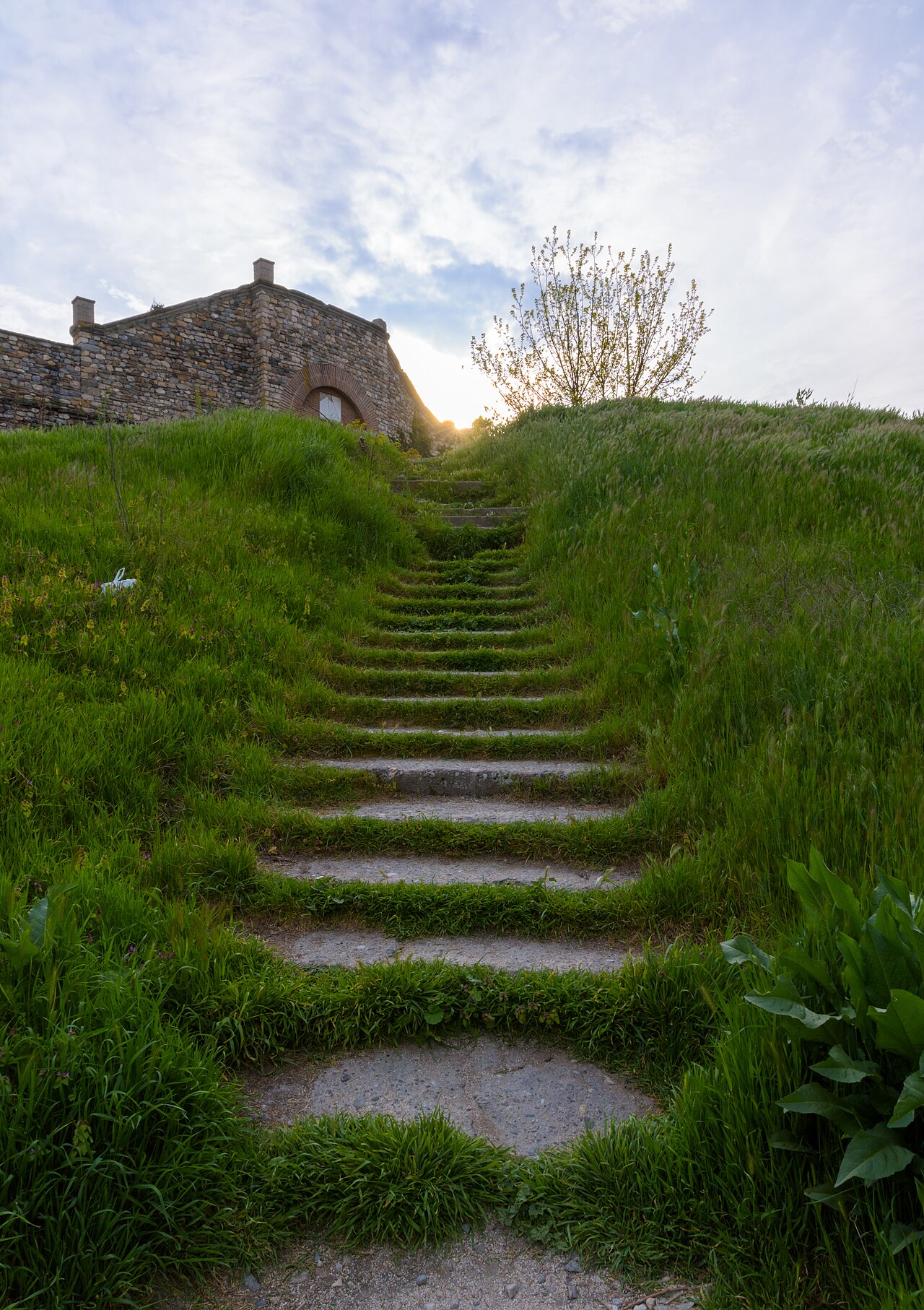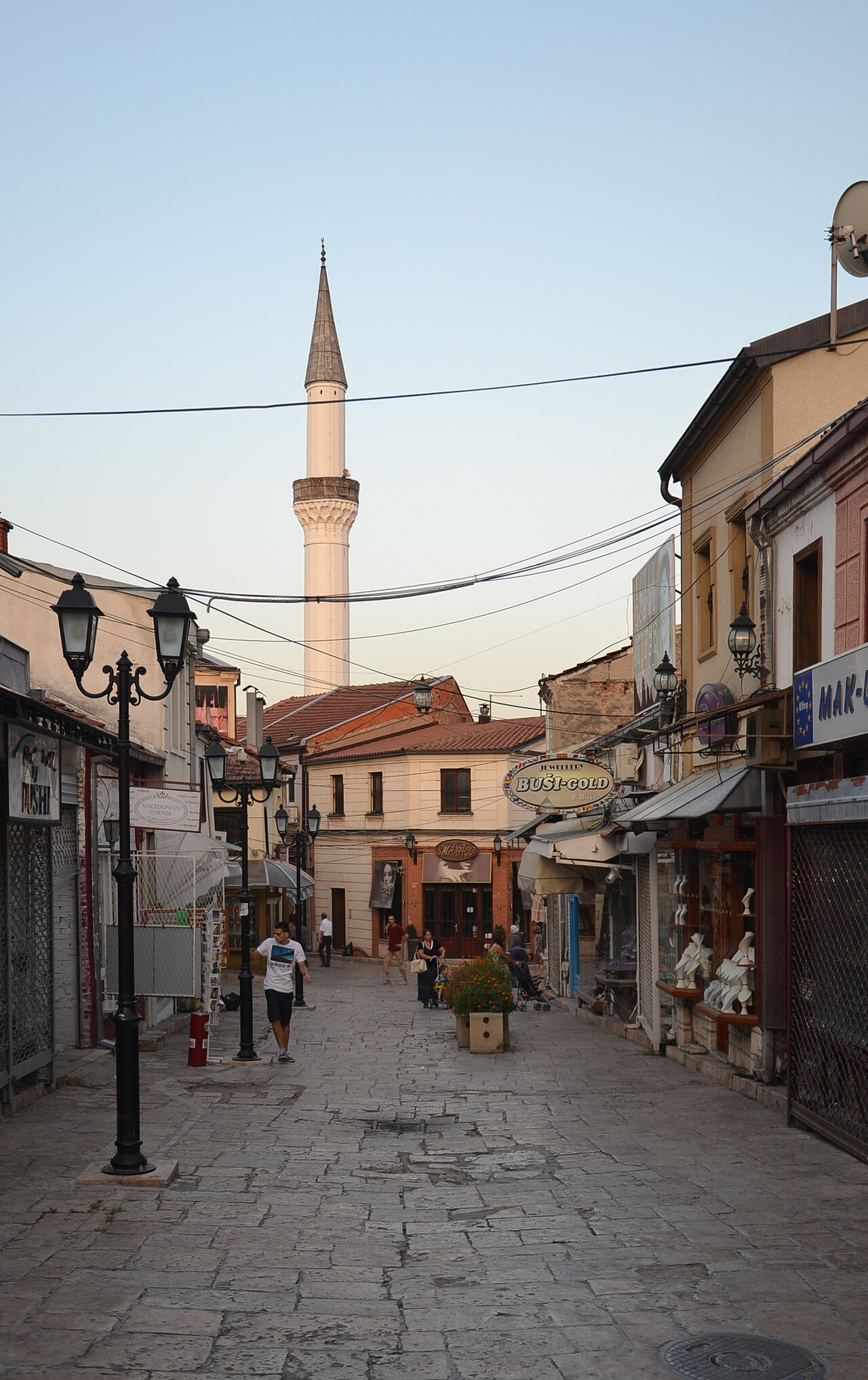
Ohrid's old town climbs a hillside above Lake Ohrid, and the whole district is part of a UNESCO World Heritage property inscribed for its natural values in 1979 and its cultural values in 1980, with an extension in 2019 to cover the Albanian side of the lake. UNESCO calls Ohrid one of Europe's oldest human settlements, with a well-preserved urban ensemble whose late-Ottoman houses date from the 18th and 19th centuries, over layers of Roman and Byzantine history. VISIT Ohrid describes the old town as the oldest and most complete architectural ensemble in south-eastern Europe, and says the town once had 365 churches, of which about 70 survive. The suggested route is the classic one. Start at the Upper Gate and climb to the citadel of Tsar Samoil on the hilltop, walk through pines to the church and archaeological park at Plaoshnik, wind down through narrow streets to St. John at Kaneo, and return to town along the suspended walkway over the lake. Add St. Sophia Cathedral, famous for its 11th-century frescoes, and the church of the Holy Mother of God Perivleptos, which sits up a steep set of streets. The monuments hold more than 800 Byzantine-style icons and over 2,500 square metres of frescoes, and the district is compact enough to cover on foot in a day.
Why this is the centrepiece: Ohrid is small, but it concentrates a remarkable amount of history in a walkable area, and the lake gives every viewpoint a backdrop. The fortress walls offer the widest panorama over the roofs, the lake and the mountains on the Albanian side, while the lakeside walkway gives a gentler, level way back to town. Seven early Christian basilicas have been excavated in the old town, and the Early Christian church at Lin dates from the mid-6th century, so the history goes much deeper than the Ottoman streets suggest.
Working the visit: take the route in one direction, with the climb first while you are fresh. Allow half a day for the fortress, Plaoshnik and Kaneo, then spend the rest on St. Sophia and the old streets and cafes around the main pedestrian street. Individual churches and the fortress may charge small entry fees and keep their own opening hours, which are shorter in winter, so check locally and bring a little cash. Dress modestly for churches. If you are staying in town, early morning is the quietest time on the hill, and late afternoon gives warm light over the lake.
Good to know: there are steps, steep cobbled lanes and uneven paths, so wear grip shoes, and avoid the hill in heavy rain or ice. In November the town is calm, many seasonal bars and boat operators are closed or reduced, and the lake can be misty, which gives a different, moodier atmosphere. Combine the old town with a boat trip when sailings are running, with Kaneo for the iconic chapel and with Sveti Naum for a half-day outing along the shore.
What to expect
The experience
A self-guided walk from the Upper Gate up to Samuel's Fortress, through Plaoshnik and Kaneo and back along the lakeside walkway, with stops at St. Sophia and Perivleptos.
Best time
Early morning for quiet streets, or late afternoon for warm light over the lake; avoid wet, icy days on the hill.
How long
Four to six hours for the full route with church stops; half a day for the fortress, Plaoshnik and Kaneo alone.
Tips
Climb first and descend by the lake, carry a little cash for small entry fees, check opening hours locally in winter and dress modestly for churches.
Quick picks
- Best for
- Every first-timer: this is the postcard, the history and the main walk of the lake.
- Families
- Compact and scenic, but steep steps and cobbles are tiring for small children, so pace the hill and use the flat lakeside path.
- Couples
- Walk to Kaneo for sunset, then dinner in the old town.
- Pair with
- St. John at Kaneo, a lake boat trip when sailings run, and a day along the shore to Sveti Naum.
- Time needed
- Half a day at minimum; a full day with the churches and a long lunch.
Good questions
Is Ohrid a UNESCO site?+
Yes. UNESCO inscribed the Ohrid region for its natural values in 1979 and its cultural values in 1980, and extended the property in 2019 to include the rest of the lake in Albania.
How many churches does Ohrid have?+
The town was known as the town of 365 churches, and VISIT Ohrid says about 70 of the original churches survive.
What is the best walking route?+
VISIT Ohrid suggests starting at the Upper Gate, climbing to Samuel's Fortress, walking through the pines to Plaoshnik, continuing to Kaneo and returning along the lakeside walkway.
Do I need to pay to visit?+
The streets and lakeside are free, but the fortress and some churches may charge small entry fees and have seasonal hours. Check locally and carry some cash.
Is it good in winter?+
It is quiet and atmospheric, though shorter opening hours and reduced boat services apply. Dress warmly and wear grippy shoes on the steep lanes.