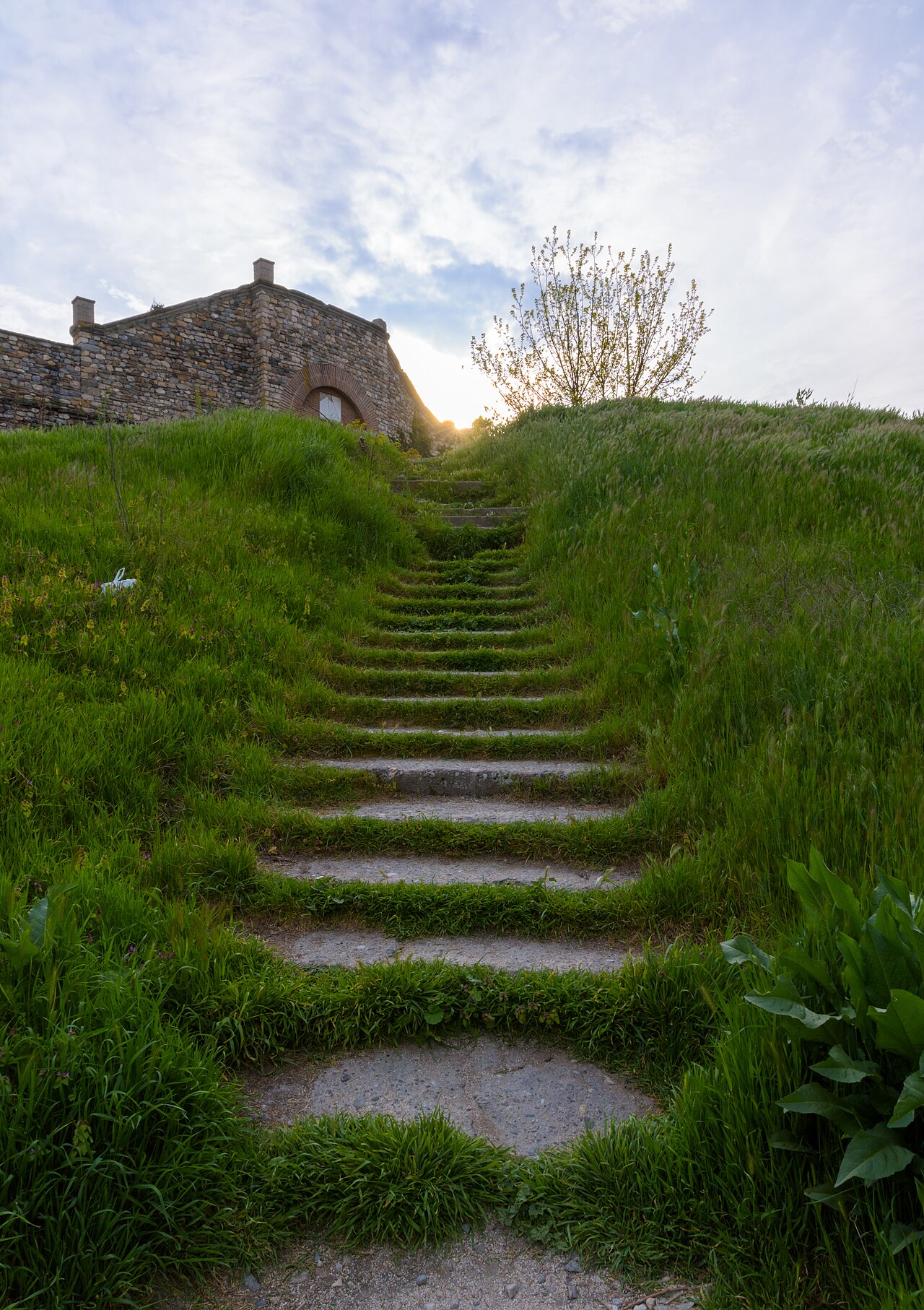
The Skopje Fortress, known simply as Kale, the Turkish word for fortress, crowns a hill in the heart of the old town above the Vardar River. It appears on Skopje's coat of arms and, with the Stone Bridge, it is one of the city's two defining symbols. The hill has been inhabited since the Neolithic and Bronze Ages, and VISIT Skopje says the first fortress was built in the 6th century AD, using yellow limestone and travertine taken from the Roman city of Skupi, which was destroyed by an earthquake in 518. The fortress was important under the medieval Macedonian state and, in 1346, Stefan Dušan was crowned emperor here and made Skopje the capital of his empire. Under the Ottomans it was neglected, and it later housed warehouses, arsenals, a military hospital and a prison until the army left in 1951. The 1963 earthquake badly damaged the walls and towers, and a long programme of excavation and restoration followed, with the upgrade of the southwestern wall completed in September 2010. Today you can walk along the ramparts and between the towers, look down on the bazaar and the river, and see the new centre with the Millennium Cross on Vodno behind. It is a place for views and atmosphere more than museum exhibits.
Understanding the layout helps. The fortress has a roughly triangular footprint, flattened to the north and steep on the south and west sides, and it sits partly above the western part of the bazaar. The interior is open ground rather than a built-up castle, so you are mostly walking the walls, looking at the towers and enjoying the view. Excavations from the 1950s and 1960s found evidence of a late Neolithic settlement, and archaeologists returned in 2007 to explore and restore the southwestern fortifications, so you may see signs of ongoing work.
Working the visit: the easiest approach is from the Old Bazaar, where lanes climb toward the walls. Allow an hour for a slow circuit and photographs, then walk back down for coffee or lunch. The light is best in the late afternoon, when the stone glows and the city opens out below; early morning is quiet and cool. The surface is uneven in places and there are few guard rails along some stretches, so supervise children, and wear shoes with grip. The fortress is also used for events at times, so opening arrangements can vary.
Good to know: it is generally treated as a free public walk, but we could not confirm current hours or any winter closures from official sources, so check locally before a special trip. In wet or icy weather the stones can be slippery. The view is the main reward, and the best way to use it is to trace the bazaar lanes below, the Stone Bridge over the river and the high-rise centre, then decide what to see next. Pair it with the Old Bazaar for a complete old-town afternoon, and with the Millennium Cross for the other great view of the city.
What to expect
The experience
A self-guided walk along the restored walls and towers of the hilltop fortress, with views over the Old Bazaar, the Vardar and the new centre.
Best time
Late afternoon for warm light over the city, or early morning for quiet and cool air.
How long
About an hour for a slow circuit; add time if you climb up from the bazaar on foot and stop for photos.
Tips
Wear shoes with grip, supervise children near unfenced edges, and check locally for hours or events before a special trip in winter.
Quick picks
- Best for
- History fans and photographers who want the classic overview of Skopje and its old town.
- Families
- Open space and a short climb suit most children, but there are drops and uneven stones, so keep them close.
- Couples
- A golden-hour walk on the ramparts followed by dinner in the bazaar below is an easy, romantic plan.
- Pair with
- The Old Bazaar at its foot, the Stone Bridge and Macedonia Square, and the Millennium Cross for the second great view.
- Time needed
- One to one and a half hours, or a half day with the bazaar.
Good questions
What is the Skopje Fortress?+
Kale is the hilltop fortress above the Old Bazaar, on the city coat of arms. VISIT Skopje dates the first fortress to the 6th century AD, built partly from stone taken from the Roman city of Skupi.
Is the fortress free to enter?+
It is generally treated as a free public walk, but we could not confirm current hours from official sources. Check locally before making a special trip, particularly in winter.
How do I get there?+
The easiest route is on foot from the Old Bazaar, where lanes climb to the walls. From Macedonia Square, cross the Stone Bridge and walk through the bazaar to the foot of the hill.
What happened to it in the 1963 earthquake?+
The earthquake badly damaged the walls, towers and buildings. A long restoration followed, and the southwestern wall upgrade was completed in September 2010.
How long do I need?+
An hour is enough for the walls, the views and photographs. Combine it with the bazaar for a relaxed half day.