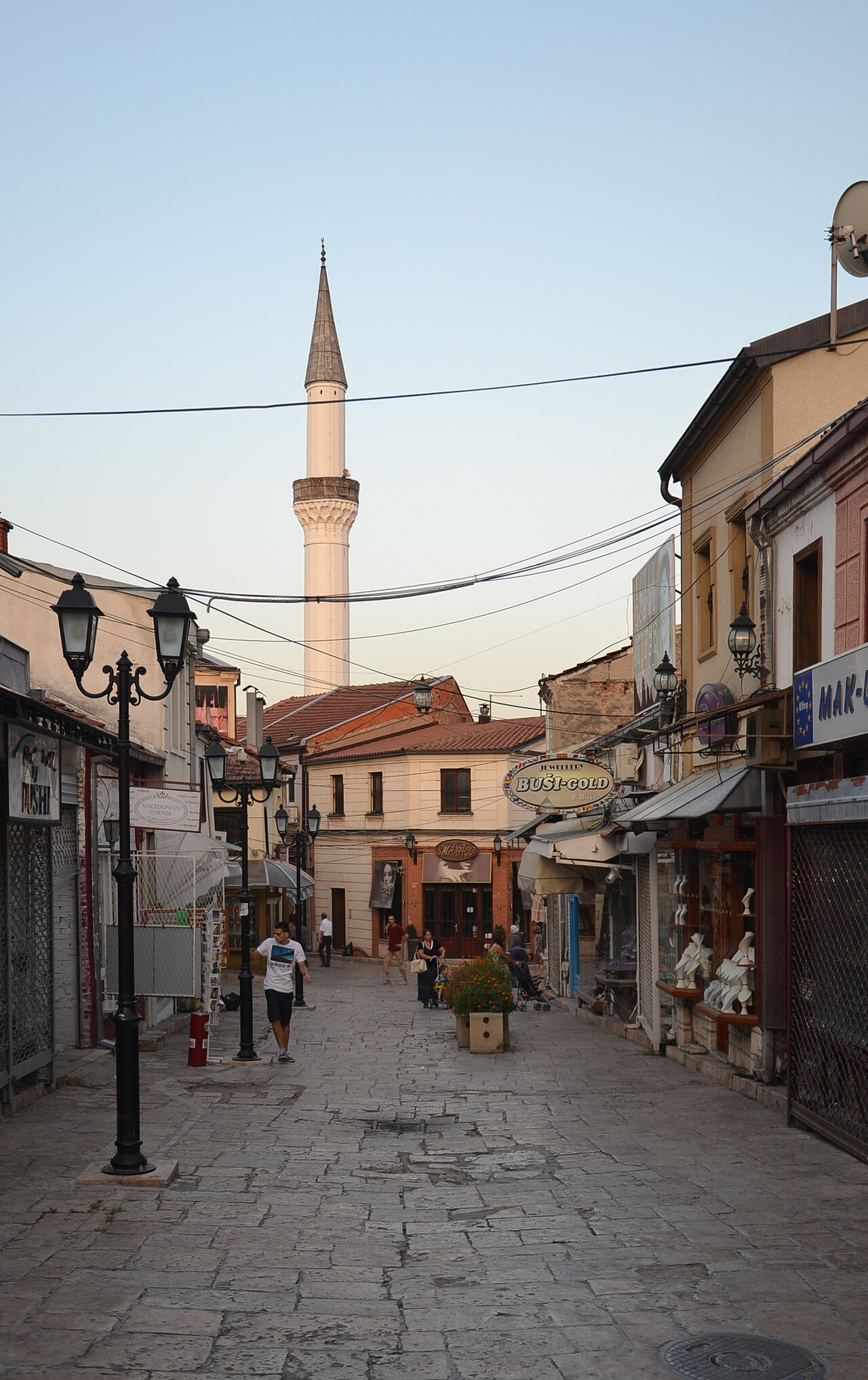
Skopje's Old Bazaar, called Čaršija locally, spreads along the eastern bank of the Vardar River between the Stone Bridge and Bit-Pazar, and from the Skopje Fortress down to the Serava river. VISIT Skopje describes it as the largest bazaar in the Balkans outside Istanbul, and it is easily the part of the capital that feels oldest. Records of a merchant quarter here go back to the 12th century, and under Ottoman rule it became the economic heart of the city. Earthquakes in 1555 and 1963 and damage in the world wars forced repeated rebuilding, so the architecture is mainly Ottoman, with Byzantine remains and some modern reconstruction. The quarter once had about 30 mosques as well as caravanserais and hans, and many of the old travellers' inns and hamams now work as museums, galleries and venues for exhibitions and concerts. Walk it without a plan: shaded lanes of coppersmiths, goldsmiths, sweet shops and tea houses, mosque courtyards with fountains, a clock tower, two churches, and the small Museum of the Skopje Old Bazaar in Suli Han, which explains bazaar life and the old crafts. The mood changes by the hour, quiet and photogenic in the morning, loud and smoky with grills by evening. It costs nothing to explore, and it is the best place in Skopje to eat a plate of kebapi, drink Turkish coffee and watch the city go about its day.
The bazaar makes sense once you know the geography. The Stone Bridge, the symbol of Skopje that links the new centre around Macedonia Square to the old town, drops you at the western edge, and the Fortress rises on the hill behind. Bit-Pazar, the working market at the far end, is where locals buy vegetables and household goods, and it is worth seeing as a contrast to the craft shops of the main lanes. In 2008 the Macedonian Parliament recognised the bazaar as cultural heritage of particular importance with permanent protection, which is why so much of it has been restored rather than replaced.
Working the visit: start at the Stone Bridge, walk in along the main lane, and let yourself turn into side streets and courtyards. Visit one han or museum, stop for coffee, and climb toward the Fortress for views back over the roofs before returning for dinner. Most grills and cafes are open daily, but shops and museums keep their own hours and some are quieter on Sundays and holidays, so treat the bazaar as a place to graze rather than a checklist. Prices on crafts and souvenirs are fair if you ask first; copper and filigree are the traditional buys. If you want context, a guided walk or a food tour is a good way to find the best grills and courtyards, and several run daily from the city centre.
Good to know: the cobbles are uneven and slippery in rain, the lanes are narrow and crowd on weekend evenings, and mosques ask for modest dress and removed shoes. In November, expect cool days and early dusk, which is a good time for tea houses and warm food. Pair the bazaar with Skopje Fortress, which sits right above it, and with a street food crawl if you want to eat well without choosing blindly.
What to expect
The experience
A self-guided wander through the lanes between the Stone Bridge and Bit-Pazar, with stops at hans, mosques, craft shops and grills.
Best time
Morning for quiet lanes and photos, late afternoon into evening for grills, tea houses and the busiest atmosphere.
How long
Two to three hours at an easy pace, longer if you add a museum, a meal and the climb to the Fortress.
Tips
Start at the Stone Bridge, eat at a busy grill, carry small cash for coffee and crafts, and dress modestly if you step into a mosque courtyard.
Quick picks
- Best for
- Every first-timer: it is the oldest and most atmospheric part of the capital and costs nothing to enjoy.
- Families
- Good for a relaxed walk and an easy lunch of grilled meat and bread, but crowded evenings and uneven cobbles call for a firm grip on little hands.
- Couples
- Turkish coffee in a courtyard, a wander at golden hour and dinner at a grill make an easy first evening.
- Pair with
- Skopje Fortress above the bazaar, the Stone Bridge and Macedonia Square, and the Skopje street food tour.
- Time needed
- Allow a good half day with lunch; a quick loop of the main lane takes about an hour.
Good questions
Is the Skopje Old Bazaar free to visit?+
Yes, the lanes and courtyards are public and free to walk. Museums, galleries and individual sights set their own entry rules, so check on the day.
How old is the Old Bazaar?+
VISIT Skopje says records of a merchant quarter here date to the 12th century, and it grew into the main Ottoman trading district. Earthquakes in 1555 and 1963 led to several reconstructions.
Where is the best place to start?+
Cross the Stone Bridge from Macedonia Square and walk straight into the main lane. The Fortress rises behind you and Bit-Pazar market lies at the far end.
Is it safe and easy to walk?+
It is a busy, lively quarter and generally easy to walk, but keep an eye on pockets in crowds and watch your footing on polished cobbles in rain.
When should I go?+
Morning is calm and good for photographs, while late afternoon and evening bring the smell of grills and the liveliest atmosphere. In winter, dress warmly as dusk comes early.