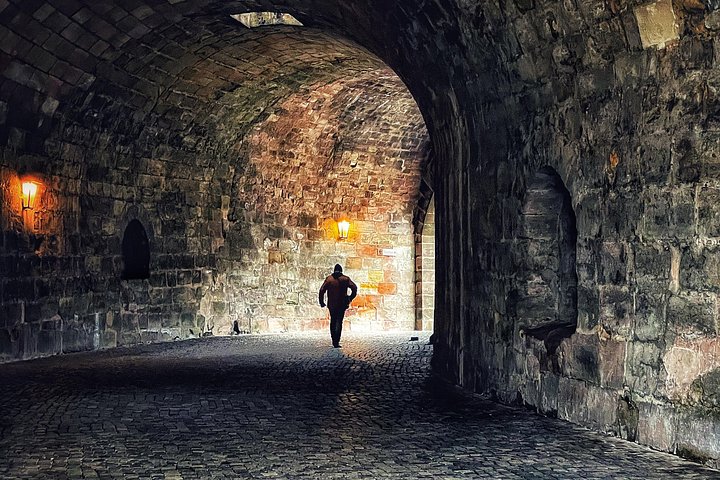
Beneath the streets of the old town lies a labyrinth of passages and chambers cut by hand into the soft red sandstone. They were dug from the fourteenth century onward by brewers who needed cool, stable cellars to store beer through the warm months. At one time there were scores of cellars, spread over several levels, and they became part of the city's culture of brewing and trade. The Historic Rock-Cut Cellars, known in German as the Felsengänge, now let visitors enter a section on a guided tour. The temperature is steady and cool all year, so bring a jacket in summer, and the low lighting gives the place a quiet drama. It is a very different Nuremberg from the one above ground, and it makes an excellent rainy-day or evening activity.
The tour explains the cellars' history, their use for beer and food storage, and the difficult conditions in which brewers worked. In the twentieth century the tunnels took on a darker role. During the Second World War, thousands of residents sheltered here during bombing raids, and one section has been preserved as an air-raid shelter with period fittings.
This makes it a useful companion to the above-ground story of the 1945 destruction. Guides use a mix of history and anecdote, and the pace is relaxed. The tour usually lasts around an hour, and some sections have low ceilings and uneven floors, so wear sturdy shoes.
Tours depart from an entrance in the old town and run at set times, with fewer English departures than German ones. That means it is smart to check the schedule and book ahead, especially in winter or on weekends. Group sizes are limited by the confined space, so spots can sell out. Because the cellars are underground, it is not suitable for people with severe claustrophobia or mobility difficulties, and strollers cannot be taken in. Children are welcome if they are comfortable in dim spaces.
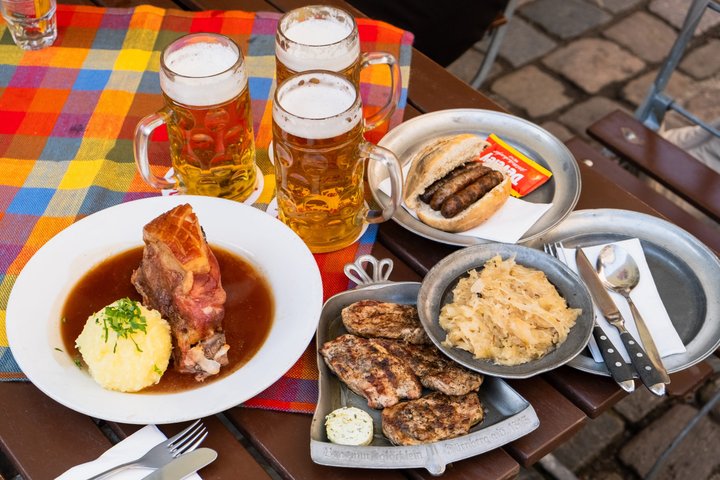
Combine the tour with a beer in a nearby Franconian tavern for the full effect. The region is known for its smoky and amber beers, and you can taste the product that the cellars were built to protect. The cellars also link with the wider Franconian beer story if you are planning the Fünf Seidla Steig beer hike or a visit to Bamberg. Opening times can vary across the year, with additional tours in the Christmas market season, so confirm times in advance before building your day around it.
To get the most from the visit, treat it as part of a wider exploration of the old town's below-ground life. Nuremberg's cellars were not only for beer: they stored food, wine and goods for merchants, and some were used as hiding places in times of danger. Today the rock is still sandstone, soft enough to carve but strong enough to hold, and you can see tool marks on the walls and the shape of old barrel niches.
Guides are happy to answer questions, and the experience is memorable for those who enjoy the sensation of stepping out of the busy city into a quiet, cold, dark world with a long story.
What to expect
The experience
A guided walk of around an hour through sandstone tunnels beneath the old town, with stories of beer storage and wartime shelter.
Best time
Any season; the cellars are cool all year. English departures are limited, so book a slot ahead.
How long
About one hour underground.
Tips
Bring a jacket, wear sturdy shoes, check the English tour times and be aware of low ceilings.
Quick picks
- Best for
- History and beer fans who like hidden places.
- Families
- Fine for older children comfortable in dim spaces; not suitable for strollers.
- Couples
- An atmospheric, slightly mysterious date activity, especially on a cold day.
- Pair with
- A Franconian beer in a nearby tavern, or the old town walking tour.
- Time needed
- One hour.
Good questions
Why were the cellars built?+
Brewers carved them from the fourteenth century onward to keep beer cool and stable through the warm months.
Were they used as air-raid shelters?+
Yes. Thousands of residents sheltered here during bombing raids, and part of the tour shows the preserved shelter.
Are tours available in English?+
Yes, but fewer than in German, so check the schedule and book ahead.
Is the tour suitable for people with claustrophobia or limited mobility?+
It involves low ceilings, steps and uneven floors, so it may not suit those who find confined spaces difficult.
What should I wear?+
A jacket, because the temperature is cool all year, and sturdy shoes for uneven floors.