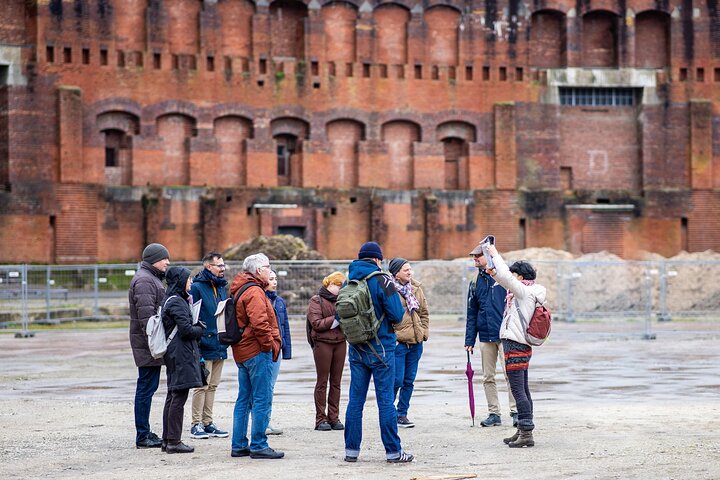
In the south-east of Nuremberg, beside the Dutzendteich lakes, lies the largest surviving piece of Nazi architecture in Germany. Between 1933 and 1938 the party held its annual rallies here, and the planned complex was meant to be bigger still. Visitors can walk the Zeppelin Field grandstand, where Hitler stood before crowds, follow the line of the unfinished Great Road, and stand inside the horseshoe shell of the Congress Hall, which was intended to seat fifty thousand people but never got a roof. The Documentation Center, located in the north wing of the Congress Hall, explains how the rallies were staged, why they worked on those who attended, and how the regime's terror ran alongside the spectacle. The site is not glorified; it is presented as a place to understand how propaganda and mass mobilisation operated. A visit is sobering and often uncomfortable, but it is also one of the most important historical experiences in Germany.
The scale is what stays with you. The Congress Hall was designed in the late 1930s as a monumental granite structure modelled on the Colosseum, and its unfinished brick core still looms over the lake. The Zeppelin Field grandstand is long and low, with a central tribune and colonnades that were partly dismantled after the war; the swastika on top was blown up by the US Army in April 1945, a moment captured in famous footage.
Nearby is the Great Road, a paved processional axis two kilometres long that was meant to connect to the Märzfeld parade ground. Today the area is also used for ordinary life: cars race on the Norisring circuit nearby, the Volksfest funfair fills part of the ground, and the Nuremberg Symphony plays in a hall built inside the Congress Hall, which shows how the city continues to live alongside this difficult legacy.
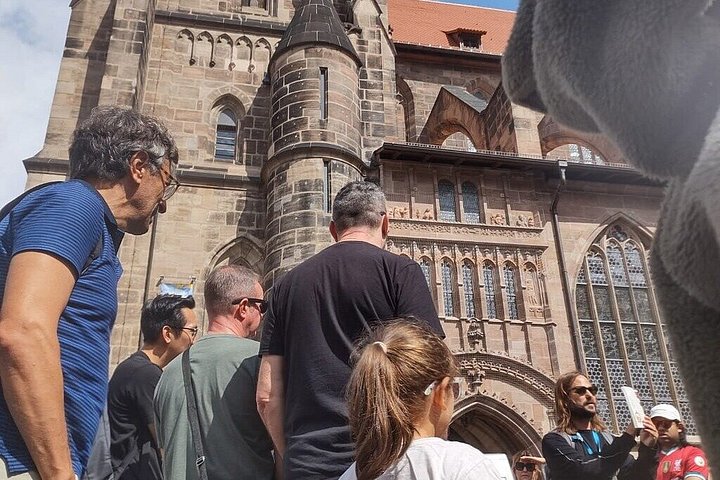
The Documentation Center runs a permanent exhibition covering the rise of the party, the rallies, the Nuremberg Laws and the war, with a long corridor into the building's inner courtyard. It uses film, photographs, documents and personal testimony, and an English audio guide is normally included with entry. Many visitors spend ninety minutes inside, then walk the grounds for another hour. Guided English-language tours add context on the architecture and the way the site was designed to dominate those standing in it.
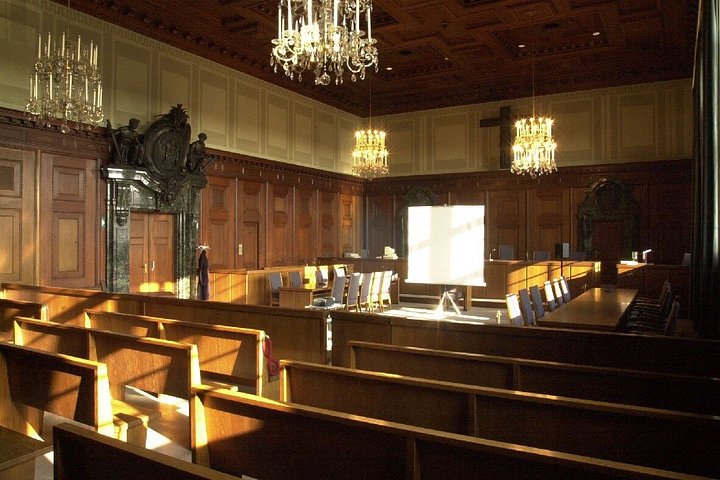
Visit with an open mind and plenty of time. Weather can be exposed and cold, so dress for wind, and wear sturdy shoes because paths are long. The site is a short tram ride from the centre, so it pairs naturally with the Courtroom 600 and the Nuremberg Trials history for a full day of twentieth-century context. Seasonal opening hours apply to the grounds, and the Documentation Center is closed on a few public holidays, so check ahead.
A few practical points help the day go smoothly. There is a cafe and bookshop at the Documentation Center, but the surrounding area has limited food, so eat before you go or plan a picnic by the Dutzendteich lake. Children old enough for the content may find the audio guide hard going, so let them set the pace. If you only have time for one outing beyond the old town, many travellers choose this site because it explains the city's modern history more directly than any museum in the centre.
What to expect
The experience
A visit to the Zeppelin Field grandstand, the unfinished Congress Hall and the Documentation Center, with an English audio guide or a guided tour.
Best time
Spring to autumn for comfortable walking; a winter visit is bleak and windy but quiet. Late morning avoids school groups.
How long
Allow ninety minutes in the Documentation Center and another hour outdoors.
Tips
Take the tram from the centre, wear warm layers and sturdy shoes, and consider a guided tour for the architecture and propaganda context.
Quick picks
- Best for
- History travellers who want to understand how the Nazi spectacle worked.
- Families
- Best for teenagers and older; the content is serious and not suitable for young children.
- Couples
- Not a romantic stop, but a thoughtful half-day for couples interested in history.
- Pair with
- Courtroom 600 and the Nuremberg Trials, or a quiet walk around the Dutzendteich lakes.
- Time needed
- Half a day, including travel from the centre.
Good questions
How do I get to the Rally Grounds from the old town?+
Take the tram or an S-Bahn service to the Dutzendteich area; the journey takes around fifteen to twenty minutes. The Documentation Center is within walking distance of the stop.
Is the site suitable for children?+
The content is heavy and the exhibition is aimed at older teenagers and adults. Younger children usually find the outdoor space more engaging than the museum.
Is there an English audio guide?+
Yes, an English audio guide is included with Documentation Center entry. Guided English tours are also available through local operators.
Is it free to walk the grounds?+
The open grounds, including the Zeppelin Field, are accessible to walk without a ticket. The Documentation Center charges admission.
Can I see the interior of the Congress Hall?+
Only part of it. The Documentation Center occupies the north wing, and the rest of the unfinished structure is used for storage and the Nuremberg Symphony, so access is limited.