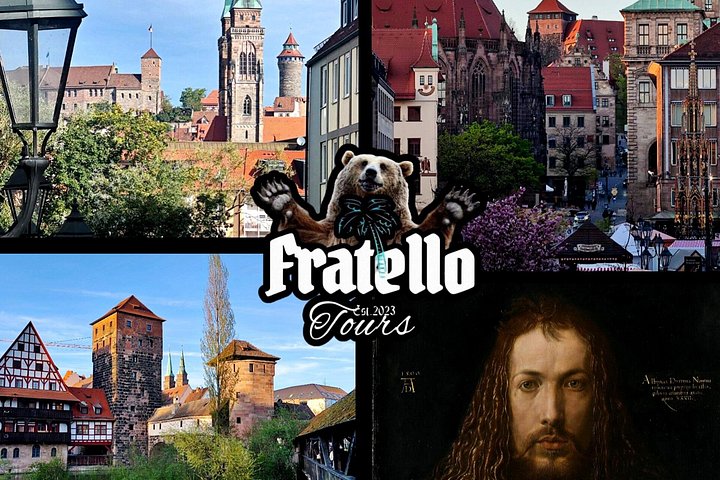
The Kaiserburg is Nuremberg's skyline and its symbol: a long sandstone fortress on a rocky ridge at the north edge of the old town, made up of the Imperial Castle proper, the Burgrave's Castle and the later city fortifications. For about five hundred years, from the eleventh century until the sixteenth, the Holy Roman emperors had no fixed capital and rode between their strongholds, and Nuremberg's castle was among the most important. Every newly crowned king was required to hold his first Imperial Diet in the city, which explains why the Imperial regalia, the crown jewels of the empire, were kept in the city for centuries. Today the complex is a museum of imperial and medieval life, and it is also the best viewpoint over the red roofs of the old town. A visit takes in the Palas hall with its richly furnished rooms, the Romanesque Double Chapel, the Sinwell Tower with its panorama, and the Deep Well, a very deep shaft that guides demonstrate with a lowered light.
Inside, the Palas and Imperial Apartments show how emperors lived and worked on the road, with tapestries, carved ceilings and the great hall where Diets met. The Double Chapel is the quiet masterpiece: two stacked chapels, the lower for the household and the upper for the emperor, connected by an opening so the ruler could watch the service from above. The museum rooms add armour, weapons and a history of the castle's building phases, and the castle gardens on the north side, a short walk from the entrance, are a pleasant place to sit with a view back across the city.
Climbing the Sinwell Tower costs a little effort and rewards you with the classic photograph of terracotta roofs, church spires and the plain beyond.
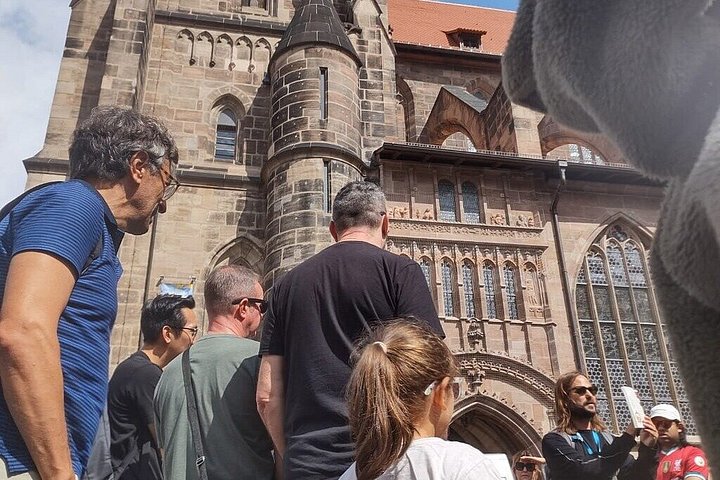
The war cost the castle dearly. The January 1945 raid wrecked much of it, and the interiors you see today are largely the result of careful postwar reconstruction, so treat the rooms as a restoration of the original rather than untouched medieval fabric. That does not reduce the impression, and the guides explain the process well. English-language tours run on a schedule, and combination tours that pair the castle with a walk down through the old town and a taste of gingerbread are a popular way to organise the morning.
Plan around the weather and the hill. The approach from the Hauptmarkt is a steady climb on cobbles, and the tower is open to the elements, so bring a layer outside summer. Opening hours are longer in the warm months and shorter in winter, and certain rooms can close for events or conservation work, so check with the operator before you set out.
Buy a combined ticket for the castle sights if you plan to see them all, and allow around two hours with the tower and a coffee at the castle gardens kiosk or the cafes below.
Families should know that the site is not stroller friendly: stairs, cobbles and narrow doorways are part of the experience, and a carrier works better than a pushchair. Visitors who want the full story often combine the castle with the Dürer House just below, using the castle for the empire and the house for the artist, which together explain why the city was both powerful and creative. Photographers should save energy for late afternoon, when the low sun turns the sandstone gold and the view from the tower toward the Church of Our Lady is at its best.
What to expect
The experience
A visit to the hilltop imperial complex: Palas and Imperial Apartments, the Double Chapel, the Deep Well, the museum and the Sinwell Tower, alone or on a guided tour.
Best time
Mornings for fewer tour groups; clear afternoons for the best light on the roofs. Hours are longer in summer and shorter in winter.
How long
Allow around two hours with the tower and gardens; a combined tour including the old town takes most of a morning.
Tips
Wear shoes for cobbles and a real hill. Book a guided tour if you want the stories behind the rooms, and keep your camera for the Sinwell Tower.
Quick picks
- Best for
- Anyone who wants to understand why Nuremberg mattered in the Holy Roman Empire.
- Families
- Children enjoy the tower climb and the well demonstration; the hill and stairs are tiring for toddlers.
- Couples
- The tower view and the castle garden make a romantic stop, especially in soft evening light.
- Pair with
- The Dürer House and the Hauptmarkt, both a short walk down the hill.
- Time needed
- Two hours for the castle alone, a half day with the old town.
Good questions
What is the best way to visit the Imperial Castle?+
A guided tour that pairs the castle with the old town gives the most context, while independent visitors can buy a castle ticket and follow signs. Either way, allow around two hours.
Is the castle original?+
Parts date from the eleventh century onward, but the January 1945 raid caused heavy damage and many rooms were reconstructed after the war. The Double Chapel and the Deep Well are among the elements guides highlight.
Is the Sinwell Tower climb worth it?+
Yes, the view over the old town roofs is the best in the city. The stairs are narrow and open to weather, so skip it if you have mobility issues.
Can I visit in winter?+
Yes. Hours are shorter and the interior can be cold, but the crowds are thinner and the Christmas market below adds atmosphere.
How steep is the walk up?+
From the Hauptmarkt it is a steady uphill climb of about ten to fifteen minutes on cobbles. A taxi or the little tourist train can take you part of the way.