The Olympic Peninsula looks small on a map and feels enormous on the road. No highway crosses the national park, so every major sight is reached by a spur off US 101, and the loop around the outside takes about five hours without stops. Three days is the minimum for a satisfying first visit: one for the north side, one for the west, and one for the coast and the way home. The plan below starts and ends in Port Angeles, but you can run it in either direction, and it works as a loop from Seattle with the ferries included.
Day one: Hurricane Ridge and the Port Angeles waterfront
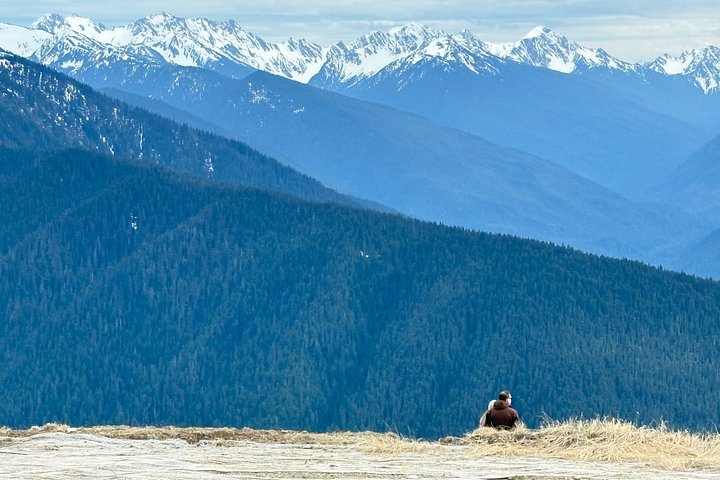
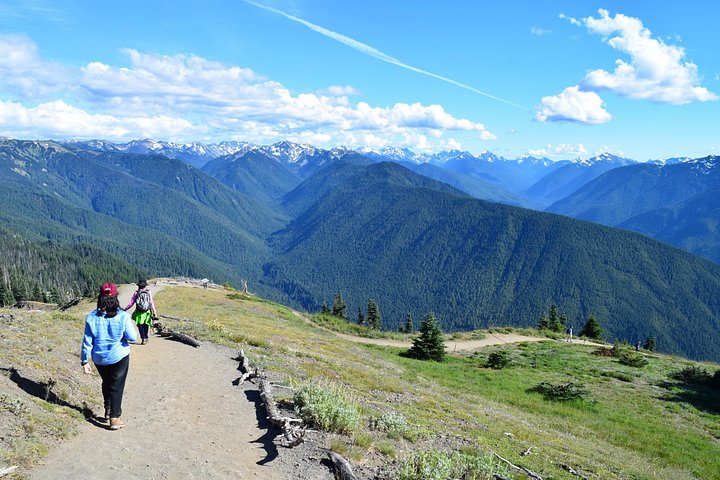
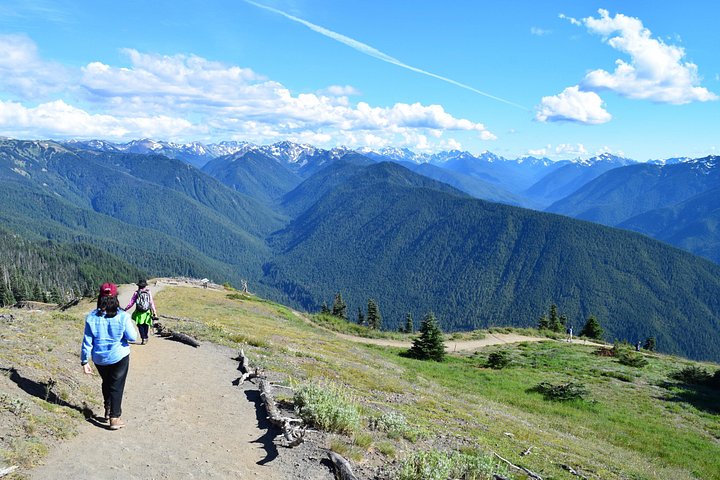
Start early with the 17-mile drive up to Hurricane Ridge, where the meadows and the view of the Olympic range are best in the morning. Check road conditions first, because the road can close for snow, fog or construction, and facilities at the top can be limited, so carry your own water and snacks. Walk part of Hurricane Hill, then drive back down for lunch in town. In the afternoon, visit the waterfront and the Feiro Marine Life Center, walk the Olympic Discovery Trail along the harbor, or take an e-bike ride. If you want a guided option, a Hurricane Ridge and Sol Duc tour covers the highlights with the driving done for you.
Day two: Lake Crescent, Sol Duc and the road west
Drive west on US 101 to Lake Crescent, about 30 minutes from Port Angeles. Walk the easy trail to Marymere Falls in the morning while the crowds are thin, then rent a kayak or simply sit by the water. Continue to the Sol Duc turnoff and walk the short trail to Sol Duc Falls through old-growth forest. If the resort is open, a soak in the hot springs is a pleasant way to end the afternoon. Continue on to Forks, about an hour farther, for dinner and an overnight, or stay near the lake if you prefer a slower day.
Day three: Hoh Rain Forest and the coast
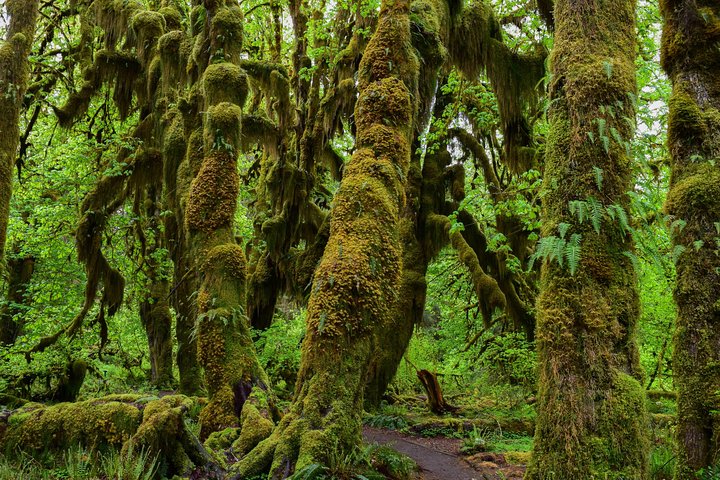
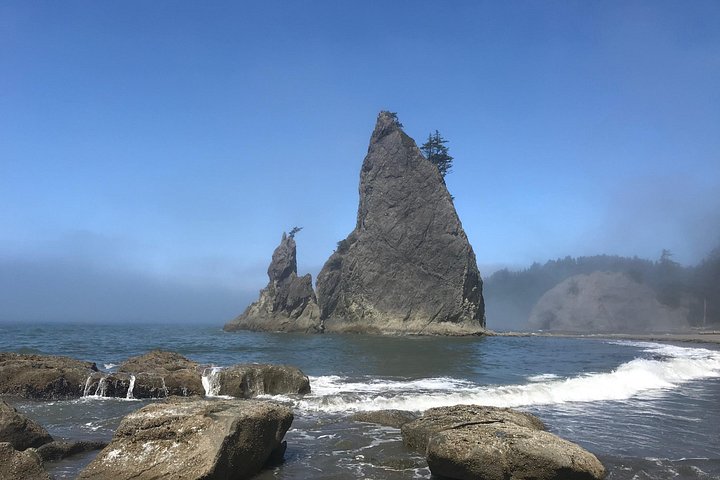
From Forks, drive about an hour to the Hoh Rain Forest and walk the Hall of Mosses and the Spruce Nature Trail before the parking lot fills. Then head to the coast: Rialto Beach near La Push is the most dramatic, with sea stacks and driftwood, and the walk to the Hole-in-the-Wall needs a low tide. Ruby Beach and Kalaloch lie farther south on US 101 and make a good sunset stop. If you have the energy, continue to Lake Quinault for the night and complete the loop the next day.
Making the loop work
The most common mistake is trying to see too much in each day. Driving times on the peninsula are long, roads are winding, and every stop takes longer than expected because the scenery invites lingering. If you are short of time, drop Sol Duc or Ruby Beach rather than rushing the Hoh. Check tide tables for any beach walk, and keep a flexible mindset about weather: if clouds sit on the mountains, swap the ridge for the lake or the rain forest, which look better in gray light anyway.
Where to sleep
Port Angeles is the natural base for day one, and the Lake Crescent Lodge is a special night if you can book it. Forks or La Push work for the west side, and Lake Quinault Lodge is a classic stop on the southern leg. Book early for July and August, as rooms fill months ahead. Fuel up whenever you pass a town, because gas stations are sparse west of Port Angeles, and stock a cooler with food and water, since restaurants close early in small towns.
If you have a fourth day
Add Port Townsend, the Victorian seaport on the northeast tip, and Fort Worden, which are about an hour east of Port Angeles. Or take the Coho ferry across the strait to Victoria for the day. Either one rounds out the trip with culture and architecture after three days of wild landscapes. Whatever you choose, save a little time for unplanned stops, since some of the best moments on the peninsula come from pulling over at a viewpoint, a trailhead or a beach that was not on the plan.
Packing list
Bring a waterproof shell, warm mid-layers, sturdy shoes with grip, a refillable water bottle and snacks. Add a headlamp for bunkers and evening walks, binoculars for birds and whales, and a tide table for beach days.