Seattle sits across Puget Sound from the Olympic Peninsula, and reaching the peninsula is half the fun. You can go by ferry, by bridge, or on a guided tour, and the route you choose shapes the rest of your trip. Understanding the options helps you save time, avoid ferry lines and decide whether a day trip is realistic or whether you should stay overnight.
The Bainbridge and Kingston ferry routes
The most popular routes are the Seattle to Bainbridge Island ferry, which takes about 35 minutes, followed by a drive across Bainbridge, the Agate Pass bridge and the Hood Canal Bridge to the peninsula. Alternatively, the Edmonds to Kingston ferry avoids driving through Seattle and connects to Highway 104 and the Hood Canal Bridge. Both routes reach Port Angeles in roughly two and a half to three hours of total travel time, depending on queues. Check the ferry schedule and consider arriving early in summer, when lines can be long.
Driving around via Tacoma and Olympia
The southern route crosses the Tacoma Narrows Bridge and continues through Olympia to US 101, then north along Hood Canal. It avoids ferries and can be a good choice on busy summer weekends, though it adds time. The Hood Canal is a scenic fjord with oyster shacks and small towns along the way. If you are heading to the southwest peninsula or Lake Quinault, this is the natural route.
Public transport and tours
Without a car, you can reach the peninsula by combining ferries and regional buses, but connections are limited and schedules vary by season. Guided small-group tours from Seattle remove the logistics, handling the ferry and the driving, and typically visit the north side of Olympic National Park. They are a good option for travelers with limited time or those uncomfortable driving winding roads. Check what is included, from park entry to meals, and the departure time, which is usually early.
Is a day trip realistic?
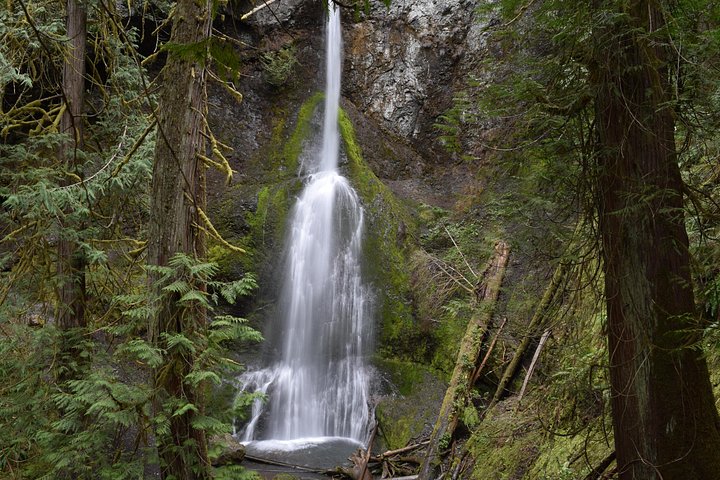
A long day trip can show you the north side: Lake Crescent, Marymere Falls and perhaps Hurricane Ridge. But the travel time of five to six hours round trip leaves limited time at each stop. For the rain forest and coast on the west side, add another hour or more each way, which is too much for one day. If you want to see more than one area, stay overnight in Port Angeles, Sequim or Port Townsend, and spread the sights over two or three days.
Combining the peninsula with Seattle
Many visitors split a trip between Seattle and the peninsula, spending a few days in the city and then crossing by ferry. Port Townsend and Fort Worden make an easy first night, followed by Sequim and Port Angeles, then Lake Crescent and the west coast. On the way back, loop south through Lake Quinault and Olympia. This circuit takes about five to seven days and gives a rounded view of the region, with the ferry crossings adding scenery.
Practical tips
Reserve vehicle space on ferries where reservations are offered, and check traffic before you leave. Fill up on fuel in Port Angeles or Sequim before heading west. Carry a paper map or download offline maps. Allow extra time on summer Fridays and Sundays, when ferry and highway traffic peaks. Pack for changeable weather, and keep a rain jacket within reach even on sunny days in the city, since conditions on the peninsula can differ.
When to go by tour instead
If the idea of ferry lines, mountain driving and tight schedules does not appeal, a guided day from Seattle or a guided tour from Port Angeles is a good alternative. Compare small-group options, look at the itinerary, and choose the one that visits the areas you care about most.
Sample two-day plan
Take the morning ferry to Bainbridge or Kingston, drive to Port Townsend for lunch and Fort Worden, continue to Sequim for the evening, and spend the second day on Hurricane Ridge or Lake Crescent before returning by the same route or the Coho ferry to Victoria. It is an efficient first taste of the region without a punishing schedule, and it leaves room for a night in a historic inn.
Whichever route you choose, allow slack in your schedule for ferry waits, and enjoy the crossing as part of the trip.