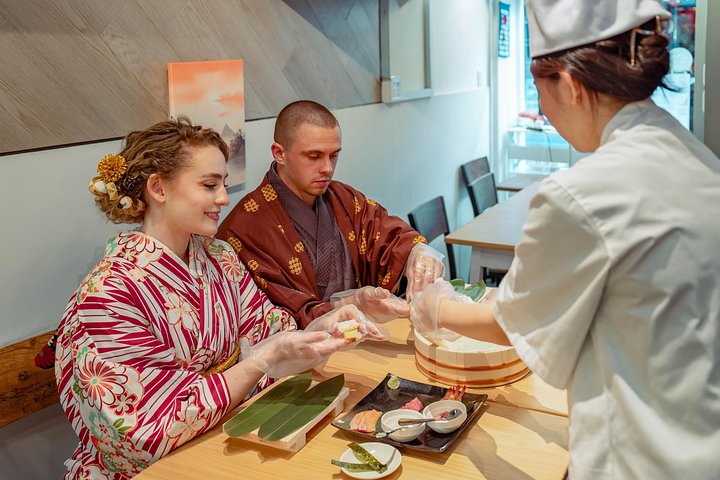
Sushi is a skill that looks simple and is not, and this class is a friendly way to find out. It lasts about ninety minutes and takes place in a studio near Namba Station, in the heart of Minami and close to Dotonbori, so it is easy to fit between sightseeing and dinner. You learn about the ingredients and styles of sushi, practice shaping rice and fish into nigiri and gunkan, the little battleship-shaped pieces wrapped in seaweed, and make twelve pieces in all. You then eat the sushi you made, which is the best part of any class. Snacks are included, and alcohol is not. The class takes up to sixteen travelers, so it is livelier than a private lesson, and it is a good activity for groups, families and solo travelers who like company. Vegetarian sushi is provided, and vegan and halal versions can be arranged on request, which makes it more inclusive than many sushi classes. The venue is wheelchair and stroller accessible, and service animals are welcome. It is one of the best-reviewed food classes in Osaka and is among the most affordable, which makes it an easy yes for anyone curious about how sushi is made.
What you will learn. A good sushi lesson starts with rice, because the temperature, seasoning and handling of the rice decide whether the finished piece holds together and tastes right. You are shown how to mix and shape the rice, how to handle the fish and toppings, and how to form nigiri and gunkan neatly. The instructors explain why sushi is traditionally eaten by hand, how soy sauce and wasabi are used and what the different toppings are.
Most travelers leave with a better understanding of what they are looking at when they sit at a sushi counter, which is useful for the rest of your trip, and a set of twelve pieces that look, with luck, nearly as good as the ones in restaurants.
Practicalities. The studio is about three minutes from Namba Station, in the Nishi-Shinsaibashi area of Chuo Ward, and the meeting point and the end point are the same. Arrive a few minutes before the start so that you do not miss the introduction. Tell the operator about allergies, vegetarian, vegan or halal needs when you book, because the class is geared to accommodate them but needs notice.
Cancellation is free up to 24 hours before the experience starts, and children receive discounted rates, so check the child prices on the booking page. If you want a drink with your sushi, you will need to buy it separately, since alcoholic drinks are not included.
How to use it. Because it is short and central, the class slots easily into an afternoon before a night in Dotonbori, or into a rainy day when you need an indoor activity. It is a good first-week experience: you eat sushi with more attention and a better sense of quality afterward. For couples and friends it is a casual shared activity, and for families it is one of the more kid-friendly cooking experiences in the city, since the work is hands-on and the result is eaten on the spot.
If you would like a longer, more home-style lesson in cooking Osaka classics, the okonomiyaki class is a stronger pick, and if you prefer to drink and taste, the sake and takoyaki class in Namba is a short walk away.
What to expect
The experience
A ninety-minute class near Namba Station where you learn about sushi styles, make twelve pieces of nigiri and gunkan, and eat them.
Best time
Afternoon, before an evening in Dotonbori.
How long
About ninety minutes.
Tips
Tell the operator about dietary needs at booking. Vegetarian sushi is provided; vegan and halal are available on request.
Quick picks
- Best for
- Anyone who wants an affordable, central, hands-on introduction to making sushi.
- Families
- One of the easier cooking classes for children, with discounted rates and an accessible venue.
- Couples
- A casual shared activity before dinner.
- Pair with
- An evening in Dotonbori, three minutes away on foot.
- Time needed
- About ninety minutes.
Good questions
How long is the sushi class?+
About ninety minutes.
What do I make?+
Twelve pieces of sushi, including nigiri and gunkan, which you then eat.
Are vegetarian options available?+
Yes. Vegetarian sushi is provided, and vegan and halal versions are available on request.
Where is the class?+
About three minutes from Namba Station, in the Nishi-Shinsaibashi area of Chuo Ward.
Is it accessible?+
The venue is wheelchair and stroller accessible, and service animals are allowed.