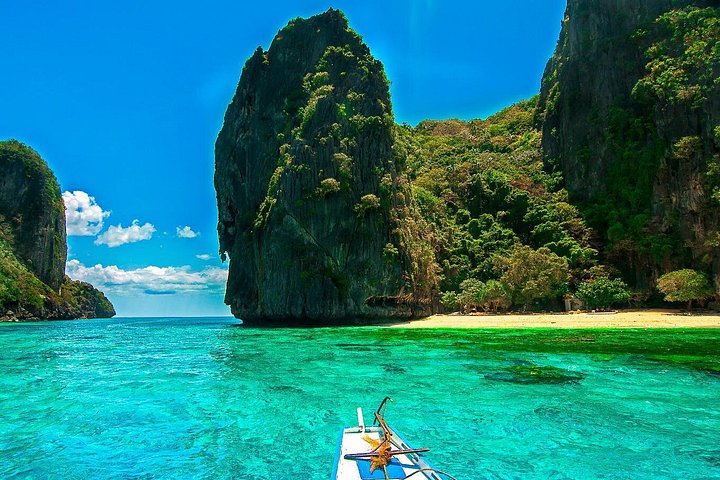
Palawan's weather decides what you can actually do. Almost everything that makes the island famous happens on the water or near it: island-hopping boats in El Nido and Coron, the paddle boat into the Underground River, firefly trips on a mangrove river. When the sea is rough or the rain is heavy, those trips are the first to be cancelled. Choosing your month well is therefore worth more than choosing your hotel well. This guide explains the seasons, what each means for your plans and how to hedge if you cannot pick the perfect window.
The dry season, December to April
This is the classic time to go, with the calmest seas, the clearest water and the most reliable boat days. El Nido's Tours A to D run most days, the lagoons are at their best and Nacpan Beach is at its golden-sand peak. The price of that reliability is crowds and higher rates, particularly around the Christmas and New Year period and again at Easter. Book rooms early, and book your boats two to three weeks ahead for the popular routes, since good operators fill up. If you only have one chance to visit and flexible dates, February to April usually offers the best balance of hot, dry weather and a settled sea.
The shoulder months, November and May
Both months sit on the edge of the dry season. November is the start of the drier period, with mostly sunny days and noticeably fewer visitors than December, and May is hot and generally calm before the rains arrive. Prices ease, boats are less crowded and you can often book tours a few days ahead rather than weeks. The trade-off is less certainty: a shoulder-month squall can still cancel a boat day, so build a spare day into your schedule. Many experienced visitors prefer these months for exactly that reason, since the experience is close to peak season without the queues at the lagoons.
The rainy season, June to October
This is the low season, when southwest winds and rain bring rough seas and frequent boat cancellations. You may miss the lagoons entirely, and some days the authorities halt departures for safety. Visibility underwater can be poorer, and the Underground River park can close when the sea is rough or the weather turns heavy. The benefits are real but narrow: lower prices, empty beaches on dry days and lush green scenery. If you travel then, choose refundable bookings, keep your itinerary loose and treat any sunny day as a bonus. Pick a base with things to do on land, such as El Nido town, the Taraw Cliff canopy walk and the cafes, rather than relying on boats.
Planning by place
El Nido is the most weather-sensitive base because almost everything leaves from the beach by boat. Puerto Princesa is more forgiving: the city has the Baywalk and its evening food stalls, and a day at the Underground River depends on the sea at the national park rather than the open bay. Coron sits across the water and is reached by ferry or air, so allow slack for transfers if you are connecting between them. A fast ferry between El Nido and Coron takes roughly 3.5 to 5 hours, and rough seas can disrupt it, so avoid tight same-day connections in the wetter months.
Time of day matters too
Even in the best months, mornings tend to have the calmest water and the clearest light. Boat tours start early for this reason, and the lagoons are quieter before the main wave of groups arrives. Hiking and viewpoint climbs such as Mount Tapyas in Coron are best at sunrise or late afternoon, when the heat is bearable. Evenings are the time for Nacpan Beach sunsets and the firefly river trip.
How to hedge
Build a spare day into each base, book flexible rates where you can and ask each operator what happens if the tour is cancelled for weather. Most will offer a reschedule or refund, but policies differ and you should check before paying. Keep an indoor or land-based fallback in mind, such as the canopy walk, a massage, a cooking class or a city wander. Carry cash for fees and tricycles, since cards are rarely accepted on boats and in small towns. Finally, check the sea and weather conditions with your hotel the evening before any big boat day, because local knowledge is usually better than any forecast app.
The short answer
For the best odds of smooth seas, go between December and April, and book early. For good weather with fewer people, aim for November or May. For the lowest prices and a flexible mindset, the rainy season can work, but expect to lose some days to weather.