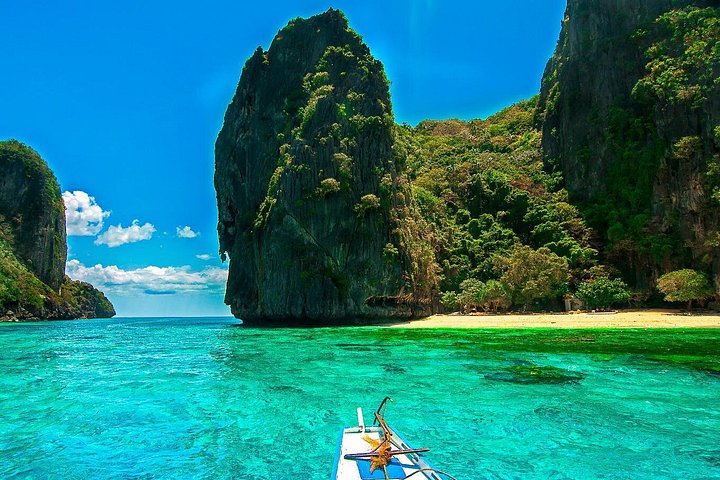
Palawan has a reputation as an expensive island, and the top end certainly is. Private-island resorts and private boats cost a lot, and flights to remote airstrips add up. But the core experience is available at a modest price if you travel smartly. Island hopping on shared boats, simple rooms, local food and free beaches can make a week in Palawan far cheaper than most beach destinations of this quality. This guide shows where to save and where it is worth spending.
Share your boat
The biggest cost in El Nido and Coron is the island-hopping day, and the cheapest way to do it is on a shared group tour. The standard routes, Tours A, B, C and D in El Nido, are sold by many operators at similar prices, and shared tours with lunch are the budget option. Private boats cost more, but they split well between four or more people. Read the inclusions carefully, since environmental fees, kayak hire and snorkel gear are often extra, and add them to your budget. Do not choose purely on the lowest headline price, because very cheap boats may cut corners on safety gear, so check that life jackets are provided.
Pick the right tours, not all of them
You do not need to do every route. With limited funds, do Tour A for the lagoons, then add Tour C or B only if you have the time and money. In Coron, the Kayangan Lake island tour packs seven stops into one day, so a single day covers the headline sights. Near Puerto Princesa, the Underground River is the one to prioritise, with Honda Bay as an optional second day.
Use the free sights
Many of Palawan's best experiences cost little or nothing. Nacpan Beach is free and one of the best in the country. The Puerto Princesa Baywalk is a free waterfront with cheap food stalls in the evening. Mount Tapyas in Coron is a self-guided climb with a view over the bay and typically only a small fee, if any. The Taraw Cliff canopy walk is modest in price compared with a boat day and fills a spare morning. Plan a rest day at the beach or the promenade between boat days, and you will cut your daily spend.
Sleep simply
Rooms are the second biggest cost. In El Nido town, Spin Designer Hostel offers dorm beds and private rooms, and staying in the town centre lets you walk to restaurants, tour desks and the beach instead of paying for transport. In Puerto Princesa and Coron, small guesthouses and inns are plentiful and cheap. Book popular properties early in the dry season, and ask whether breakfast is included. If you want one comfortable night, a mid-range hotel such as Lime Resort El Nido, with free buffet breakfast and a pool, is good value, and the free breakfast saves a meal each day.
Eat locally
Eating where locals eat is the best way to save. Look for small family restaurants, carinderia-style canteens and market stalls, where a plate of rice with a grilled or stewed dish costs far less than a tourist restaurant. Fresh fish and fruit are cheap, and street food at the Puerto Princesa Baywalk is a good evening option. Carry a refillable bottle and ask your hotel about water refill points to avoid buying plastic bottles constantly. Boat tours usually include lunch, so you can skip a meal.
Move smartly
Getting between bases is where money disappears if you are careless. A shared van between El Nido and Puerto Princesa takes around five to six hours and costs much less per person than a private transfer. Fast ferries between El Nido and Coron take roughly 3.5 to 5 hours and are cheaper than flying. In towns, share tricycles and agree the fare before you get in. Avoid renting a motorbike unless you are experienced, since the cost of an accident on wet roads is far greater than any saving.
Cash and fees
Cards are rarely accepted on boats, at beaches and in small restaurants, so carry cash. ATMs can run out or fail in small towns, so withdraw in larger centres when you can. Keep small notes for tricycles, kayaks and entrance fees.
Where to spend
A few things are worth the money: a safe, reputable boat operator, a good night's sleep and the Underground River permit through a tour. Save on food, transport and extras, but not on safety. Travelling in the shoulder months of November and May also cuts room rates and boat prices without sacrificing much weather.