The idea
Three days is enough to feel the shape of Paros if you accept one rule: do not try to see everything. The island rewards a slow rhythm, with a mix of town, village, beach and boat. This plan gives each of those a half or full day, and it leaves room for long lunches. Swap days around if the wind or ferries demand it.
Day one: Parikia and the west coast
Arrive early if you can and drop your bags at your hotel. Start at the Church of a Hundred Doors, the great Byzantine complex near the port, and spend an hour in the courtyard, nave and baptistery. Walk into the old town and climb to the Venetian kastro, where the walls contain marble columns from an ancient temple. Have a long lunch at a taverna in the lanes, then spend the heat of the afternoon on Livadia Beach, a short walk from the harbour. Return to the old town in the early evening for the Archaeological Museum if it is open, then walk to the windmills for sunset. Dinner can be grilled fish by the harbour or a quiet taverna in a back street.
Day two: the island by road
Take a guided highlights tour or rent a car, depending on your comfort on the roads. Head inland to Lefkes, the former capital, and walk its marble lanes before the heat builds. If you like walking, add a stretch of the Byzantine path toward neighbouring villages. Have lunch in the village, with local cheese, salads and grilled meat. In the afternoon, drive to the north coast for a swim at Kolymbithres or Monastiri, where the granite rocks and calm water are the island's postcard view. End the day in Naoussa, with a stroll around the harbour and the fortress, then dinner on the waterfront. Book a table if it is high season.
Day three: the sea
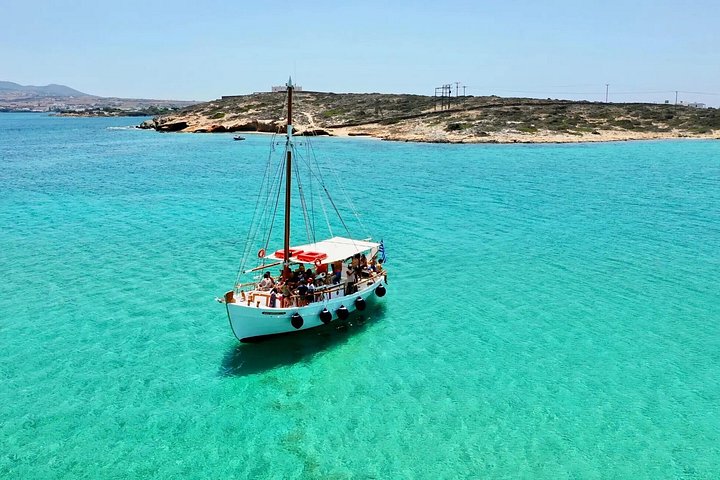
Spend a full day on a boat. The classic choice is a trip to Antiparos and Despotiko with swim stops and lunch. A shorter alternative is the Blue Lagoon and sea caves cruise, which leaves time for a late lunch ashore. If you prefer to see Antiparos on foot, take the guided tour that includes the cave and the castle square. Pack a swimsuit, towel, hat, sunscreen and a light layer for the ride back. Return to your hotel for a shower and then have a final dinner, ideally somewhere with a view of the sea.
If you have a fourth day
Choose between a wine tasting and cheese visit, a cooking class, a horseback ride or a day trip to Delos and Mykonos or Santorini. The longer cruises are tiring, so keep them for a day when you have no other plans.
Adjusting for the wind
The meltemi can make boats uncomfortable or cancel them, especially in July and August. If the sea is rough on day three, swap it with day two and spend the rough day inland. Ask your hotel or boat operator about the forecast the evening before. On windy days the sheltered beaches on the west and south are a better bet than the exposed east.
Adjusting for children
Families will find the beaches at Monastiri and Livadia easy, and the Antiparos cave is an adventure for children who can manage the steps. Skip the longest cruises with very young children and choose a half-day boat trip instead. Build in downtime in the afternoon, when the sun is strongest.
Adjusting for couples
Add a sunset cruise on a traditional boat, a dinner in Naoussa and a morning of walking in the hills. Consider a night in a hillside resort for views and quiet.
Time and transport tips
Buses connect Parikia with Naoussa and Lefkes, but a car or scooter gives more freedom. Book ferry and flight times to match your plan, and avoid scheduling a long cruise on the day of arrival or departure. Keep small cash for beaches and bakeries.
A note on pace
Resist the urge to add more stops. Paros is a place where an unplanned hour in a lane, a long swim or a second coffee is often the best part of the day. Build in a slow afternoon each day, and treat the plan as a menu rather than a schedule. If a day goes well, stay with it; if the weather or the wind changes, rearrange without regret. Most of the sights on this list are free or inexpensive, which means flexibility costs you little. Pack light, because ferries and buses are easier with a small bag, and leave space for pottery, honey or linen from the island's shops.