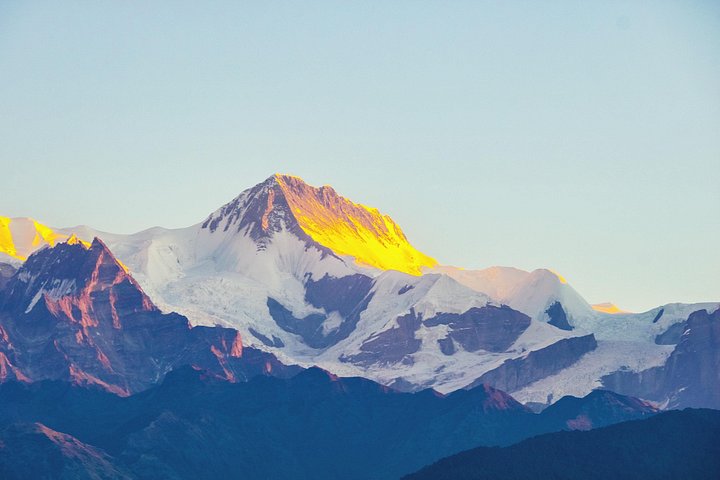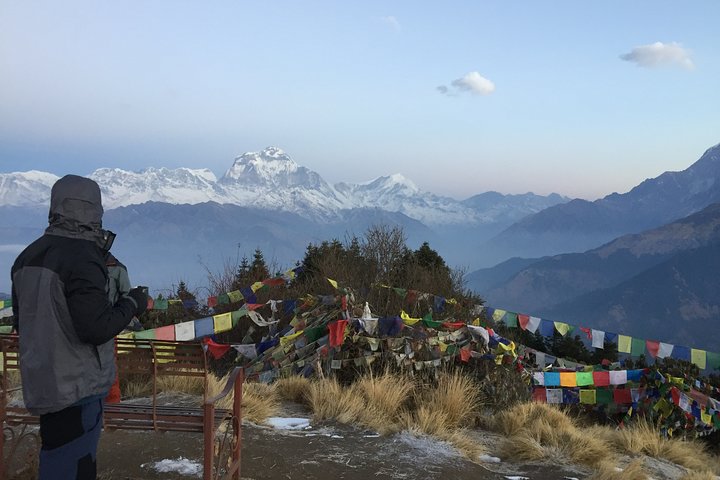
Mardi Himal is one of the newer and quieter classic treks of the Annapurna region. The route climbs from forested villages through rhododendron woodland to an open ridge, then follows the crest to the viewpoint beneath Machhapuchhre, with the Annapurna range spread out in front and the Fishtail peak seeming to hang overhead. Where Poon Hill is a short sunrise outing with a crowd at the top, Mardi Himal is a true multi-day trek with a genuine sense of altitude, and the ridge gives mountain views for much of the day rather than a single moment at dawn. The guided trek we feature is a teahouse trek of several nights, with a guide, a private transfer from Pokhara to the start, a shared jeep back, meals, accommodation and the Annapurna Conservation Area and TIMS permits included in the package description. Itineraries vary between four and six days depending on the pace and the operator, so check the exact schedule before you commit. The trek sits in the middle of the difficulty range: no technical climbing is involved, but the days are long, the stone steps are steep and the final stretch rises above 3,500 meters, where altitude starts to matter.
The experience is built around the ridge. The lower sections pass through villages and forest, with birdsong and rhododendron that is at its best in spring. As you climb, the trees thin out and the path opens onto grassy slopes with views of Annapurna South, Hiunchuli and, above all, Machhapuchhre, which looks different from here than it does from the lake.
High-camp lodges are simple, with basic rooms, shared bathrooms and hot meals, and the nights are cold, so a good sleeping bag or liner and warm layers matter more than any gadget. The viewpoint at the top is usually reached in the dark for sunrise, and the walk down the same ridge is a very different experience in daylight.
Is it right for you? You should be reasonably fit and comfortable walking for five to seven hours on consecutive days. Altitude is the main risk. The high camp sits around 3,500 meters and the upper viewpoint rises to about 4,500 meters, so ascend slowly, drink plenty of water, listen to your guide and be willing to turn back or stop if you develop a persistent headache, nausea or breathlessness.
Good boots, trekking poles, a rain layer and a headlamp are essential. Travel insurance that covers trekking at altitude is sensible and often required by operators.
Timing is the other decision. October and November are peak season, with clear skies and busy teahouses, so book ahead. Spring, from March to May, is also popular, with flowers and warmer days, but views can be hazier. The monsoon brings leeches, cloud and slippery trails, and winter nights are very cold at the top.
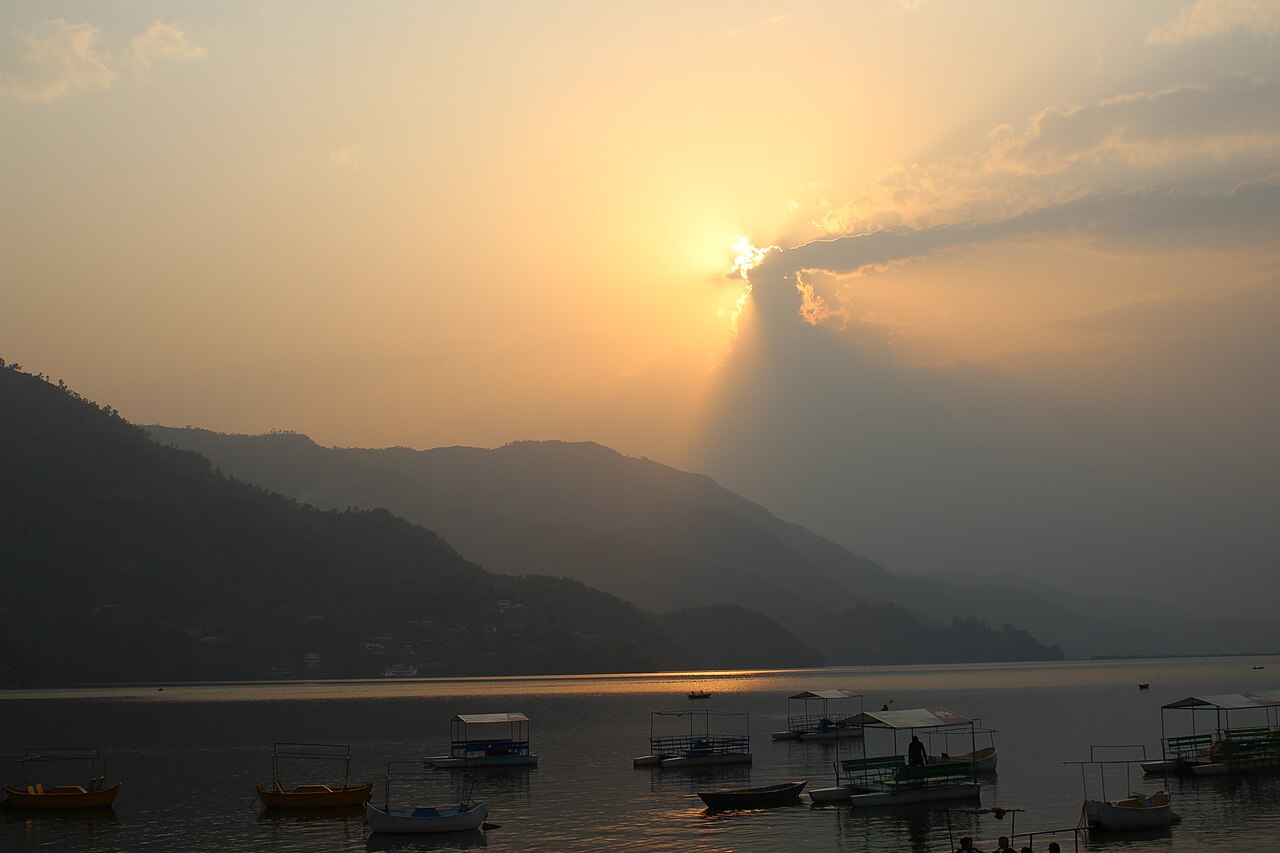
Build a spare day into your plan before your flight out, because bad weather can shift a trek, and keep a rest day in Pokhara afterward with a lake boat ride and a good dinner. If you have only two or three days, the short Poon Hill trek is a better fit.
What to expect
The experience
A guided multi-day teahouse trek from the foothills near Pokhara up a forested ridge to a viewpoint beneath Machhapuchhre, with permits, meals, accommodation and transfers in the package.
Best time
October to November for clear skies, or March to May for flowers and warmer days. The monsoon and deep winter are harder.
How long
Four to six days depending on the pace and the operator, plus a buffer day before any onward flight.
Tips
Ascend slowly, carry a warm sleeping layer, boots and poles, and agree on a plan with your guide for altitude symptoms.
Quick picks
- Best for
- Fit walkers who want a quieter, higher alternative to Poon Hill with ridge views of the Fishtail peak.
- Families
- Only for experienced, fit teenagers, because the days are long and the altitude is real.
- Couples
- A shared challenge with some of the best mountain views near Pokhara, rewarded by a rest day on the lake.
- Pair with
- Poon Hill Trek beforehand for acclimatization, or a Phewa Lake boat ride and Pokhara dinner afterward.
- Time needed
- Allow a week, including a buffer day.
Good questions
How long is the Mardi Himal trek?+
Itineraries run from about four to six days depending on the pace and operator. Check the day-by-day schedule before you book and keep a spare day in your travel plans.
Do I need permits?+
Yes, the Annapurna Conservation Area requires permits. The guided package we feature lists the permits and the TIMS card as included, but confirm that with the operator.
How high does the trek go?+
The high camp sits at roughly 3,500 meters and the upper viewpoint at roughly 4,500 meters, so acclimatize carefully and tell your guide about any symptoms.
When is the best time to trek?+
October and November offer the clearest skies, and March to May is also good. Monsoon and midwinter are less comfortable.
Is it harder than Poon Hill?+
Yes. It lasts longer, climbs higher and has more demanding days, though it remains a non-technical teahouse trek that a fit walker can complete.