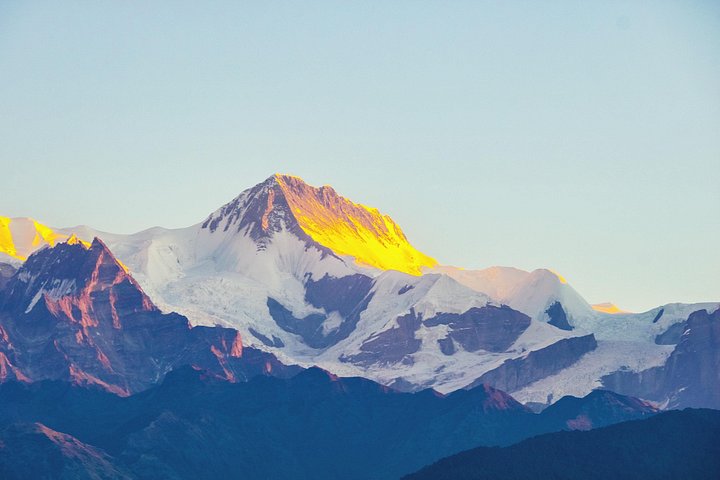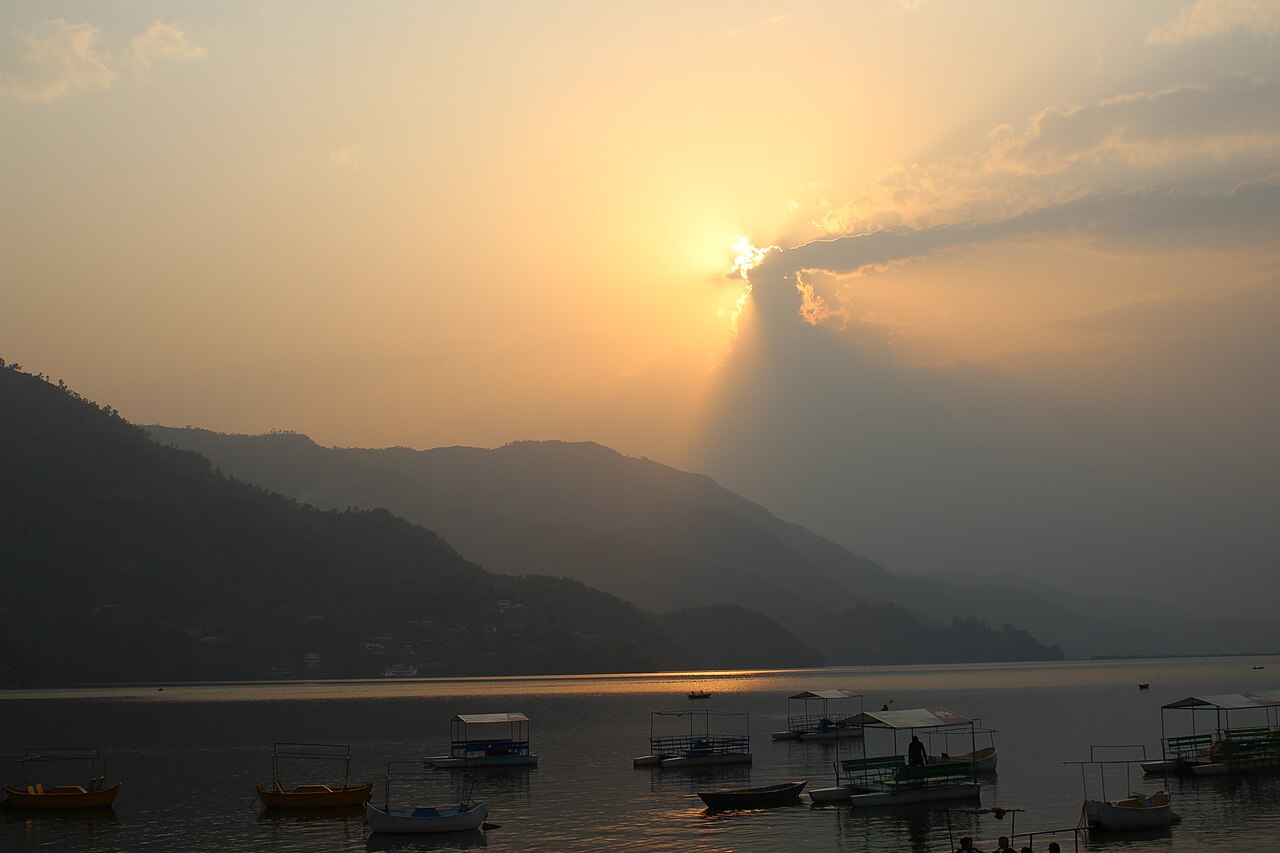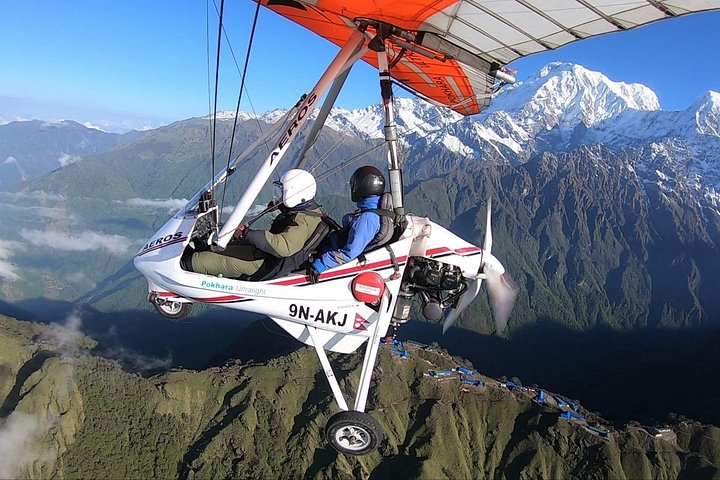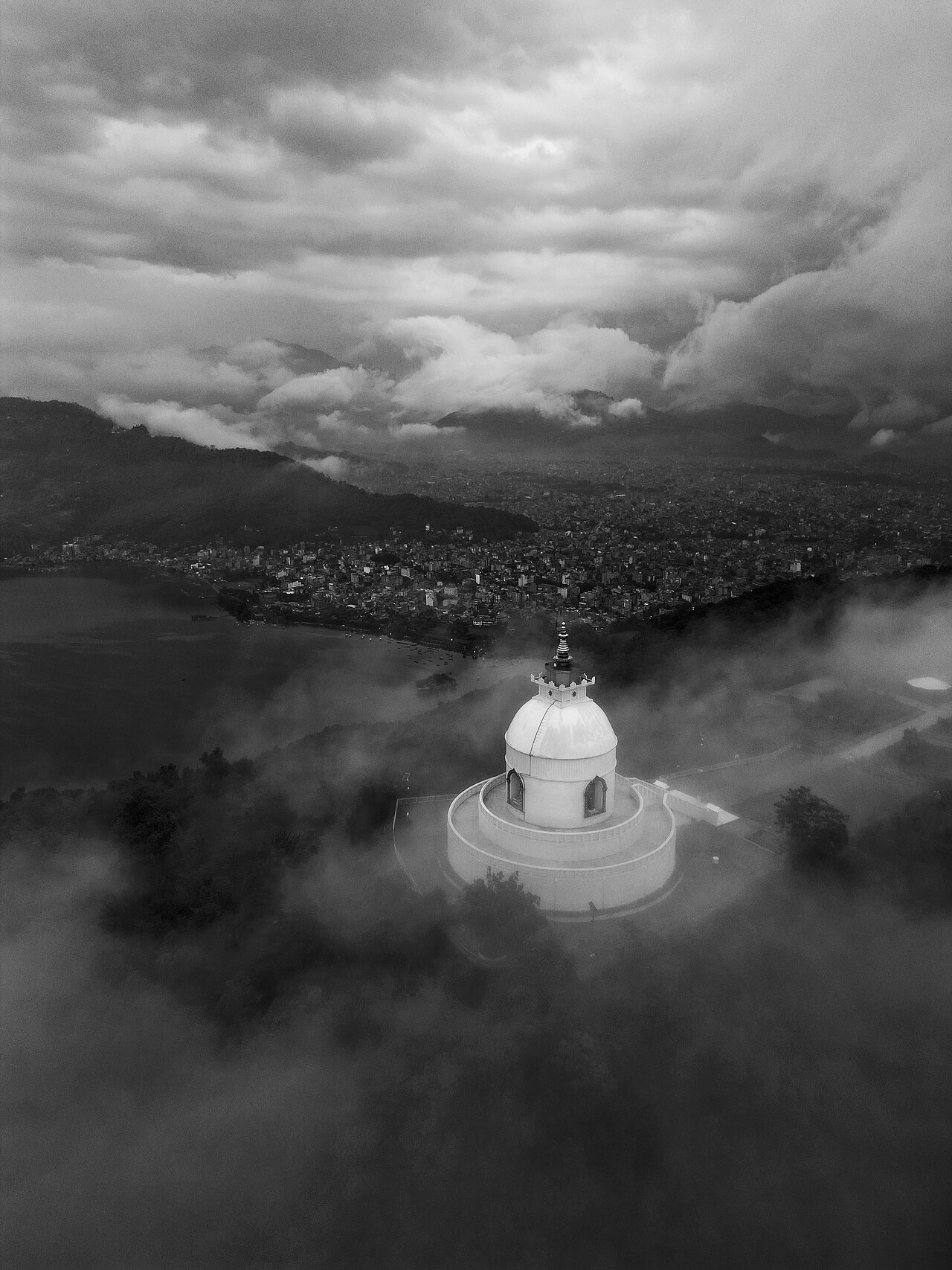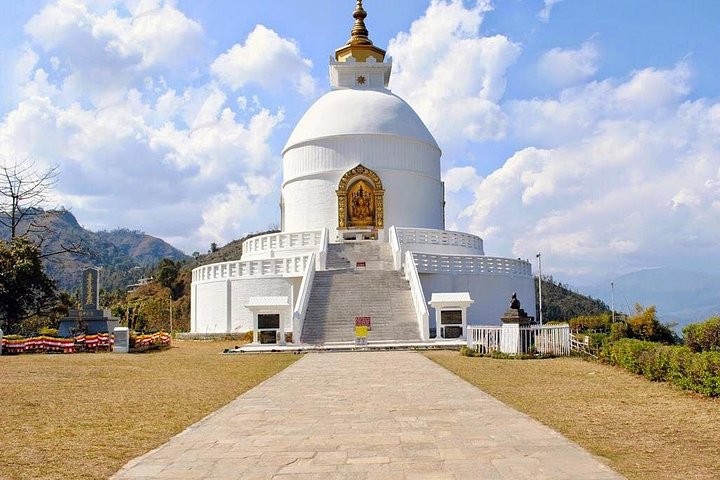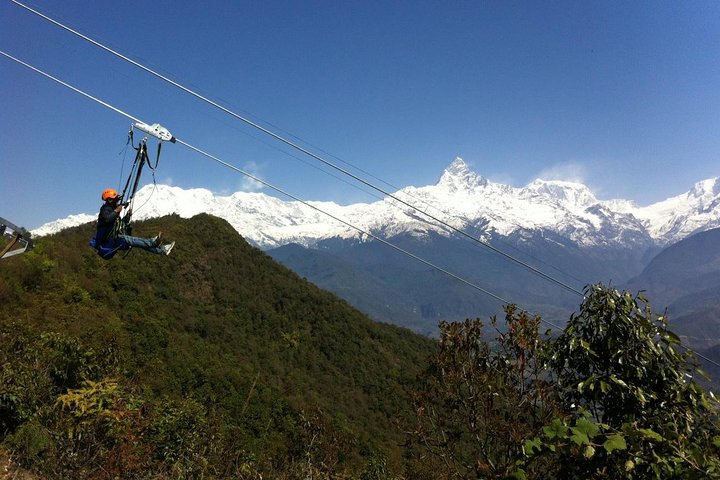
ZipFlyer Nepal is the zip-line that put Pokhara on the adventure map alongside paragliding. It is marketed as the steepest zip-line in the world, and the setting is the reason: the line starts high on the Sarangkot ridge above the valley and runs down toward the green farmland below, with Phewa Lake, the foothills and on clear days the white wall of the Annapurna range spread out around you. Riders are clipped into a harness and fly face-forward, lying down rather than sitting, so the view and the sensation of speed are both much more direct than on a conventional seated zip-line. The ride itself is short, a minute or two rather than a long cruise, which is part of the appeal: you pay for a burst of speed and a very big drop, not for a lengthy transfer. The experience is built as a small package. You check in, are fitted with a harness and helmet, receive a safety briefing from the crew and are taken up to the launch point, then the line takes over. Most visitors reach the site by road from Lakeside, and the climb to the ridge is part of the outing, so it combines naturally with a sunrise visit to Sarangkot or a paragliding flight from the same hills. The operator has a very large number of positive reviews, which is reassuring for a pursuit where preparation and equipment matter more than anything else.
Think of ZipFlyer as a morning activity. Cloud tends to build over the hills by midday, and the best views of the mountains come early, so a start in the first half of the day gives you both the clearest sky and more comfortable temperatures. If you have already been up at Sarangkot for sunrise, ZipFlyer is an easy add-on: you are in the right part of the hills, and you can be back at your hotel for a late breakfast.
Allow more time than the ride itself suggests, because check-in, the briefing, the harness fitting and the transfer to the launch point take up most of the visit, and waiting is common in the busy autumn weeks.
Who is it for? Anyone who is comfortable with heights and speed and meets the operator's age and weight conditions, which you should confirm when you book. It suits couples and groups of friends who want one memorable thing to do together, and it is a good choice for travelers who like the idea of Pokhara's adventure scene but do not want to commit to a full paragliding flight.
Nervous riders are generally better off watching a ride or two first, and anyone with back or neck problems, heart conditions or pregnancy should skip it. Wear closed shoes, trousers or shorts that will not ride up, and secure phones and sunglasses, since loose items do not mix with a fast descent.
A few practical points make the day smoother. Autumn, from October to November, is the busiest period, so reserve your slot a day or two ahead and keep a spare day in your plan in case wind or weather interrupts operations. Spring is also reliable, while the summer monsoon brings cloud and rain that reduce both the views and the number of operating days.
Bring some cash for small extras, a layer for the cool ridge and a camera strap you trust. If you are visiting with children, check the minimum age and weight on the day, and remember that the experience is about thrill rather than scenery, so older teenagers will get far more from it than younger ones.
What to expect
The experience
Check in, receive a safety briefing and a harness, travel up to the launch point on the Sarangkot ridge and fly head-first down the line toward the valley.
Best time
Morning, when the air is clearest and the mountains are most likely to be visible, with October and November the peak season.
How long
The ride is short, but allow two to three hours for check-in, the briefing and the transfer to and from the launch point.
Tips
Wear closed shoes, secure loose items, confirm age and weight limits when you book and keep a spare day in case of weather.
Quick picks
- Best for
- Thrill seekers who want a fast, high-impact ride with a Himalayan backdrop and little preparation.
- Families
- Best for older teenagers who meet the operator's age and weight conditions, since the experience is about speed more than scenery.
- Couples
- A fun shared challenge, ideally on the same morning as the Sarangkot sunrise.
- Pair with
- Sarangkot Sunrise or Tandem Paragliding from Sarangkot, both from the same ridge.
- Time needed
- Half a morning, including transfers.
Good questions
How long does the ZipFlyer ride last?+
The ride itself is brief, roughly a minute or two, but the whole visit takes a couple of hours once you include check-in, the safety briefing and the transfer up to the launch point.
Is ZipFlyer suitable for children?+
There are age and weight conditions set by the operator, so check them when you book. Older teenagers usually enjoy it most, and younger children may find the speed and height too intense.
What should I wear?+
Wear closed shoes and comfortable clothing that will not ride up, bring a warm layer for the ridge and keep phones and sunglasses secured, because loose items can be lost on the descent.
When is the best time of year to go?+
October and November give the clearest skies, and spring is also good. The summer monsoon brings cloud and rain, which can reduce the views and the number of operating days.
Can I combine it with other activities?+
Yes, it fits well with a sunrise visit to Sarangkot or a paragliding flight, since all three are in the same hills above the city. Plan the zip-line for the morning and rest in the afternoon.