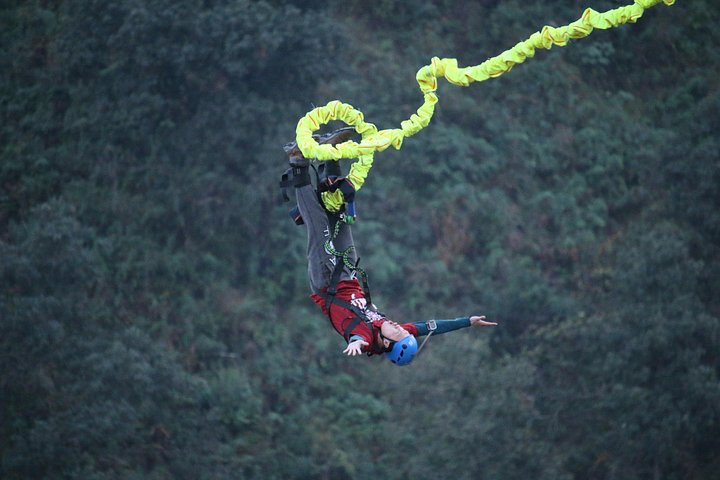
Bungee jumping in Pokhara has become one of the standard adventure options alongside paragliding and the zip-line, and the HighGround Adventures jump is the best reviewed of the local operators. The jump is made from a platform over a deep river gorge outside the lakeside tourist strip, so the outing begins with a transfer by road and ends with the unmistakable rush of a free fall followed by the rebound of the cord. Staff handle the equipment, the weighing, the harness fitting and the briefing, and they talk you through the jump from the moment you step onto the platform. The gorge setting makes the drop feel dramatic even before you leave the platform, because the walls fall away to the water below and the surrounding hills frame the view. Pokhara is a sensible place to try bungee for the first time. The operators are used to nervous first-timers, the schedule is relaxed and the atmosphere on the platform is encouraging rather than macho. Most people do one jump, and many ask for a photo or video package, which you should agree on before the jump rather than after.
Plan the outing around the transfer. The site is not on the Lakeside strip, so a pick-up from your hotel or a central meeting point is part of the arrangement, and the whole visit usually takes a couple of hours rather than a few minutes. Arrive with an empty stomach if you are prone to nausea, though a light snack is sensible, and wear comfortable clothing and secure shoes.
You will be weighed, which determines the cord used, and asked to sign a waiver, as at any bungee site in the world. If you are carrying a phone or camera, leave it with the staff or use the operator photo service, since nothing loose should go off the platform with you.
The honest question is whether you are the right person for it. Bungee is for people who want the sensation of a free fall and are comfortable with a fixed, brief moment of fear. It is not recommended for anyone with heart, back or neck problems, high blood pressure, epilepsy, pregnancy or a recent injury, and operators will refuse jumpers who do not meet their health and weight conditions.
If you are unsure, watch other jumpers for a few minutes first, and ask the crew about their safety checks and equipment. A good operator will welcome the questions.
Timing matters less than for the mountain views, because the gorge is the main scenery, but the weather still counts. Dry autumn days from October to November give the most reliable operation, spring is also good, and monsoon rain can pause jumps. Many visitors pair bungee with a rafting trip or a zip-line day to make a compact adventure itinerary, but spreading the activities over different days is kinder to nerves and to your schedule.
Book a day ahead in the peak weeks, leave some flexibility for weather and keep a hat and water for the transfer. After the jump, most people want a long lunch and a slow afternoon, so plan nothing strenuous for the rest of the day.
What to expect
The experience
Travel by road to the jump site, be weighed and fitted with a harness, take the safety briefing and jump from a platform above a river gorge.
Best time
Dry autumn days from October to November are the most reliable, and spring is also good. Monsoon rain can pause operations.
How long
The jump takes moments, but allow two to three hours for the transfer, preparation and waiting.
Tips
Agree on photo or video options before the jump, wear secure shoes, leave loose items with the staff and ask about health restrictions.
Quick picks
- Best for
- First-time bungee jumpers and adventure travelers who want one big, brief thrill.
- Families
- Only for older teenagers and adults who meet the operator's age, weight and health conditions.
- Couples
- A shared dare with a good story afterward, followed by a relaxed lakeside dinner.
- Pair with
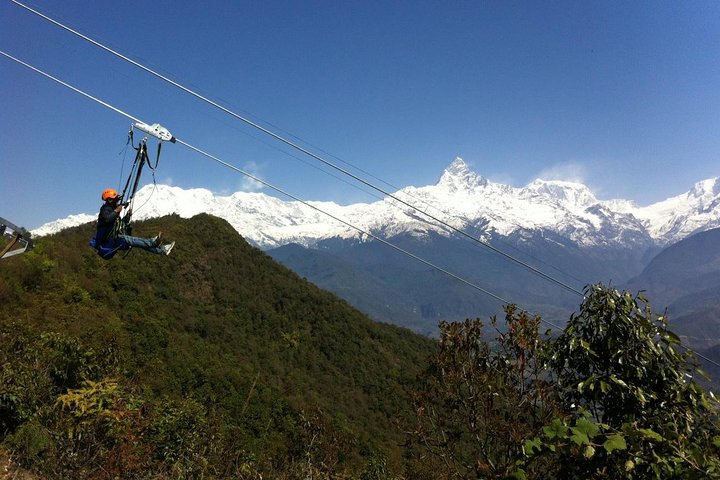
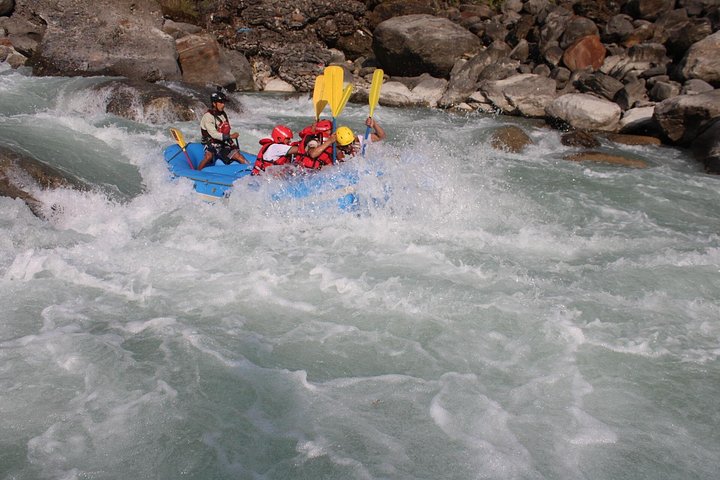
- ZipFlyer Nepal or half-day Upper Seti rafting for a compact adventure itinerary.
- Time needed
- Two to three hours including the transfer.
Good questions
Is bungee jumping in Pokhara safe?+
Safety depends on the operator, so choose one with a strong track record, ask about equipment checks and weight limits and follow the staff instructions. Operators will refuse jumpers with health conditions that make the jump unsafe.
Who should not bungee jump?+
People with heart, back or neck problems, high blood pressure, epilepsy or a recent injury, and anyone who is pregnant, should skip it. If you are unsure, check with a doctor before you travel.
How long does the outing take?+
The jump is quick, but the transfer from Lakeside, the weighing, the briefing and the waiting turn it into a two to three hour outing.
Can I record the jump?+
Photo and video packages are usually offered, and it is best to agree on them before you jump. Do not carry a loose phone or camera onto the platform.
What is the weather like?+
Autumn and spring are the most reliable seasons, with dry days and clear air. Heavy monsoon rain from summer can interrupt jumps, so keep your schedule flexible.