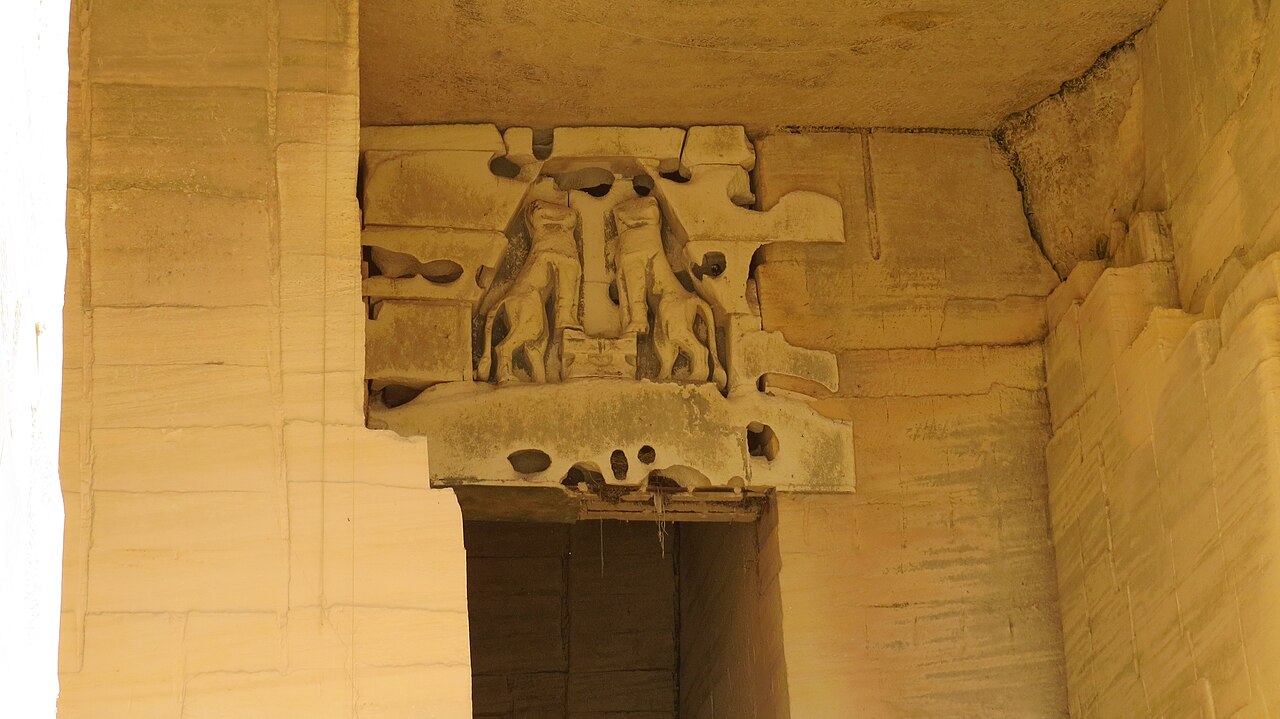
Glanum is the ruined town on the southern edge of Saint-Rémy-de-Provence, where the road to the Alpilles hills begins. People settled here because of a spring in a narrow valley, and the place grew from a Celtic sanctuary into a Hellenistic town with Greek-style houses and a bathing complex, then into a Roman town under Augustus. Excavation began in the 1920s and has uncovered streets, a forum, temples, a monumental fountain and the foundations of grand houses with mosaic floors. Just across the road, outside the paid enclosure, stand two of the best-preserved Roman monuments in France: the Mausoleum of the Julii, a tall tower-tomb with carved reliefs, and the Triumphal Arch beside it, which marked the entrance to the town. You can see both without a ticket, but the site behind them is what gives them meaning.
The route follows the old main street up the valley, so you walk from the Roman forum area past the baths and the houses toward the spring and the hillside, climbing gently the whole way. Information panels explain the layers, from the earliest Celtic and Greek phases to the Roman rebuilding, and it helps to read them as you go because the ruins are low and the story is in the stratigraphy. The Hellenistic fountain and the rock-cut basin at the head of the valley are the most evocative corners, and the views back down toward the plain are good on a clear day.
Glanum is mostly open air, which suits November: dry days are bright and cool, and there is little shade or shelter, so a wet or very windy day is better spent elsewhere. The ground is uneven stone and gravel, so wear shoes with grip. The site is generally closed on Mondays and open the rest of the week, with shorter hours in winter than in summer, so check the day before you go. A visit takes about an hour and a half, less if you only want the mausoleum and arch from the road.
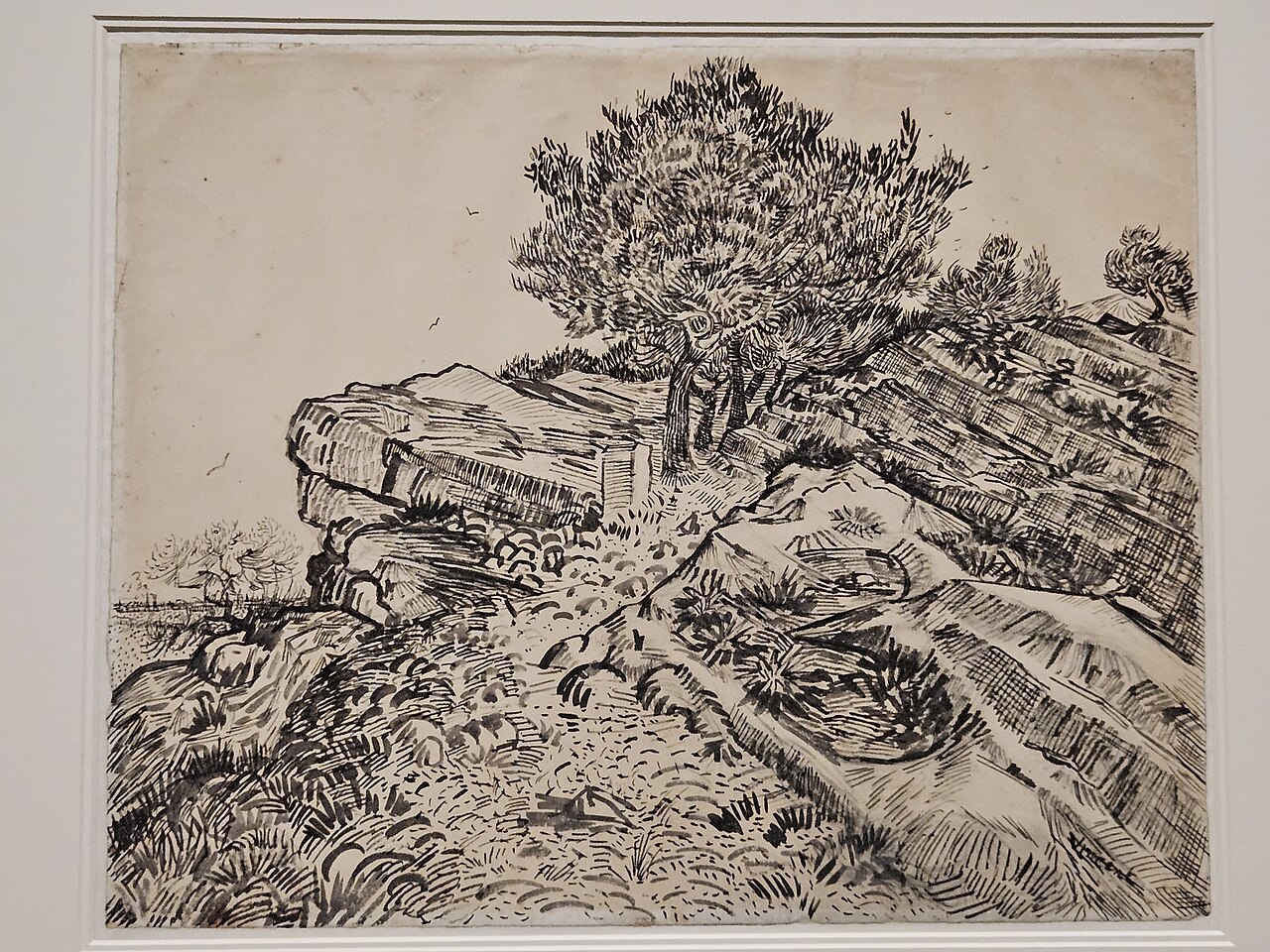
Saint-Rémy is an easy pairing. Vincent van Gogh was a patient at the asylum of Saint-Paul de Mausole, a short walk from Glanum, and painted some of his best-known work in the surrounding olive groves and fields, and the town centre has cafes, a small market on Wednesday mornings and shops selling local oil and soap.
Nostradamus was born here too. From Avignon the town is about thirty minutes by car, and it also combines naturally with Les Baux and the Carrières des Lumières in a single day. Without a car, a small-group excursion from Avignon is the simplest option, as the local bus service is limited in winter.
A few practical points help the visit. There is no cafe or shop inside the enclosure, so have coffee in Saint-Rémy first and carry water if the day is warm. The site is on a slope, so strollers are hard going, and the upper end of the valley, where the spring and the carved basin lie, is the steepest part.
Photographers do well in the hour after opening, when the low sun picks out the stone and the valley is empty. If you also want the Van Gogh story, ask at the Saint-Rémy tourist office about the marked walk that links the painter's sites in town, which makes a gentle afternoon on foot after the ruins.
What to expect
The experience
A self-guided walk through an open-air excavated town, with information panels along the old main street and the arch and mausoleum just across the road.
Best time
A dry, clear day, late morning or early afternoon, when the light is good on the stone.
How long
About ninety minutes, plus time for the arch and mausoleum.
Tips
Closed on Mondays, shorter winter hours, little shelter if it rains, and uneven ground, so wear grippy shoes and bring a windproof layer.
Quick picks
- Best for
- Anyone who likes Roman and Greek ruins without crowds.
- Families
- Space to roam and ruins to climb on in places, but the ground is uneven and there is no cafe on site.
- Couples
- A slow late-morning visit, then lunch in Saint-Rémy and a walk past the Van Gogh sites.
- Pair with
- Saint-Paul de Mausole and the Saint-Rémy town centre, Les Baux and the Carrières des Lumières.
- Time needed
- Ninety minutes.
Good questions
Is Glanum open in November?+
Yes, the site is open on a winter schedule and is closed on Mondays. Winter hours are shorter than in summer, so confirm the times for your day before you travel.
Can I see the arch and mausoleum without a ticket?+
Yes. The Mausoleum of the Julii and the Triumphal Arch stand beside the road, outside the paid enclosure, and can be seen for free at any time.
How long does the visit take?+
Plan about an hour and a half for the full site, which climbs gently up a valley. Add a little time if you want to read every panel.
How do I get there from Avignon?+
Saint-Rémy is about thirty minutes by car. Public buses are limited in winter, so a rental car or a small-group excursion is the easier option.
What else is nearby?+
The Saint-Paul de Mausole monastery where Van Gogh stayed, the town centre of Saint-Rémy, the village of Les Baux and the Carrières des Lumières are all within a short drive.