West of the Rhône, in the Gard department, three places make a rewarding day: Nîmes, the Roman city with a remarkably complete amphitheatre and a temple that has stood for two thousand years; Uzès, a quiet town of pale stone towers and shaded squares; and the Pont du Gard, the tallest Roman aqueduct bridge in the world. They are close together, so a small-group tour can visit all three with time to walk in each, which would be hard to arrange by public transport. For visitors based in Avignon or Arles who have already seen the Roman remains in their own towns, this circuit adds the best-preserved temple and one of the finest amphitheatres in the Roman world, and the aqueduct is the highlight that most people remember.
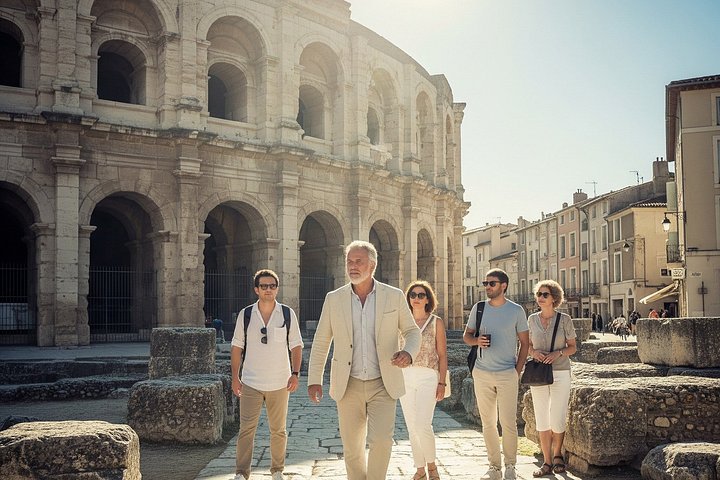
Nîmes is the main stop. The Maison Carrée, a small Roman temple from the first century, is one of the best-preserved in the world, with its columns and pediment intact, and a short film inside tells the story of the city. The Arènes de Nîmes, the amphitheatre, is so complete that it still hosts bullfights and concerts, and walking the upper galleries gives a sense of how the Romans organised crowds.
Nearby, the Jardins de la Fontaine mix eighteenth-century terraces with the ruins of a Roman sanctuary, and the Tour Magne on the hill above is the oldest surviving Roman structure in the city. The fabric called denim takes its name from the city, de Nîmes, a small fact that guides like to share.
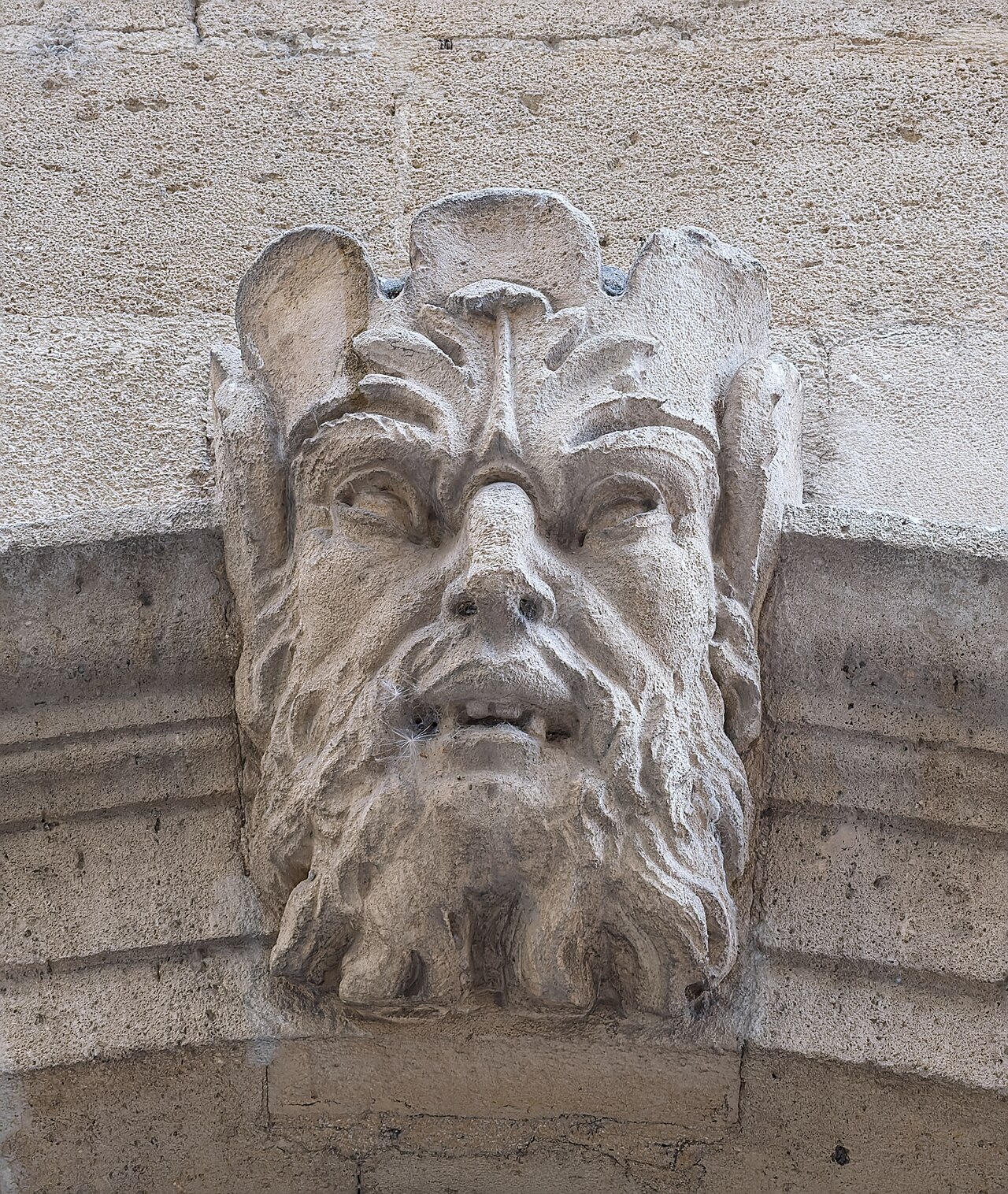
Uzès is a different pace. It was the seat of the first duchy of France, and the Duché d'Uzès, a château with a medieval tower, still dominates the old centre. The streets around the Place aux Herbes are lined with arcades and cafes, and the Fenestrelle tower, an unusual round bell tower with windows on each floor, rises above the cathedral.
A market fills the square on Saturday mornings and is one of the best in the region, so a tour that arrives on a market day has a particular bonus. The town is well suited to a slow lunch of local dishes before the afternoon.
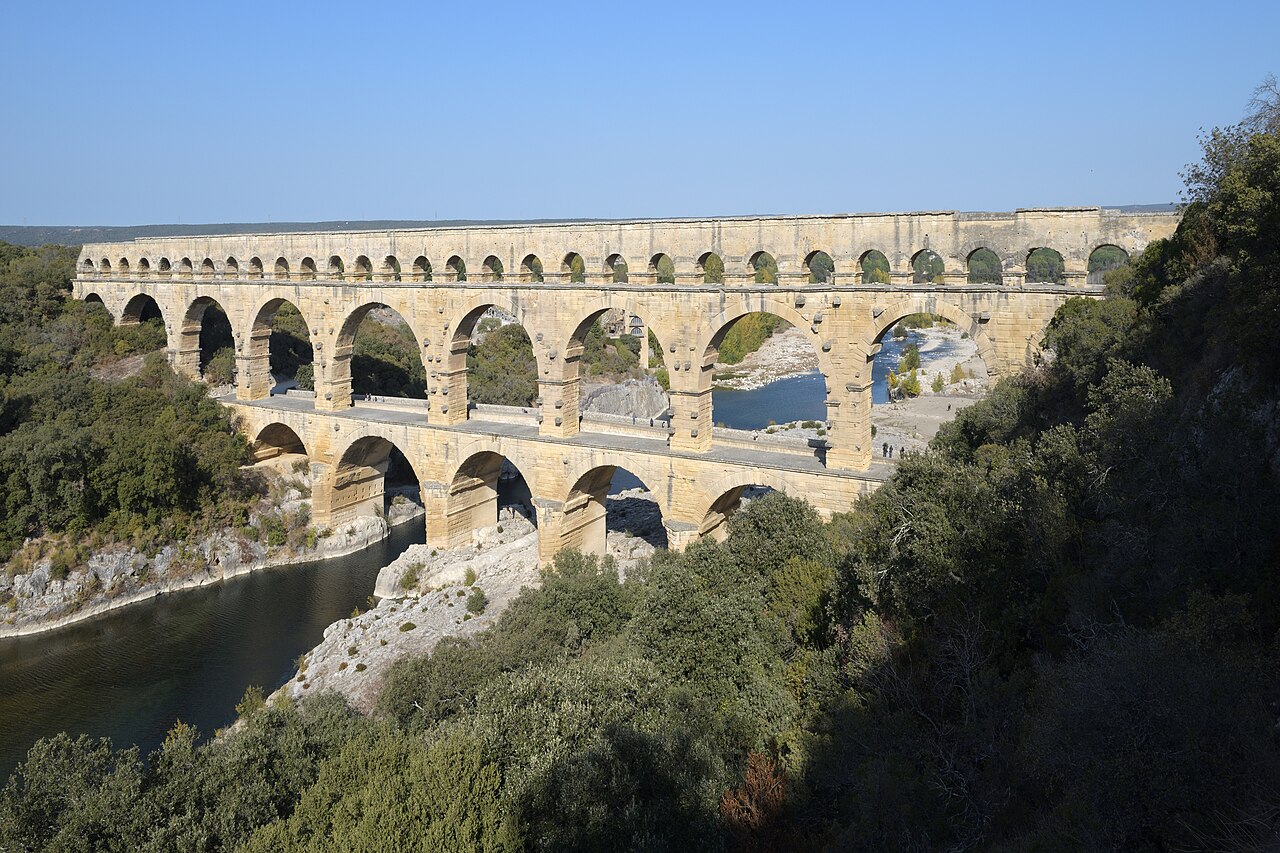
The Pont du Gard, a short drive away, ties the day together. This three-tier aqueduct bridge crosses the Gardon river, and was built to carry water to Nîmes from a spring near Uzès, a fact that connects all three stops. You can walk around both banks, look up at the arches and, in warm weather, paddle at the edge of the river.
The museum is closed in winter, but the site and walking paths stay open, and a guide can explain the engineering. Tours usually allow an hour or more at the bridge, which is enough for photographs and a walk.
Practical points are simple. The day is long, with a good deal of walking on cobbles and uneven ground, so wear comfortable shoes. Summer is hot and the bridge has little shade, so bring water and a hat, and winter can be windy with shorter hours at the monuments. Entry to the amphitheatre and the temple is usually paid separately or included according to the tour, so check what your tour covers. Departures are usually from Avignon, which makes the trip easy for visitors without a car, and the route returns in the late afternoon.
What to expect
The experience
A small-group day tour from Avignon to Nîmes, Uzès and the Pont du Gard, with a guide at each stop and free time in the towns.
Best time
Spring and autumn for mild walking weather; Saturday for the Uzès market.
How long
A full day, usually leaving in the morning and returning in the late afternoon.
Tips
Wear comfortable shoes for cobbles, bring water and a hat in summer, and check which entry tickets your tour includes.
Quick picks
- Best for
- History lovers who want Roman monuments and a pretty market town in one day.
- Families
- A long day with a lot of walking, so best for older children who like history.
- Couples
- Lunch in Uzès under the arcades, then the Pont du Gard in the afternoon light.
- Pair with
- The Arles Roman monuments, the Camargue, or an evening in Avignon.
- Time needed
- A full day, around eight hours.
Good questions
What is the Maison Carrée?+
A small Roman temple in Nîmes from the first century, among the best-preserved in the world. A short film inside tells the story of the city.
Is the amphitheatre in Nîmes worth seeing if I have seen Arles?+
Yes. The Nîmes arena is remarkably complete and still hosts events, and the upper galleries give a good sense of how it worked. The two cities complement each other.
When is the Uzès market?+
The big market fills the old centre on Saturday mornings, and there is a smaller one on another weekday. Check the days if the market matters to you.
Do I need a car?+
No. The tour departs from Avignon and covers all three stops, which is the simplest way to see them without driving.
Is the Pont du Gard open all year?+
The site and walking paths are open all year, but the museum and cultural spaces close for part of the winter, so check before you travel.