Puebla is one of Mexico's great food cities, and you can eat well here at every price, from a street snack to a long, formal lunch. The cooking is distinct from that of Mexico City or Oaxaca, built around dried chiles, nuts, seeds and the convent kitchens of the colonial era, and a few signature dishes appear on almost every menu. This guide explains what to order, where the best eating happens and how to pace yourself, without recommending specific restaurants whose quality changes from year to year.
Mole poblano
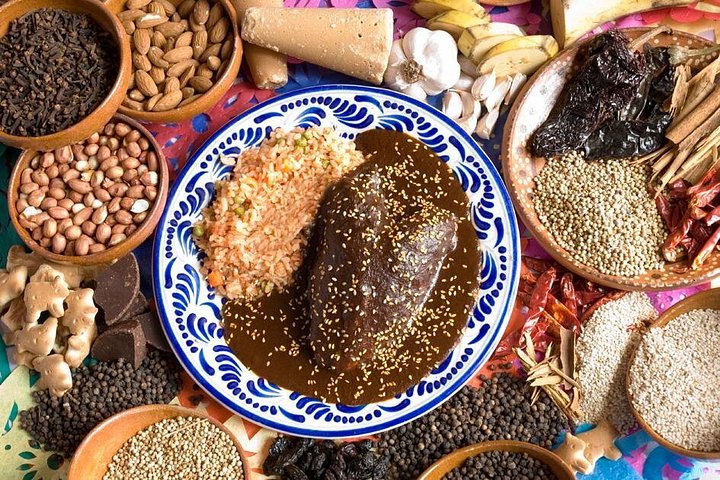
The dish that made Puebla famous is a dark, glossy sauce of dried chiles, spices, seeds and a little chocolate, usually poured over turkey or chicken and served with rice and tortillas. Popular legend credits nuns of a Puebla convent with inventing it, although historians treat that story with caution. The sauce is rich rather than hot, with a layered flavour that is both sweet and savoury. Try it at a traditional restaurant at lunch, and if you want to understand how it is made, book a market visit and cooking class, where you will see the chiles and spices and cook the sauce yourself.
Cemitas
The city's famous sandwich is built on a round, sesame-covered roll and filled with meat, avocado, cheese, onion and a herb called pápalo, which has a sharp, citrusy flavour that is unlike anything else. A good cemita is large and messy, so share one if you plan to eat again later, and ask for it without chile if you prefer a milder flavour. Cemitas are sold at stalls and small restaurants all over the centre, and a guided food walk is a good way to taste one with confidence.
Street snacks and local plates
Look for chalupas, small fried tortillas topped with salsa and shredded meat, and molotes, stuffed fried masa pockets. Tacos árabes, which came with Middle Eastern immigrants who settled in the city, are cooked on a spit and served in a pita-style flatbread and are a local speciality that visitors often miss. Tamales, hot chocolate and fresh fruit waters round out a snack day. Markets are the best places to graze, so plan a morning among the stalls with an empty stomach.
Chiles en nogada
The city's most celebrated seasonal dish is a poblano chile stuffed with a mix of meat, fruit and spices, covered in a creamy walnut sauce and topped with pomegranate seeds, so that it carries the colours of the Mexican flag. It is traditionally served in late summer, roughly August and September, when the walnuts and pomegranates are fresh. If your trip falls at that time, make it a priority, and book ahead because the best restaurants fill quickly.
Sweets
Puebla's convents were famous for their confectionery, and the tradition survives in a street of sweet shops in the centre selling camotes, which are candies made from sweet potato, along with candied fruit, nut brittle and marzipan-style treats. They make good gifts and are inexpensive, and shops often let you taste before you buy.
What to drink
Fresh fruit waters and hot chocolate are everyday drinks. The traditional drinks of the region include pulque, a fermented agave beverage that is an acquired taste, and mezcal, which is often served with orange slices and salt. Cantinas, the old-style bars of the centre, are good places to try regional drinks with snacks, and a guided cantina visit takes the guesswork out of ordering. Drink only purified or bottled water, and ask for drinks without ice if you are unsure of the source.
Practical tips
Lunch is the main meal and usually runs from about two o'clock, while dinner is lighter and later. Many restaurants close one day a week, so check before you plan a special meal. A tip of around ten to fifteen percent is customary in sit-down restaurants, and it is courteous to carry some small notes for market stalls. If you have dietary needs, learn the Spanish words for the ingredients you avoid, since nuts, seeds and meat stocks appear in many sauces.
A suggested food day
Begin with a market breakfast of tamales and hot chocolate, join a guided food walk to taste cemitas, tacos árabes and street snacks, take a long lunch of mole poblano, then finish with sweets and a drink in a cantina or on a rooftop terrace in the artists quarter.