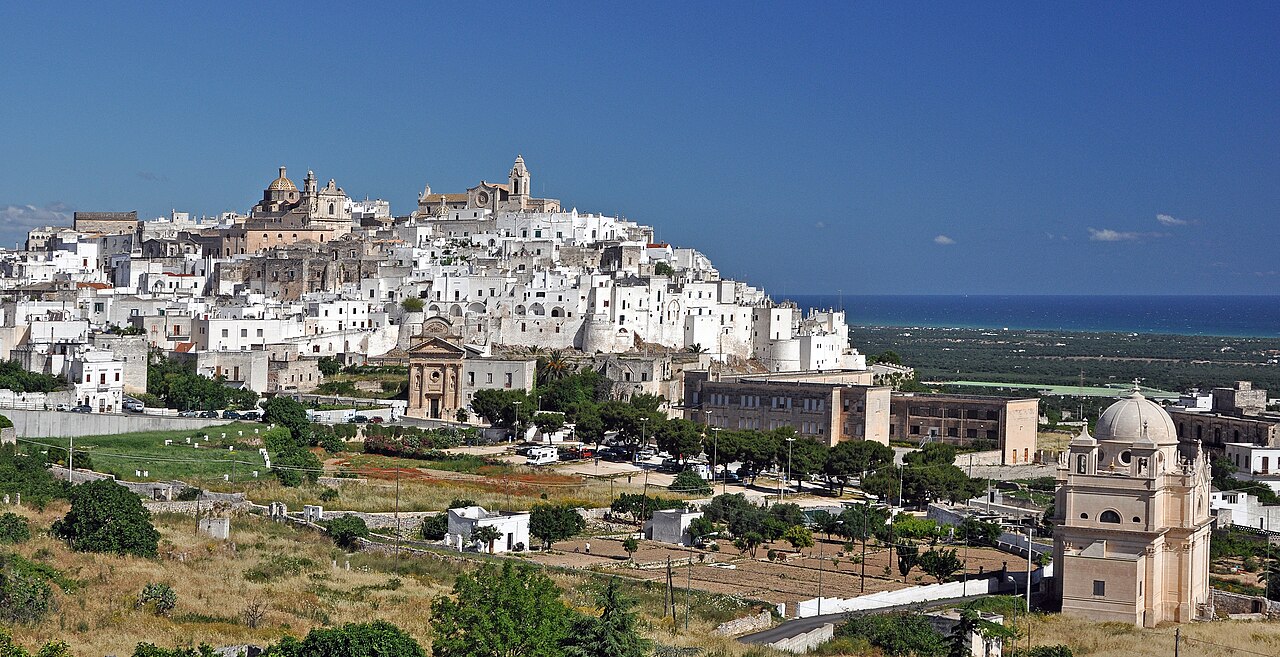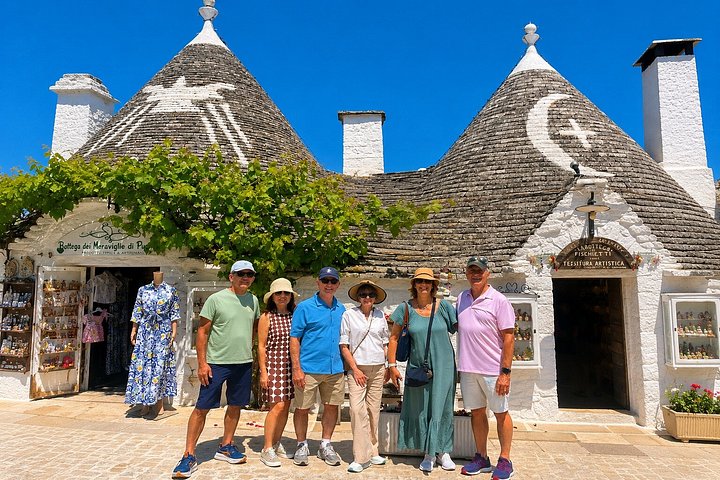
Martina Franca is the largest town in the Itria Valley and has a different character from the white villages around it. Its old centre is a showpiece of Apulian Baroque and Rococo, with pale stone palazzi, carved doorways, wrought-iron balconies and small elegant courtyards, all arranged around grand squares and narrow, curving lanes. The town stands on a hill above the trulli countryside and was founded in the Middle Ages, then grew wealthy under the Caracciolo dukes in the 17th and 18th centuries, which explains the splendour of its architecture. The main entrance to the old town is through the Arco di Sant'Antonio and the Porta di Santo Stefano, and beyond lies Piazza Plebiscito, the main square, dominated by the Palazzo Ducale and the Basilica di San Martino, the town's patron church. Entry to the old town is free, and a wander here is a pleasant contrast to a morning among the trulli of Alberobello and the lanes of Locorotondo.
Start at Piazza XX Settembre, pass under the Arco di Sant'Antonio and follow the lanes to Piazza Plebiscito, which is the heart of the old town. The Basilica di San Martino has an ornate Baroque facade with a statue of Saint Martin on horseback sharing his cloak with a beggar, and the interior is richly decorated with marble and paintings.
Opposite stands the Palazzo Ducale, the former home of the ruling family, with elegant halls that are used for cultural events and exhibitions. From the square, the lanes fan out in a maze of small streets where balconies lean over the stone, and it is easy to spend an hour discovering hidden courtyards and little churches.
The town is known for its food. Capocollo di Martina Franca is a cured pork speciality seasoned and aged locally, and you will see it in butchers, delicatessens and on restaurant menus across the valley. Nearby Cisternino is famous for its fornello pronto butchers, where you pick meat from the counter and have it grilled on the spot, and Martina Franca has its own versions of the tradition.
Every summer the town also hosts a well-known opera and classical music festival in the Itria Valley, which fills the Palazzo Ducale courtyard and nearby squares with performances, so check the season if you like music.
Getting there is simple. Martina Franca is the end of the regional rail line through the valley from Bari, a journey of about an hour and a half, and a short drive from Alberobello and Locorotondo. Parking is easiest outside the old centre, which has traffic restrictions. Plan two hours for the old town, and add a longer lunch if you want to try the local meats. Late afternoon is the best time, when the stone turns golden, shops reopen after the siesta and the squares fill with families on their evening stroll.
Wear comfortable shoes for the polished paving and carry a light layer in the cooler months, when the hill can be breezy. Many visitors also like to stop in the small shops selling cured meats, cheeses and local sweets, and to sit in one of the cafes on the square watching the town go by. The surrounding countryside, with its trulli, walls and farms, is lovely by bicycle, so ask locally about routes if you have a spare afternoon.
What to expect
The experience
A self-guided walk through the Baroque old town, from the entrance arch to Piazza Plebiscito, the basilica and the Palazzo Ducale.
Best time
Late afternoon and early evening, when the stone glows and the squares fill with locals.
How long
Two to three hours, longer with a long lunch of local cured meats.
Tips
Park outside the traffic-restricted centre, wear shoes with grip for the polished stone and note that many shops close for part of the afternoon.
Quick picks
- Best for
- Architecture and food lovers who want a grand Baroque town as a counterpoint to the white villages nearby.
- Families
- Spacious squares and short distances suit children, though the lanes are uneven for strollers.
- Couples
- An early-evening stroll, an aperitivo in Piazza Plebiscito and dinner with local cured meats.
- Pair with
- Locorotondo, Alberobello, Cisternino and a vineyard visit in the Itria Valley.
- Time needed
- Two to three hours, or a relaxed half day with lunch.
Good questions
Is Martina Franca worth a visit if I have seen Alberobello and Locorotondo?+
Yes. Its Baroque palaces and squares are very different from the trulli and whitewashed lanes of its neighbours, so it adds variety to a day in the Itria Valley.
What is the most important building?+
The Basilica di San Martino and the Palazzo Ducale on Piazza Plebiscito are the main monuments. The Arco di Sant'Antonio gives a grand entrance to the old centre.
Is there an entry fee?+
No, the old town is free to walk. Some palace rooms or events may be ticketed, and you pay for food and drink as usual.
How do I get there from Bari?+
A regional train through the Itria Valley takes about an hour and a half, ending at Martina Franca. By car, parking outside the old centre is the easiest option.
What should I eat here?+
Try capocollo di Martina Franca, a cured pork speciality, along with local cheeses, orecchiette and grilled meats. Nearby Cisternino is famed for its grill butchers.