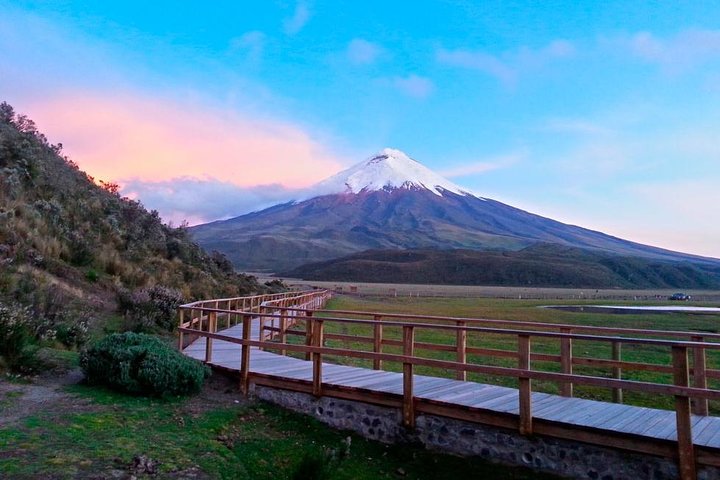
The Antisana area is one of the wilder day trips from Quito, a high landscape of grassland, lakes and rock beneath a glaciated volcano of the same name. The protected reserve around the mountain is known for its wildlife, and the headline attraction for many visitors is the chance to see Andean condors, among the largest flying birds in the world, which nest and soar along the cliffs in the area. A condor sanctuary and rescue centre in the foothills gives visitors a closer look at the birds, which are a national symbol, and explains the conservation effort around them. Elsewhere on the route there are lakes with wild horses, Andean gulls and sometimes foxes or deer, and the road passes through cloud forest where hummingbird feeders draw several species within arm's reach. Most tours combine the condors with a hummingbird observatory, so you move from bleak high páramo to green, flower-filled gardens in a single day. It is a good choice for wildlife and photography enthusiasts, and a quieter alternative to the busier volcano trips. Weather in the area is changeable, so a flexible attitude and warm clothes matter.
Why go
The combination of big landscape and close wildlife encounters is hard to match. The páramo looks stark and almost lunar, with tufts of grass and rocky ridges, and the glaciated volcano appears from time to time when clouds part. A few hours later you can be watching tiny hummingbirds hover at feeders in a garden below, and the contrast between the two settings makes the day feel varied.
How the visit works
The tour linked here is a day trip that combines the condor sanctuary with a hummingbird observatory, collecting visitors in Quito in the morning and returning in the evening. Expect a drive of a couple of hours each way, with stops for photographs, a short walk or two and a lunch break.
Some itineraries differ in which sites they include, so confirm the details with your operator. The condors at a sanctuary are typically seen in an enclosure or at supervised flying demonstrations, while sightings of wild condors in the surrounding area depend on weather and luck.
Wildlife and conservation
Andean condors are threatened across much of their range, and projects that rescue, rehabilitate and monitor them are an important part of the effort. Visiting a responsible sanctuary supports that work, and guides can explain how the programme operates. Birdwatchers will also appreciate the range of hummingbirds, tanagers and other species at the observatory, and a good guide can point out species that you would miss alone.
What to bring
The páramo is cold, windy and exposed, and conditions can change within minutes. Bring warm layers, a waterproof jacket, a hat, gloves and sun protection, and sturdy shoes for walking on uneven ground. Binoculars and a camera with a zoom lens make a big difference. Altitude is significant, so take things slowly and drink water.
Good to know
A private or small-group tour gives more flexibility with timing than a large coach. Start times are early, because wildlife is most active in the morning, and weather is often best before midday.
Making the most of it
Keep a small notebook or a photo log of the species you see, and ask your guide about the best vantage points for the volcano. A thermos of something hot is welcome on the páramo, and a spare memory card is worth carrying, since hummingbirds are hard to resist photographing.
What to expect
The experience
A full-day wildlife trip east of Quito, combining a condor sanctuary and high páramo scenery with a hummingbird observatory in the cloud forest.
Best time
Early starts give the best wildlife activity and clearer views of the volcano.
How long
A full day, with roughly two hours of driving each way plus time at each stop.
Tips
Dress for cold and wind, bring binoculars and a zoom lens, and move slowly at altitude.
Quick picks
- Best for
- Wildlife lovers, birdwatchers and photographers who want a quieter alternative to the busiest volcano trips.
- Families
- Hummingbird feeders and condors are a hit with children, though the cold, altitude and long day suit older kids best.
- Couples
- A scenic, unhurried day with close wildlife encounters and a contrast of landscapes.
- Pair with
- Papallacta Hot Springs, which lie in the same direction, for a soak after the cold páramo.
- Time needed
- A full day.
Good questions
Will I see wild condors?+
Sightings of wild condors in the area depend on weather and luck. A sanctuary gives a reliable close look at the birds in a managed setting.
What else does the trip include?+
Itineraries vary, but many combine the condors with high páramo scenery, lakes and a hummingbird observatory in the cloud forest. Confirm the details with your operator.
What should I wear?+
Warm layers, a waterproof and windproof jacket, a hat and gloves, sun protection and sturdy shoes. The páramo is cold and exposed.
Is it suitable for children?+
Often yes, since the birds are exciting to watch, but the long day, cold and altitude suit older children better than toddlers.
What is the best time of day?+
Morning, when wildlife is most active and the weather is usually clearer. Tours start early for that reason.