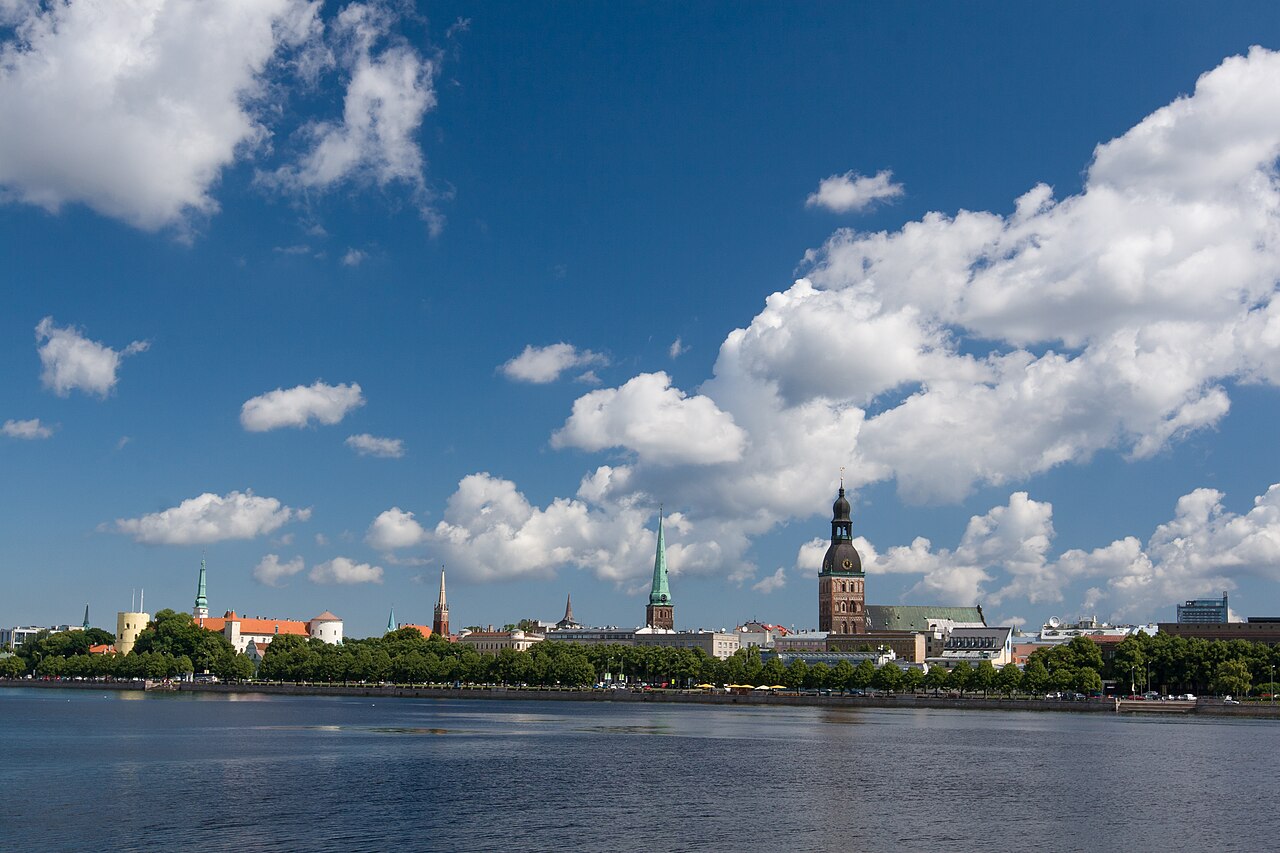
Riga Castle stands at the northern edge of the Old Town beside the Daugava, a broad ochre complex of towers and courtyards that has been rebuilt after fires, sieges and changing rulers more times than anyone can easily count. It was founded in the fourteenth century by the Livonian Order after the people of Riga destroyed its predecessor, and later passed through Polish, Swedish and Russian hands. In independent Latvia it became the seat of the head of state, and today parts of it serve as the residence of the President, so the main block is closed to ordinary visitors. Other parts hold national museums, including the national history museum, which makes the castle a genuine day out on a rainy afternoon. From outside, the setting is the draw: a plain, sturdy building on a broad square, with the green riverbank and the spire of the Cathedral nearby.
What you can see
The exterior and the forecourt are open to walk around, and the Daugava embankment beside the castle gives a fine view across the river to the modern skyline. Inside, the museums occupy separate wings and have their own opening hours and ticket prices, so plan around the museum you want rather than the whole building. The national history museum covers Latvian life from prehistory to the twentieth century in exhibits that suit anyone curious about how the country has been shaped, while other exhibitions come and go.
How to visit
Pils laukums sits a short walk from Dome Square and the Three Brothers, so the castle slots neatly into an Old Town loop. Walk down from the Cathedral, take in the facade, then continue along the river. Stand on the embankment for photographs and look for the changing of the guard at the presidential entrance when it takes place, which is a modest but charming ceremony.
If you intend to go inside a museum, buy the ticket online or at the desk and check the day, because most museums close one day a week.
Good to know
Because the building is a working seat of government, security staff are usually visible, and photography near the entrances is restricted. Do not expect a conventional fairytale castle; the charm lies in the layers of history, the plain mass of the building and its location at the meeting point of the old city and the river. In winter the embankment is windy and the courtyard quiet, while in summer the lawns fill with locals.
Making the most of it
Combine the castle with a walk to the Swedish Gate and Powder Tower, then cross to the riverside for a view of the Old Town from the Daugava. If you have limited time, treat the castle as a half-hour exterior stop and spend your museum hours at the Latvian National Museum of Art or the Museum of the Occupation instead.
What to expect
The experience
A walk around the castle exterior and riverside, with optional museum visits in the separate wings.
Best time
Late morning for a museum, or early evening for the river light on the walls.
How long
About thirty minutes outside; one to two hours if you add a museum.
Tips
The presidential wing is closed to visitors; check each museum’s open days and book the ticket you want.
Quick picks
- Best for
- History fans who want a museum visit within the Old Town.
- Families
- Open spaces outside and a museum with hands-on displays for older children.
- Couples
- A riverside stroll at dusk after seeing the Old Town.
- Pair with
- Riga Cathedral, Riga Old Town and the Daugava embankment.
- Time needed
- Thirty minutes to two hours.
Good questions
Can you go inside Riga Castle?+
Not into the presidential wing, but the national museums in other parts of the complex are open to visitors with a ticket.
Who lives in Riga Castle?+
Parts of it serve as the residence of the President of Latvia.
Is the castle worth visiting?+
For the exterior and setting, yes as a short stop; for the museums, yes if you want deeper Latvian history.
Where is Riga Castle?+
On Pils laukums at the northern edge of the Old Town beside the Daugava, a short walk from the Cathedral.
Are the museums open every day?+
Most close one day a week, so check the day and book your ticket before you go.