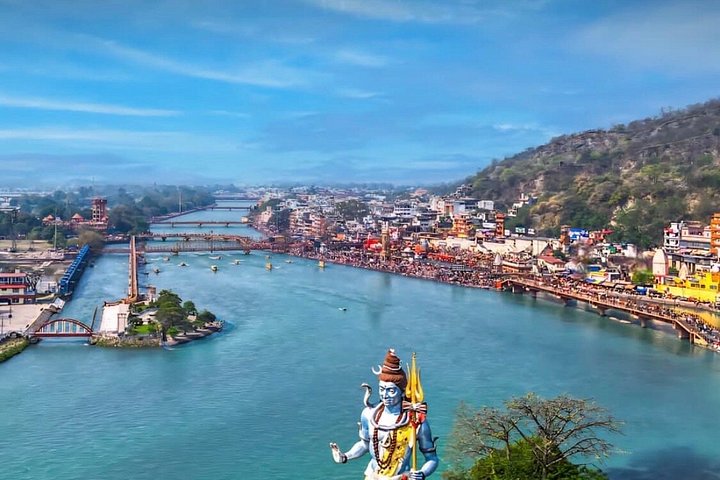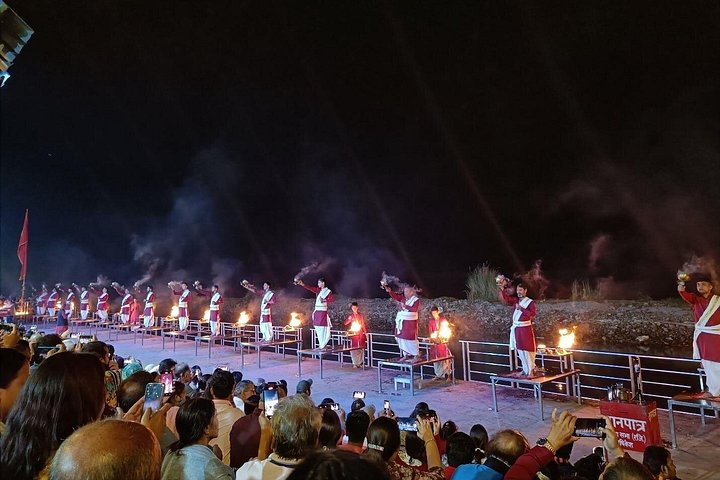
The evening Ganga Aarti at Triveni Ghat is the moment many travellers remember longest from Rishikesh. Every evening around sunset, priests in saffron gather on the stone steps by the Ganges, light large brass lamps, ring bells and sing hymns to the river while pilgrims float small leaf boats carrying flowers and tiny flames onto the current. The setting is simple and the scale is human, which is part of the appeal: families, sadhus, backpackers and local devotees sit shoulder to shoulder on the steps while the sky darkens and the lamps glow. Triveni Ghat is named for the traditional belief that three sacred streams meet here, and it is one of the main bathing ghats of the town. A guided old-town walk before the ceremony adds context, passing the narrow lanes, small shrines and market stalls around the ghat, and explaining what is happening and why. Without a guide the aarti is beautiful but easy to misread, with crowds, vendors and customs that are not obvious to a first-time visitor.
How the evening works
Guided walks of this type usually meet in the late afternoon in or near the old town, walk through the lanes around the market and the ghat, and arrive in time to secure a spot on the steps before the ceremony starts at sunset. The guide explains the rituals, such as the offering of flowers and lamps, the meaning of the chants, and how to take part respectfully. After the aarti you can walk back through the lanes together, and some tours end with tea or a snack.
Etiquette is simple and worth following. Dress modestly, covering shoulders and knees, and remove your shoes where steps lead to the water or a shrine. Keep voices low, ask before photographing people, and do not step into the river area reserved for the priests. Offerings are small and inexpensive, and it is normal to be approached by sellers of flower boats and by people asking for donations; a firm, polite refusal is fine. Keep a hand on your phone and wallet in the crowd.
Plan the timing with sunset in mind. The ceremony follows the setting sun, so it starts earlier in winter than in summer, and the steps fill up quickly on weekends and festival days. Arrive early for a place, and bring a layer in winter because the river air cools quickly after dark. If you are staying near the Laxman Jhula or Tapovan area, allow time for the walk or a short ride to the ghat, as the lanes get busy near the ceremony.
Many visitors compare this aarti with the larger ceremony at Parmarth Niketan, which has a bigger stage and a choir, and with the grand aarti at Har Ki Pauri in Haridwar. Triveni Ghat is the more local, less staged of the three, and a good place to start. It pairs naturally with a food walk or a rafting day earlier in the afternoon.
Making it a full evening
A good rhythm is to start with a cup of chai in the old town, walk down to the ghat an hour before sunset, and stay seated for a few minutes after the final chant, when the crowd thins and the lamps float away downstream. That quiet moment is often more affecting than the ceremony itself. Eat afterwards at one of the simple vegetarian restaurants near the market, and keep in mind that lanes near the ghat are dim, so a small torch is useful.
What to expect
The experience
A guided walk through the old town lanes, then a seat on the ghat for the evening aarti ceremony.
Best time
Late afternoon through sunset; start times shift with the season.
How long
Two to three hours including the walk and the ceremony.
Tips
Dress modestly, carry small change for offerings, and arrive early on weekends.
Quick picks
- Best for
- First-time visitors who want context for the ritual, not just a view of it.
- Families
- Children enjoy the lamps and bells but crowds can be tight; keep them close.
- Couples
- A quiet, atmospheric evening after a day of activity.
- Pair with
- Street food in the old town before or after.
- Time needed
- One evening.
Good questions
What time does the aarti start?+
It follows sunset, so the start time moves through the year. Your tour will tell you the meeting time, and arriving early gets a better place on the steps.
Is the ceremony free?+
Watching is free. Guided walks, flower offerings and any donations are optional extras.
What should I wear?+
Modest clothing that covers shoulders and knees, plus easy-off shoes and a light layer for the evening air.
Can I take photos?+
Photographing the ceremony from a distance is generally fine, but ask before photographing individuals and do not use flash near the priests.
How does it compare with Parmarth Niketan?+
Triveni Ghat is smaller and more local in feel. Parmarth Niketan has a larger staged ceremony with a choir and many visitors.