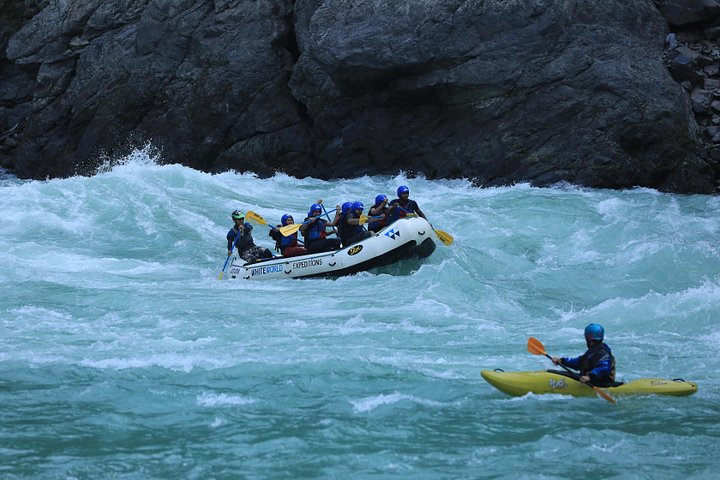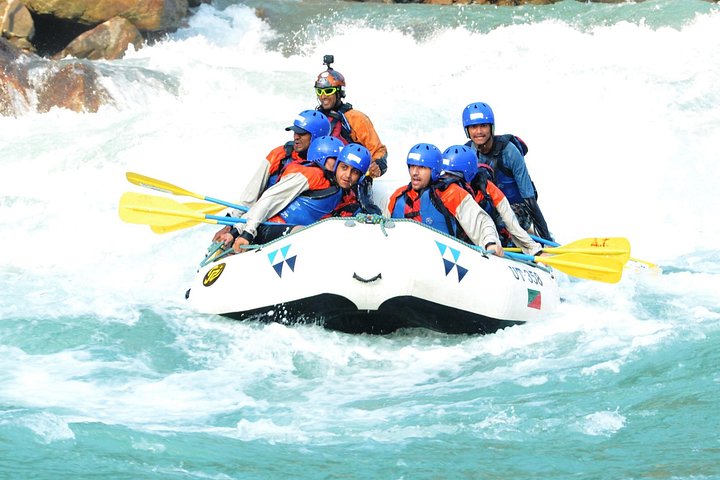
Rafting is the reason many travellers come to Rishikesh, and the half-day run is the version most people choose. The Ganges here is not the slow brown river of the plains. It leaves the Himalayan foothills cold, clear and quick, and the stretch below Rishikesh is a string of named rapids that rafting guides have been running for decades. A half-day trip of about 26 km starts upstream of town, drops through the big water in the first hour, and then settles into calmer reaches where you can swim in a life jacket, watch the forested banks go by and look up at the temples above the river. Rapids are graded on the international scale, and the popular sections run from gentle Grade I and II water to lively Grade III and IV, so the day suits first-timers as well as people who have paddled before. Each raft carries a guide who sits at the back, steers and calls the paddle commands, so you do not need experience, only the willingness to follow instructions and get soaked.
What the trip involves is simple. You are met in town or at a riverside office, given a briefing and safety talk, fitted with a helmet, life jacket and paddle, and driven upstream to the put-in point. The briefing matters, because the commands for forward, back, stop and get down are what keep a raft stable in a big wave. Once afloat, you paddle through rapids that guides know by name, such as Roller Coaster, Three Blind Mice, Golf Course and Black Money, with calm stretches between them.
Many operators stop for a swim and a cliff jump option in a quiet section, and a few photographers at the bank offer pictures for sale. After the run you are taken back to town, and showers and changing space are normally available.
Timing and season decide how good the water is. The main rafting season runs from autumn through spring, roughly September to June, with the strongest rapids after snowmelt feeds the river in spring. Rafting is suspended during the monsoon months when the Ganges is too high, and local authorities set the opening and closing dates, so do not plan a trip in July or August without checking.
Mornings are cooler and calmer on the water, and winter mornings can be properly cold in the shade, so bring a change of clothes and expect to wear them. In the hot pre-monsoon months, an afternoon run is more comfortable.
Safety and suitability need a straight answer. Operators set minimum ages and weights for different stretches, and the longer, bigger-water runs are not suited to small children, pregnant travellers or anyone with back, heart or shoulder conditions. Wear a swimsuit or quick-dry clothes, bring a towel and sunscreen, and keep valuables locked at the hotel because bags and phones do get wet unless a dry bag is provided.
Always check that the operator provides certified helmets and life jackets, and that guides run the stretch regularly. Alcohol is not part of the experience, and Rishikesh bans it in much of the town anyway.
How it fits into your stay
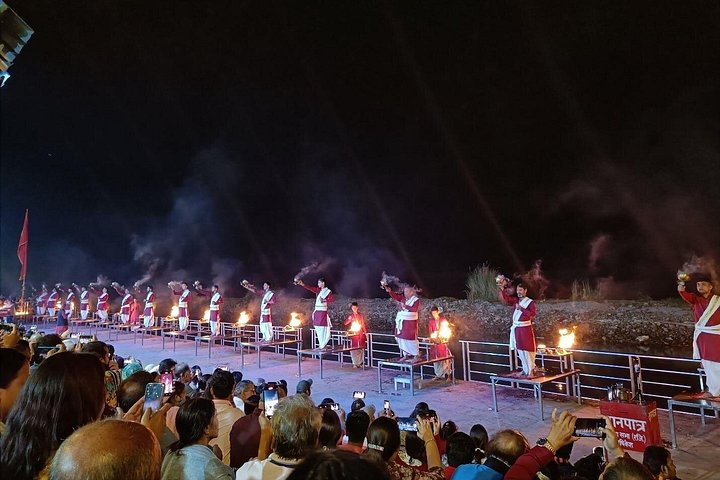
The half-day format leaves the rest of the day free for the evening Ganga Aarti or a walk across the footbridges. If you want more river, the full-day run adds a longer stretch with extra rapids, and multi-day expeditions camp on the white sand beaches along the way. Many visitors do the half-day on their first full day, then decide whether to go bigger.
What to expect
The experience
A briefing, then a guided raft run of about 26 km down the Ganges with helmets, life jackets and a guide steering each raft.
Best time
Autumn to spring, with morning runs cooler and spring giving the biggest water; rafting is suspended in the monsoon.
How long
Allow three to four hours including the briefing, the drive upstream and the run.
Tips
Wear quick-dry clothes, bring a change and a towel, and leave valuables at the hotel unless a dry bag is provided.
Quick picks
- Best for
- First-timers who want a proper rapids run without giving up a whole day.
- Families
- Check the operator's minimum age for the stretch; younger children usually need a calmer section.
- Couples
- A shared adrenaline morning, followed by the evening aarti.
- Pair with
- The Triveni Ghat or Parmarth Niketan Ganga Aarti the same evening.
- Time needed
- Half a day.
Good questions
Do I need rafting experience?+
No. Each raft has a guide who steers and gives paddle commands, and the briefing before the run covers what to do if someone falls in.
When is the rafting season?+
Roughly September to June. Rafting is suspended during the monsoon months, so check dates with the operator before you plan around it.
Are the rapids dangerous?+
They are real white water, graded up to about Grade IV on popular stretches. Helmets and life jackets are standard, and guides know the river, but you should still follow instructions and choose a stretch that matches your confidence.
Can children go?+
Operators set minimum ages and weights that vary by stretch, so ask before booking. Younger children are usually limited to gentler sections.
What should I wear?+
Swimwear or quick-dry clothes, secure sandals and a change of dry clothes. Sunscreen and a hat help in warm months.