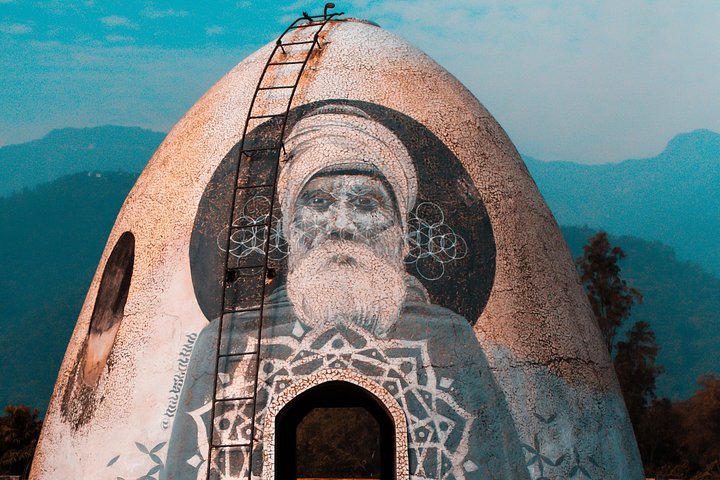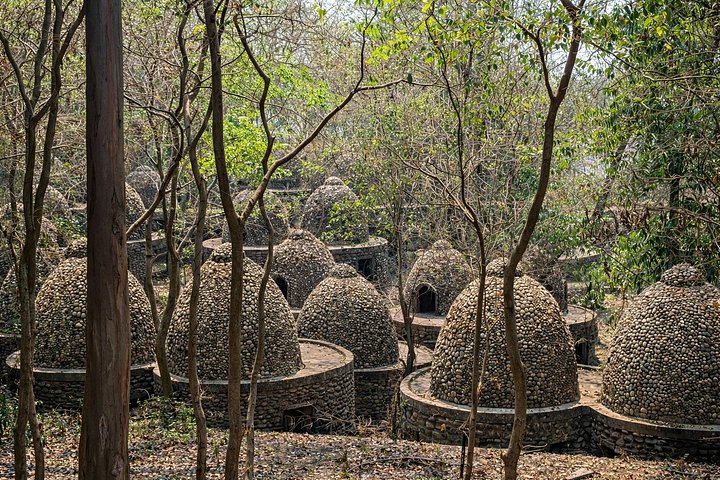
The Beatles Ashram, formally known as Chaurasi Kutia, is one of the most unusual heritage sites in India. In early 1968 the four Beatles, along with other celebrities of the era, travelled to Rishikesh to study Transcendental Meditation with Maharishi Mahesh Yogi, and many of the songs on the White Album were written during that stay. Decades later, the ashram sits in the forest on the east bank of the Ganges, abandoned and half reclaimed by jungle, with domed meditation cells, crumbling halls and walls covered in layers of graffiti and murals. It is part gallery, part ruin and part pilgrimage for music fans. A guided walk of the site brings the story to life, from the arrival of the band and the daily routine of the retreat to the famous falling-out that ended it, and points out the best murals and quiet corners that unguided visitors often miss. The setting is atmospheric: birdsong, sunlight through the trees, and silence broken only by other visitors' footsteps on the old stone paths.
The site is run as a heritage space and entry normally needs a ticket, with a higher price for foreign visitors than for Indian citizens. It is open during daylight hours, and the layout is a loose cluster of buildings spread across forest paths, so you do a good deal of walking on uneven ground.
Guided walks usually combine the ashram with the nearby riverbank and a meditation or art element. Because the walls are continually repainted by visiting artists, the murals change from year to year, and the best-known pieces are sometimes covered by new work.
What to look for inside
The round stone meditation cells, each built for one person, give the ashram its name, which refers to the 84 cells; the big hall that served for lectures and gatherings; and the quiet courtyard where the Beatles gathered. Murals range from portraits of the band to abstract art and political statements. Guides can explain the story of the stay, the songs written there and the reasons the group left, and they can point out which areas were restored and which are left to nature.
Practical points matter in a forest setting. Wear sturdy shoes, bring water and insect repellent, and respect any signs about restricted areas, as some buildings are unsafe. The site is inside forest land, so wildlife such as monkeys is common; keep food out of sight and avoid feeding them. Photography is welcome and is one of the main reasons people come, but be considerate of other visitors who are trying to meditate or sit quietly. Early morning or late afternoon gives the best light and fewer crowds.
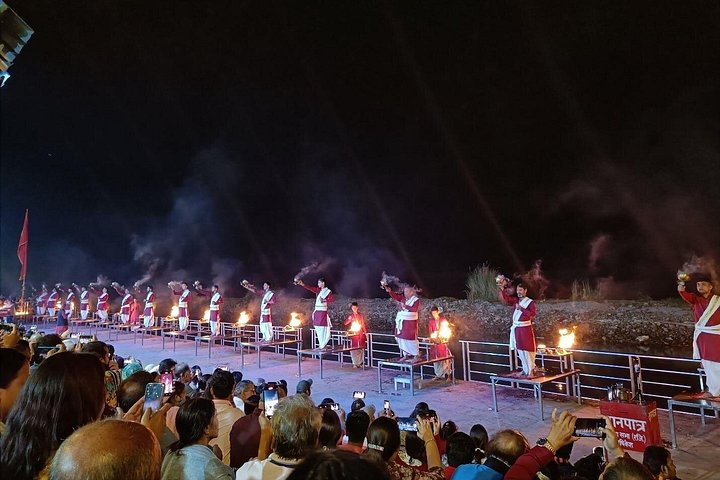
The ashram makes a good half-day outing and pairs well with the other spiritual sights of Rishikesh. Many visitors combine it with a walk across the Ram Jhula bridge or a river-bank stroll, followed by an evening aarti. If you want to understand why this small town became a name in 1960s pop culture, this is where the story is easiest to follow.
A note on context
The 1968 retreat drew a crowd of musicians and actors, and the songs written there, later released on the White Album, give the ruins their fame. Yet the site is also a reminder of how the Western fascination with Indian meditation began, and how Rishikesh became a destination for seekers. Reading a little about the story beforehand, or simply listening to the album on the way, adds a layer to what you see among the domes and murals.
What to expect
The experience
A guided walk through the ashram ruins, murals and forest paths, with the story of the 1968 stay and a meditation element.
Best time
Morning or late afternoon for softer light and fewer visitors.
How long
Two to three hours including the walk and a short pause.
Tips
Wear sturdy shoes, carry water and insect repellent, and watch for monkeys.
Quick picks
- Best for
- Music fans, photographers and anyone curious about 1960s history.
- Families
- Fine for older children who can walk on uneven ground.
- Couples
- A quiet, atmospheric walk with a story.
- Pair with
- Ram Jhula and the riverside lanes nearby.
- Time needed
- Half a day.
Good questions
Who stayed at the ashram?+
The Beatles and other well-known visitors studied meditation here with Maharishi Mahesh Yogi in early 1968, and several songs on the White Album were written during that time.
Is the ashram safe to walk around?+
Most paths are fine, but some buildings are unsafe and may be roped off. Follow signs and your guide, and wear sturdy shoes.
Do I need a ticket?+
Entry is normally ticketed, with different prices for foreign visitors and Indian citizens, so check what the tour includes.
Are the murals permanent?+
No. Artists keep adding new work, so what you see changes from year to year.
Is it good for photography?+
Yes. The domes, jungle light and murals are popular subjects, especially in the morning or late afternoon.