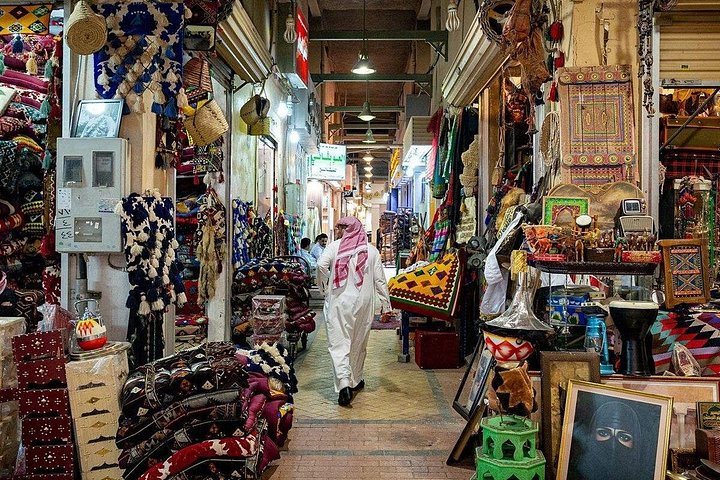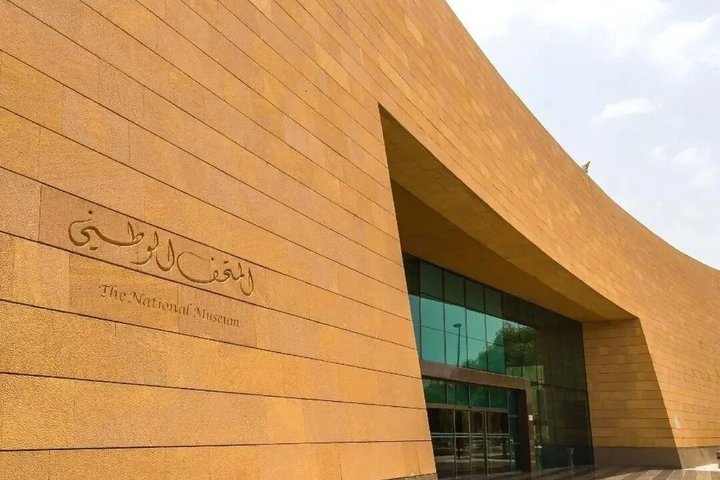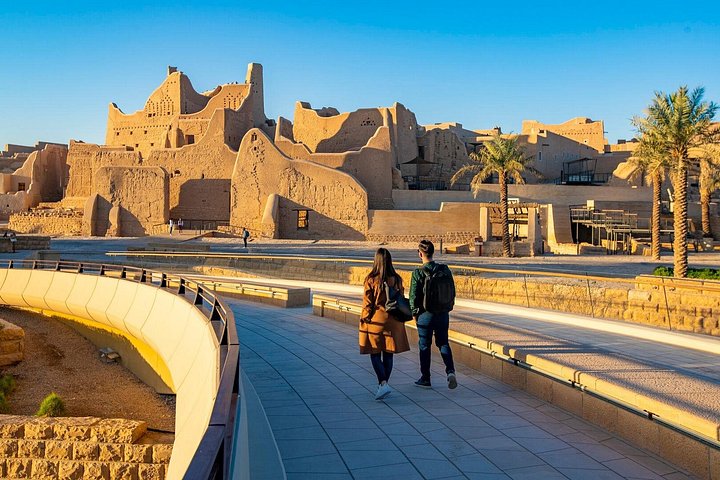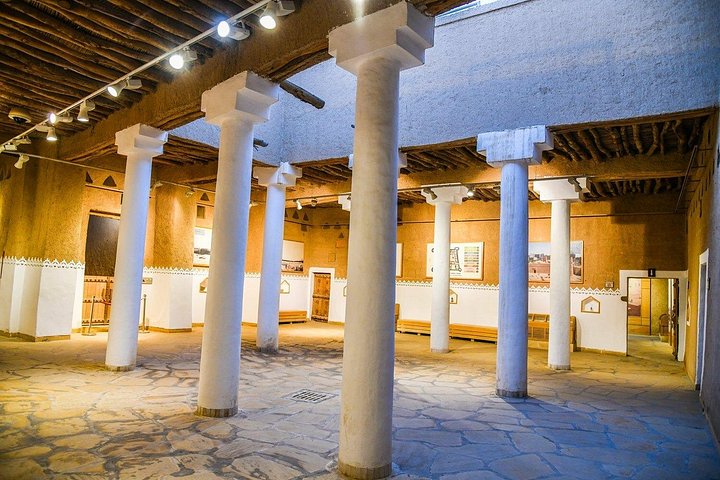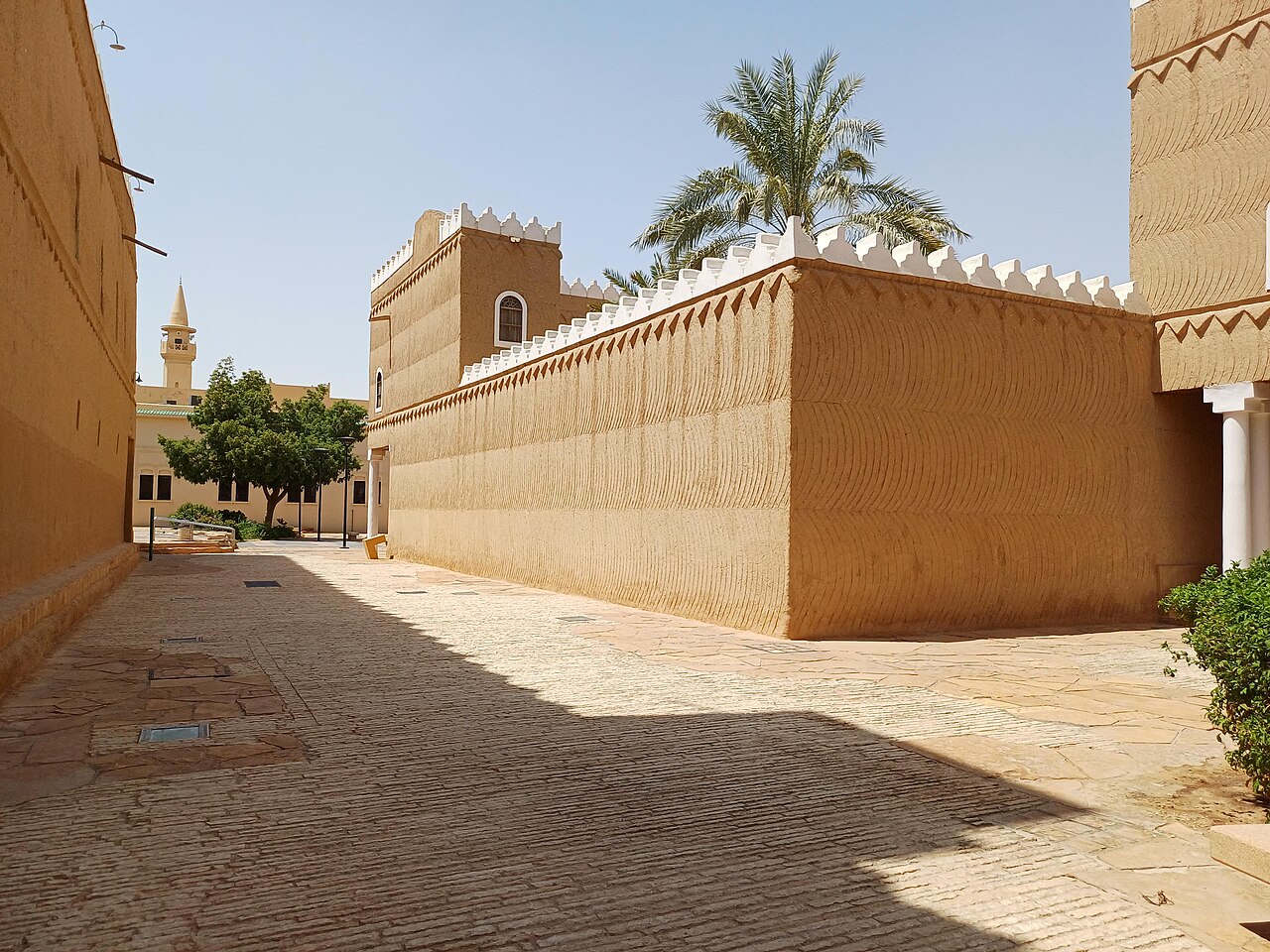
Murabba Palace is a restored mud-brick palace that King Abdulaziz built in the 1930s as his residence and seat of government, then at the edge of Riyadh and now surrounded by the city. Visit Saudi presents it as a place to uncover the story of the king and the origins of modern Saudi Arabia, and its Najdi design is the draw. Rooms open off a central courtyard, with thick walls, small windows, carved wooden doors and palm-trunk ceilings that keep the interior cool, and displays show how the king lived and governed. The palace sits within the King Abdulaziz Historical Centre, close to the National Museum, so it is easy to see both in the same visit and to add Masmak Fortress and Souq Al Zal in the same day.
Why it matters
Masmak tells the story of the capture of Riyadh, and Murabba shows what came next, when the king settled into a city that was growing out of its walls. The palace is a rare chance to walk through the rooms of a historic ruler in the style of the region, and the construction techniques, with mud brick, palm trunks and plaster, explain how people built in the desert before air-conditioning.
How to visit
Visit Saudi’s page for the palace gives the story but not the practical details, and sources differ on fees and opening times, so check current information before you go and do not assume a fixed schedule. There is no partner tour that names the palace, so the link here goes to Visit Saudi’s page. Several old-city walking and city tours include Murabba, and a guide helps, because the rooms are labelled lightly and the stories are the point.
Plan the visit as part of a half-day in the Historical Centre: start at the National Museum, walk across to the palace and finish at Masmak and Souq Al Zal in the evening. Go in the cooler months, wear comfortable shoes and dress modestly. Allow about an hour for the palace, and take a break in the shade of the courtyard between sights.
What to expect
The experience
A walk through restored courtyard rooms in a mud-brick palace, with displays on King Abdulaziz and the early years of the modern state.
Best time
Late afternoon in the cooler months, as part of a day in the Historical Centre.
How long
About an hour.
Tips
Check current entry terms before you go, dress modestly and pair it with the National Museum next door.
Quick picks
- Best for
- History fans who want to see how a ruler lived in the early days of the kingdom.
- Families
- Older children who like palaces and old buildings will enjoy it, and the courtyards give space to move.
- Couples
- A quiet, photogenic stop on a heritage afternoon in old Riyadh.
- Pair with
- The National Museum in the same grounds, then Masmak Fortress and Souq Al Zal.
- Time needed
- Allow about an hour, or half a day with the other sights.
Good questions
What is Murabba Palace?+
It is a restored mud-brick palace that King Abdulaziz built in the 1930s as his residence and seat of government. It is now a heritage site in the King Abdulaziz Historical Centre.
Is it far from the National Museum?+
No, it is in the same Historical Centre grounds, a short walk from the museum. Most visitors see both in one visit.
Do I need to book a tour?+
No, but a guide adds context, and several old-city tours include the palace. Check what each tour covers before you book.
How long should I allow?+
About an hour for the palace. Add time for the National Museum, Masmak Fortress and Souq Al Zal if you want a full day.
What is the architecture like?+
It is Najdi in style, with thick mud-brick walls, small windows, carved wooden doors and palm-trunk ceilings around a central courtyard.