Santiago de Compostela can be visited all year, but the experience changes with the seasons. Weather, crowds, prices and opening hours all shift, and the pilgrim calendar adds its own rhythm. This guide explains what to expect so you can choose the time that suits you.
Spring (March to May)
Spring is a lovely time. The countryside is green, gardens bloom and the temperatures are mild, though rain is common. The pilgrim season begins to build, with walkers arriving in greater numbers from April. Easter brings processions and crowds, so book early. May is often considered one of the best months, with long days and comfortable walking weather.
Summer (June to August)
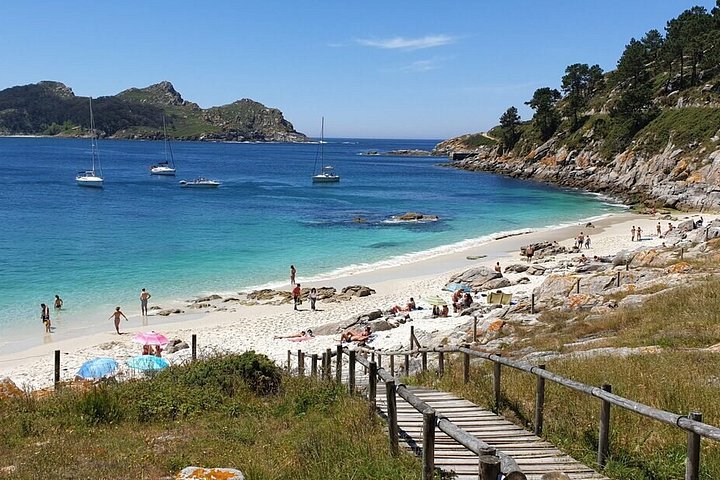
Summer is the high season. Days are long and warm, usually pleasant rather than hot, and the coast is at its best. The Cíes Islands ferries run daily, beaches are open and outdoor dining is at its peak. The city is busy with pilgrims, tour groups and holidaymakers, and prices rise. The feast of Saint James on 25 July is the biggest date in the calendar, with fireworks and celebrations in the Praza do Obradoiro. Book accommodation and tours well ahead.
Autumn (September to November)
Early autumn is another favourite time. The weather is often settled, the crowds thin out and the wine harvest brings activity to the Rías Baixas and Ribeira Sacra. Later in autumn the rain returns, leaves turn and the city feels quieter. Chestnuts appear in the market and the food turns hearty. It is a good time for food lovers.
Winter (December to February)
Winter is damp and mild rather than harsh, with frequent rain and short days. The old town is calm, rooms are cheaper and the cathedral is peaceful. Christmas lights decorate the lanes, and the atmosphere is cosy. Some day trips run less often, and the Cíes Islands ferries do not operate in the same way, so check before you plan. Bring a good waterproof and warm layers.
Holy Years
When 25 July falls on a Sunday, the church declares a Holy Year, or Xacobeo, and the Holy Door of the cathedral is opened. Visitor numbers rise sharply, with many more pilgrims and events. If you want to experience the atmosphere, book very early. If you prefer calm, choose another year or a quieter season.
Weather and rain
Galicia's climate is Atlantic, which means moderate temperatures and frequent rain, particularly in autumn and winter. Even in summer, a shower is possible. The saying is that if it is not raining, it will be soon, but the rain is part of the landscape's beauty. Pack layers, a waterproof and shoes with grip.
Crowds and the Camino
The busiest pilgrim months are May to October, with peaks in August and September. During this time the Praza do Obradoiro is full, and the pilgrims' mass is crowded. For a quieter experience, visit on weekdays, arrive early at the cathedral and consider the shoulder seasons.
What is open
Most sights and shops are open all year, though some small attractions reduce hours in winter and the markets close on Sundays. Coastal excursions and boat trips depend on weather and season. Always check with operators when you book.
Our pick
For most travellers, late spring and early autumn offer the best balance of weather, crowds and prices. If you love festivals and fireworks, aim for late July. If you want peace, rain jackets and bargains, go in winter.
Daylight and packing
Daylight changes a lot through the year. In midsummer the sky stays light until late in the evening, which is perfect for long walks and dining outdoors. In midwinter the sun sets early, so plan your sightseeing for the middle of the day. In any season, bring a compact umbrella or waterproof, shoes with a good grip on wet granite, and a warm layer for evenings, especially if you plan a coastal day trip where the Atlantic wind can be sharp. A small daypack, a water bottle and a portable charger make long days in the city easier.
Budget and booking
Prices follow the seasons. Summer and the days around 25 July are the most expensive, and the cheapest rooms are found in winter and the quieter weeks of early spring and late autumn. If your dates are flexible, aim for weekdays, which are cheaper and calmer than weekends. Free cancellation rates are worth paying for in the unpredictable weeks of spring and autumn, when you may want to adjust excursions to the forecast.