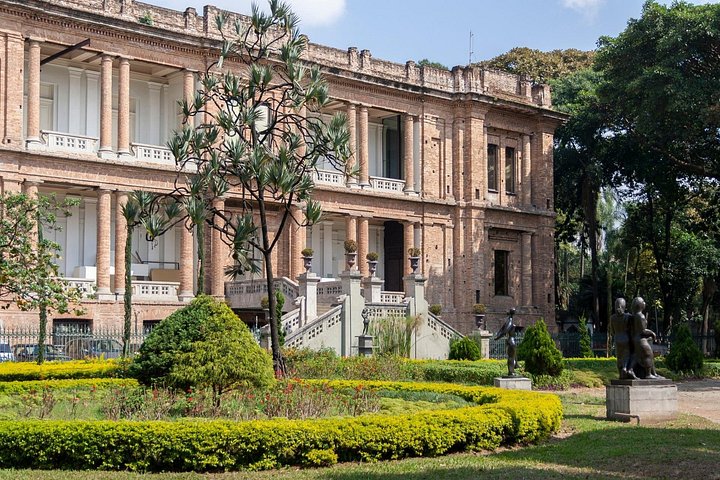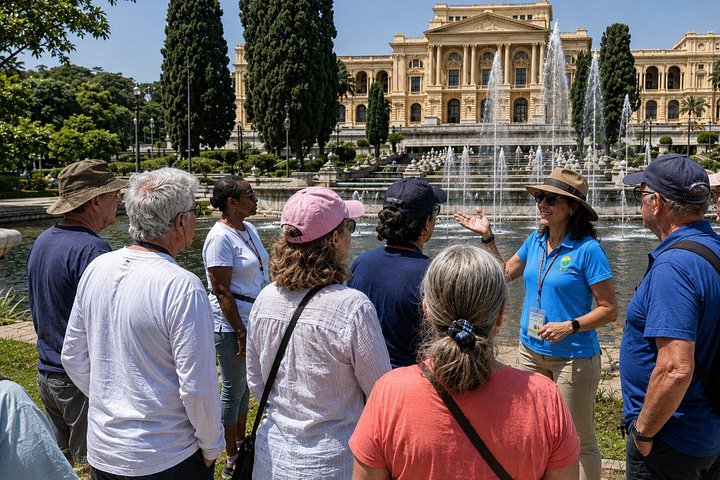
The Museu do Ipiranga, also known as the Paulista Museum, stands on a hill in the south-east of the city, overlooking the spot linked to Brazil's declaration of independence in 1822. The monumental building was completed in the late nineteenth century in a European palace style and has been a museum since the early twentieth century. After a long closure for restoration it reopened with refreshed galleries, a new entrance structure and a modern approach to telling the story of the city and the country. The collection runs to many thousands of objects, including paintings, furniture, maps, photographs, tools and everyday items, and it is arranged to show how people lived, worked and imagined their nation across the centuries. Out front, the formal gardens in the French manner lead down towards the monument and the park, giving the visit a pleasant open-air chapter.
Allow about two hours inside and another hour for the gardens. The most famous work is a large painting of the independence scene that fills a hall of its own, and it draws the biggest crowds. Other galleries trace the growth of São Paulo from a small settlement to a vast metropolis, with exhibits on trade, transport, domestic life and the roles of enslaved and immigrant peoples. The new exhibitions favour clear storytelling over dense text, and many rooms include audio, video or interactive elements.
The museum keeps a weekly closing day, so confirm the opening hours before you set out, and timed or limited entry can apply on busy days. Tickets can usually be booked in advance, which saves time at weekends and on public holidays. The building is large and partly spread over several levels, with lifts and ramps, so ask at the desk about step-free routes if you need them. There is a cafe and a shop, and the gardens are open for picnics and strolling.
The museum sits some way from Avenida Paulista, so it works best as its own morning or afternoon rather than a quick add-on. A private tour that follows the independence story and includes transport is available for travellers who want a guide and a simpler journey, and the metro and buses also serve the area. Combine it with a stroll in the park, and plan your return by ride-hailing car if you are travelling in the evening. Bring a hat and water in summer, because the gardens have little shade at midday.
A few practical thoughts make the day smoother. Start with the main galleries while your energy is high, then take a break in the cafe before heading out to the gardens, where the symmetrical paths, fountains and lawns invite a slow walk. Families often spread out a blanket on the grass, and on fine weekends the park fills with local visitors, which adds to the atmosphere.
The museum also runs educational activities and temporary exhibitions through the year, so it is worth looking at the programme for anything that matches your interests. If you only have a short time, head straight for the independence hall and the galleries on city life, which give the clearest picture of the museum's story. Photography is generally allowed without flash in most rooms, but follow the signs in each gallery.
What to expect
The experience
A self-guided visit through restored galleries on several levels, followed by a walk in the formal gardens, or a private guided visit with transport.
Best time
A weekday morning, which gives you quieter galleries and cooler weather for the gardens.
How long
Two hours inside, plus time in the gardens.
Tips
Confirm the weekly closing day, book ahead for weekends and holidays, and bring a hat and water in summer.
Quick picks
- Best for
- History lovers, families and visitors who like grand buildings and gardens.
- Families
- Open lawns, a cafe and interactive rooms make it easy for children, and the gardens give them room to run.
- Couples
- Pair the galleries with a slow stroll through the gardens in the late afternoon.
- Pair with
- The Pinacoteca or the Mercadão on a separate day, and a meal in the Vila Mariana area.
- Time needed
- Two to three hours.
Good questions
Why is the Ipiranga important?+
It stands near the place associated with Brazil's declaration of independence in 1822, and the museum tells the story of that moment alongside the history of São Paulo.
Should I book ahead?+
Advance tickets are a good idea at weekends and on public holidays, when entry can be limited. On weekdays you can often buy on the day.
How long does a visit take?+
Allow about two hours for the galleries and another hour if you want to walk through the gardens and the park.
Is it accessible?+
The restored building has lifts and ramps. Ask at the desk about step-free routes and about facilities for visitors with limited mobility.
How do I get there?+
Buses and ride-hailing cars serve the museum, and the metro is within reach with a short onward ride. A guided visit with transport removes the planning.