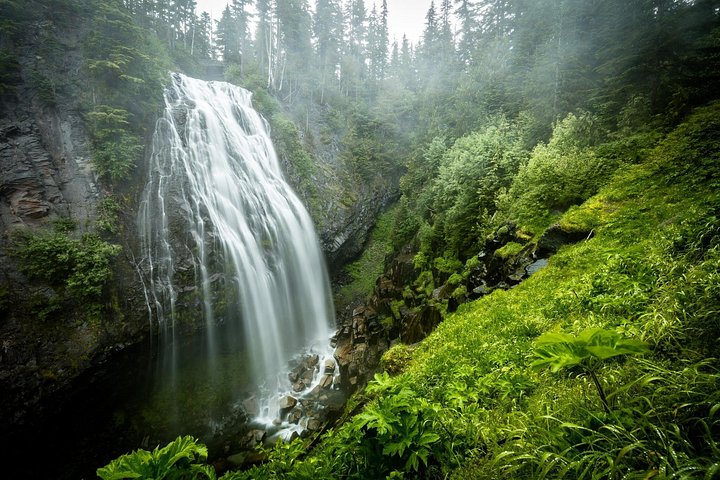
Waterfall rappelling is one of the most exciting outdoor adventures within reach of Seattle. Guides lead small groups into a forested canyon in the Cascade foothills, fit you with a harness, helmet and rope system and teach you how to lower yourself down rock walls beside flowing water. The descents are staged, building from gentle practice drops to taller waterfalls, so confidence grows with each step. You do not need previous climbing experience, only a willingness to try, a reasonable level of fitness and comfort getting wet. The scenery is part of the reward: mossy cliffs, ferns, cool spray and the sound of the falls make the canyon feel far from the city. A photo package is included, so you leave with pictures of your own descent.
Safety is the heart of the experience. Guides explain the equipment and techniques carefully, check each harness and anchor and stay close during every descent. Groups are kept small so everyone gets attention, and the first drops are intentionally easy. By the time you reach the biggest waterfall, you will have practiced the movements several times and gained a feel for how the rope behaves.
Expect to be wet, so wear clothing that dries quickly, such as synthetic layers, and bring a change of clothes and a towel for the journey back. Wet suits or other gear may be supplied, depending on conditions.
The approach to the canyon involves a short hike on forest trails, so sturdy footwear with good grip is essential. Guides may supply helmets and gloves, and often recommend shoes that you do not mind getting soaked. The activity is physically active but not extreme: it uses your arms and legs, and you may feel muscles the next day. Minimum age and weight limits usually apply, and guests with certain medical conditions should check with the operator before booking.
Allow most of a morning or afternoon for the experience, including the drive and briefing. Water levels vary by season, with spring and early summer providing the strongest flow, and late summer offering warmer weather and gentler conditions. Because the activity takes place outdoors, it can be affected by heavy rain, so ask about the operator's plan if conditions are poor.
For adventurous couples, friends and active families with older children, this is a rare chance to combine hiking, climbing and water play, and to come back with a story and the photographs to prove it.
Some preparation makes the day smoother. Eat a proper breakfast, drink water and avoid cotton clothing, which stays heavy and cold when wet. Tie back long hair and remove jewelry that could catch on ropes. If you wear glasses, bring a strap or consider contact lenses, and keep valuables in the vehicle because there is little space to carry things in the canyon.
Guides are used to nervous first-timers and will let you go at your own pace, so speak up if you need an extra moment on a ledge. Nothing about the experience is a race, and the sense of pride when you complete the largest drop is a big part of why people come back and recommend it to friends.
What to expect
The experience
A guided canyoneering outing with a safety briefing, equipment and a series of rappels beside waterfalls, plus a photo package.
Best time
Late spring to early autumn, when water levels and weather suit the activity.
How long
About four to five hours including the approach.
Tips
Wear quick-drying layers and grippy shoes, and bring a towel and a change of clothes.
Quick picks
- Best for
- An adrenaline day outdoors with no experience needed.
- Families
- Best for active teenagers who meet the age limits.
- Couples
- A shared adventure with great photos.
- Pair with
- A relaxed dinner in Fremont or Ballard.
- Time needed
- Half a day plus travel.
Good questions
Do I need climbing experience?+
No. Guides teach you the techniques and build up gradually.
Will I get wet?+
Yes. Wear clothing that dries quickly.
Is equipment provided?+
Harness, helmet and rope systems are provided; ask about wet suits and gloves.
Are there age or fitness limits?+
Yes. Check the requirements for your group before you book.
What happens in bad weather?+
Ask the operator about its plan when you book.