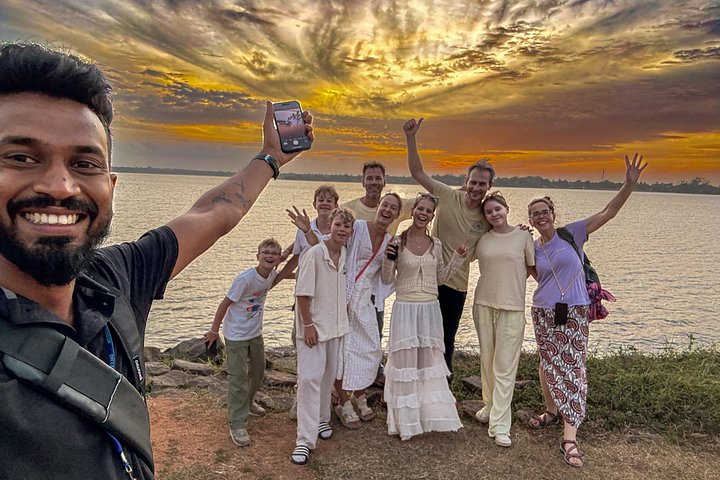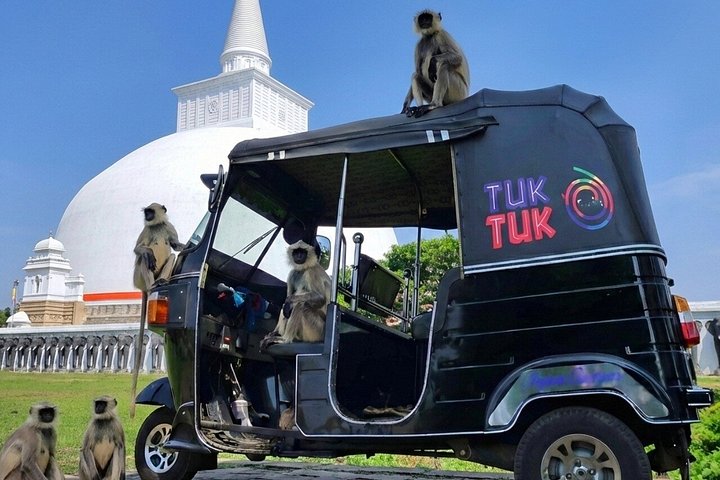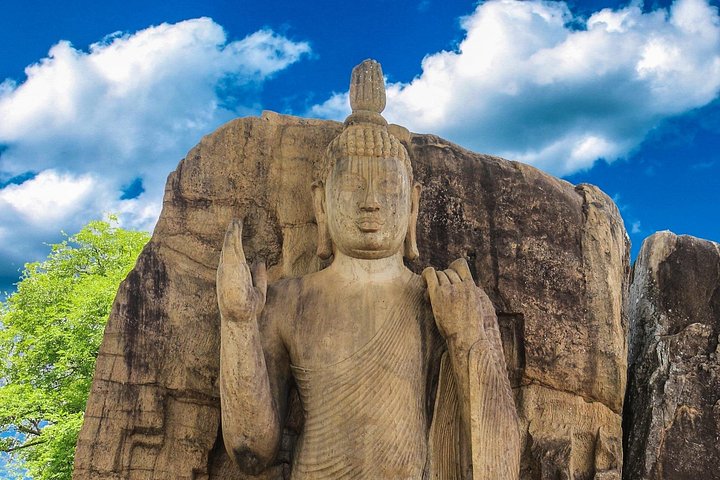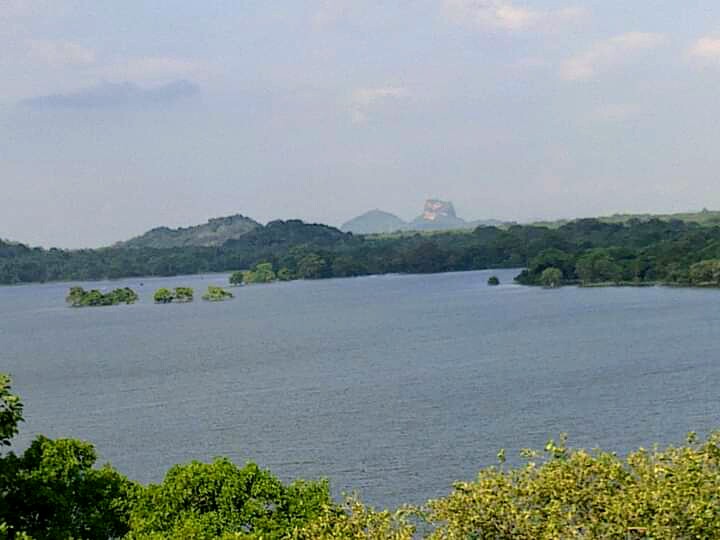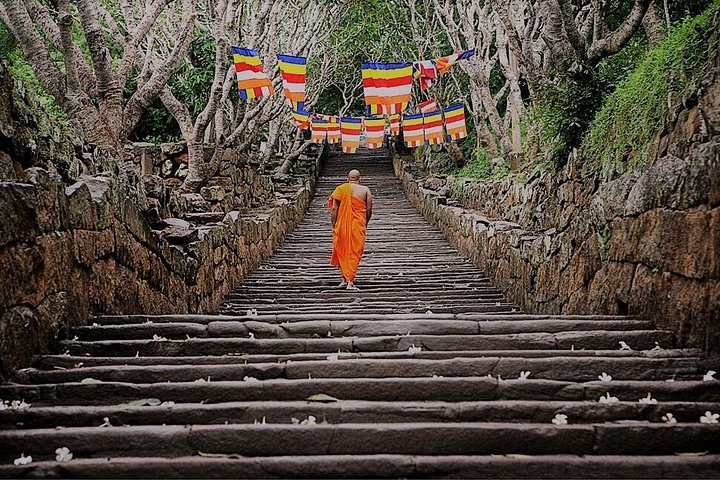
Mihintale is a rocky hill about thirteen kilometres east of Anuradhapura, and it is the place where, according to tradition, the monk Mahinda met King Devanampiya Tissa in the third century BC and introduced Buddhism to Sri Lanka. For Sri Lankan Buddhists it is a pilgrimage site of the first importance, and each June thousands gather for the Poson festival that commemorates the event. Even if you are not religious, the combination of history, stonework and views makes it a rewarding stop. The climb begins with a broad granite stairway of well over a thousand steps, lined with frangipani trees, that rises in shallow flights to a series of terraces. Along the way you pass an ancient hospital site, ruined monasteries, a refectory with stone troughs for feeding monks and the Kantaka Chetiya, a stupa surrounded by carved platforms. Higher up a whitewashed Ambasthala Dagoba marks the spot of the legendary meeting, and a short scramble leads to Aradhana Gala, a rock where Mahinda is said to have preached. A sunrise or sunset visit by tuk-tuk is a gentle way to enjoy the mountain at its best. In the soft light the stupas glow, the plains stretch out below and the heat that bakes the stairway at midday has eased. Going with a tuk-tuk driver also solves the transport from Anuradhapura, where many visitors stay, and lets you time the climb to catch the light.
What is usually included
A tuk-tuk and driver for the trip between your accommodation and Mihintale, and in some cases a guide or a helper at the site. Entrance fees at Mihintale are separate and are collected at the base. Check the pickup point and the timings when you book, and confirm whether the driver waits while you climb.
What to expect
You remove shoes and hats at the foot of the steps and walk the stairway barefoot, which is one of the most distinctive parts of the experience. The stone cools in the evening and is pleasant at dawn, but can burn at midday, which is why timing matters. The main stairway has rests and shade, while the smaller trails to the rocks require care. Expect to spend around two to three hours including the walk, with time to pause for views and for the pilgrims in white who often fill the terraces.
Making the most of it
Wear clothing that covers shoulders and knees, carry water and take a torch or phone light for sunrise starts or for the way down after sunset. Monkeys and sometimes deer roam the grounds, and may be curious about food. On full moon Poya days the site is busy with devotees and alcohol is not sold, which is memorable but crowded. If you can, combine the visit with a day in Anuradhapura to link the two stories, since Mihintale is the origin of the faith that Anuradhapura became the centre of.
Who it suits
Pilgrims, photographers and travellers who enjoy a moderate climb with a spiritual purpose. It is a good option for an active early morning or a calm evening, and the stairway is wide and well maintained, so it is manageable for most reasonably fit visitors. Those who find the steps difficult can climb partway and still enjoy the terraces and views.
What to expect
The experience
A tuk-tuk trip to Mihintale for a sunrise or sunset climb of the granite stairway, with stops at the stupas and viewpoints.
Best time
Sunrise or sunset, for cooler stone, softer light and fewer visitors.
How long
Two to three hours including the climb and the transfer.
Tips
Remove shoes and hats at the base, cover shoulders and knees, carry water and bring a torch for the dark.
Quick picks
- Best for
- Visitors who want a meaningful, scenic climb with Buddhist heritage and sunrise or sunset light.
- Families
- Possible for children who can manage a long staircase, with plenty of places to rest.
- Couples
- A quiet, atmospheric climb with a view at the end, particularly at sunset.
- Pair with
- A day in Anuradhapura, since Mihintale is where the story began.
- Time needed
- Two to three hours.
Good questions
How many steps are there?+
More than a thousand granite steps in broad, shallow flights, with rest points along the way.
Do I have to climb barefoot?+
Yes, shoes are removed at the base of the stairway. In the evening and morning the stone is comfortable, but it can be hot in the middle of the day.
Why is Mihintale important?+
Tradition holds that the monk Mahinda met King Devanampiya Tissa here in the third century BC and introduced Buddhism to Sri Lanka.
Is there an entrance fee?+
Check the current arrangements at the base. Fees for foreign visitors are usually collected on site and are not always included in a tour.
When is it busiest?+
On full moon Poya days and during the Poson festival in June, when large numbers of pilgrims visit.