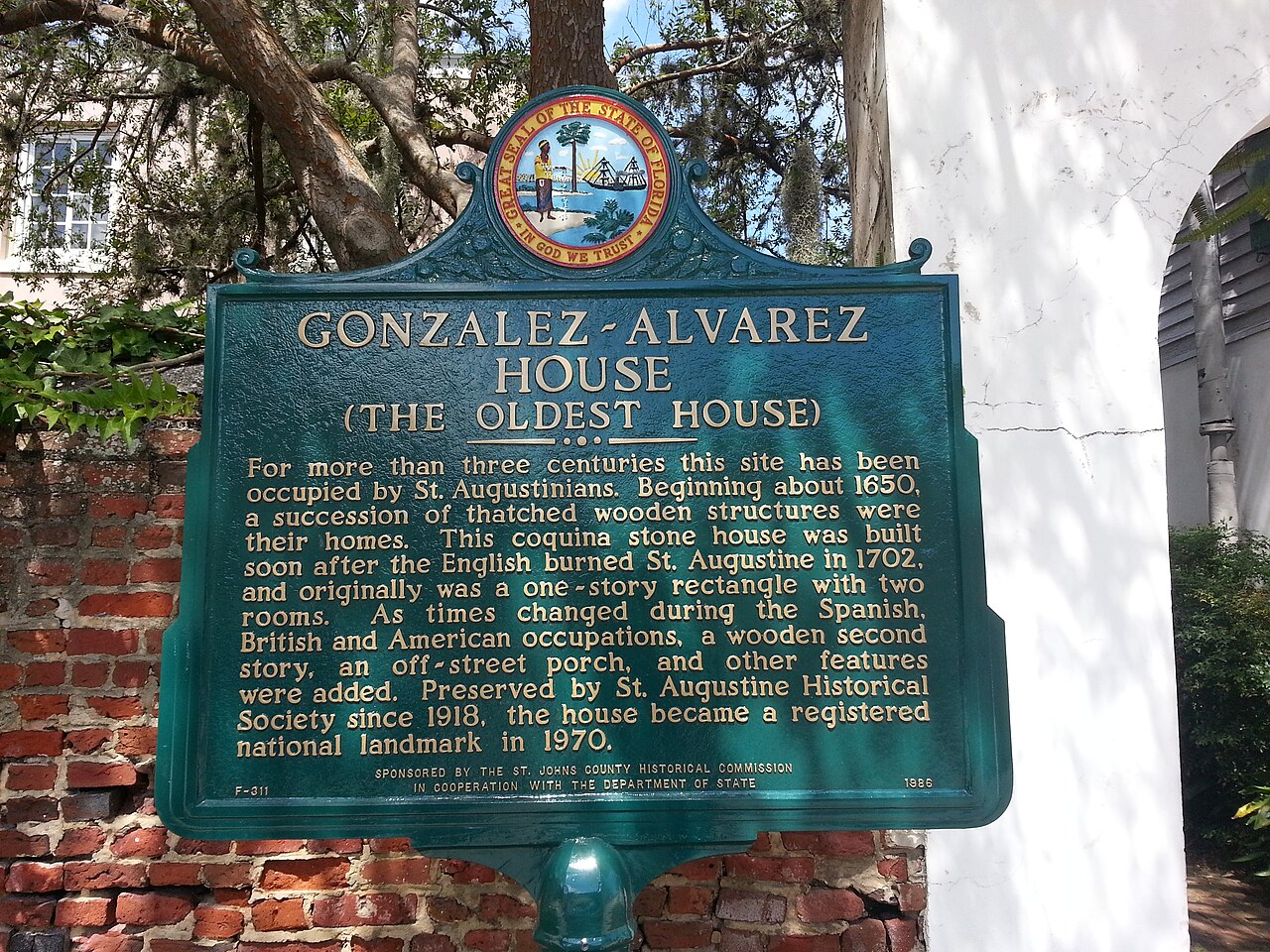
For all the forts and grand hotels, the place that best shows how ordinary people lived in Spanish St. Augustine is a modest house on St. Francis Street in the quiet southern part of the old town. The González-Álvarez House dates to the early eighteenth century, built of coquina stone and tabby, the local shell-and-lime concrete, after the English siege of 1702 burned most of the wooden town. Its walls hold three hundred years of the city’s turnover in a single address: a Spanish artilleryman’s family, British occupants after Florida changed hands in 1763, a returning Spanish era and then the Álvarez family, Minorcan descendants who lived here through much of the nineteenth century. Later owners added a second story of wood and opened it to tourists by the 1890s, and the St. Augustine Historical Society has owned and interpreted it since 1918. It is a designated National Historic Landmark. Tours are guided, and the guides do the heavy lifting: room by room they explain how the house changed with each regime, from the colonial ground-floor rooms with their thick walls and low doors to the furnishings and kitchen arrangements of later centuries. The ticket also covers the rest of the complex: the Manucy Museum, which traces the city’s history from Timucua times onward; the Tovar House next door; changing exhibitions; and the ornamental gardens, which are a peaceful, shaded corner of the old town and a popular wedding setting.
Visiting: the complex is at 14 St. Francis Street, a few blocks south of the Plaza de la Constitución near the end of Aviles Street, and the Historical Society lists it as open daily. Admission is a modest fee; guided tours of the house run through the day, and you can explore the museum, exhibits and gardens at your own pace before or after. Plan on about an hour. Parking in the immediate streets is limited, so most visitors walk down from the plaza, which makes it an easy add-on to an Aviles Street stroll and the Ximenez-Fatio House a few minutes away.
Why it is worth the walk: the southern blocks of the historic district are where the tourist crush thins out, and this house is the anchor. You leave with a much sharper sense of the city’s layered identity — Spanish, British, Minorcan, American — than you get from St. George Street’s shopfronts. The Manucy Museum’s exhibits give context for everything else you will see in town, and the changing exhibitions draw on the Historical Society’s own research library, which is one of the best collections on Florida’s colonial past. The house’s claim to be the oldest is specific: it is the oldest surviving Spanish colonial dwelling in Florida, not the oldest building of any kind, and the guides are clear about what is original and what was rebuilt.
When to go: mornings and late afternoons are quietest. In summer, pair it with indoor stops for the midday heat; in winter it is a pleasant walk at any hour. During Nights of Lights, from the weekend before Thanksgiving through mid-January, the southern old town is lit but calmer than the plaza, and an early-evening walk past the house down to the bayfront is one of the season’s gentler pleasures. History-minded visitors should combine it with the Castillo and the Colonial Quarter for the military and civic sides of the same story.
What to expect
The experience
A guided tour of an early-1700s coquina house, plus a self-paced history museum, the Tovar House, changing exhibitions and ornamental gardens, all run by the St. Augustine Historical Society.
Best time
Morning or late afternoon; combine with an Aviles Street walk and the Ximenez-Fatio House.
How long
About an hour for the tour, museum and gardens.
Tips
Walk down from the plaza rather than hunting for parking. Ask the guide what is original and what was rebuilt — they enjoy that question. The gardens are a quiet place to rest.
Quick picks
- Best for
- History-minded visitors who want to see how ordinary colonial families lived.
- Families
- Good for school-age kids, especially with the museum’s timeline; short enough for most attention spans.
- Couples
- A quiet southern-old-town stop on the way down Aviles Street to dinner.
- Pair with
- The Ximenez-Fatio House on Aviles Street and the Castillo for the military side of the story.
- Time needed
- About an hour.
Good questions
How old is the Oldest House?+
The González-Álvarez House dates to the early 1700s, built after the 1702 siege burned much of the town. It is the oldest surviving Spanish colonial dwelling in Florida.
Who runs it?+
The St. Augustine Historical Society, which has owned and interpreted the house since 1918.
What does the ticket include?+
A guided tour of the house plus access to the Manucy Museum, the Tovar House, changing exhibitions and the gardens.
Where is it?+
At 14 St. Francis Street, a few blocks south of the Plaza de la Constitución, near the southern end of Aviles Street.
Is it really the oldest building in the city?+
It is the oldest surviving Spanish colonial house in Florida; the Castillo de San Marcos is older as a structure, and guides explain which parts of the house are original.