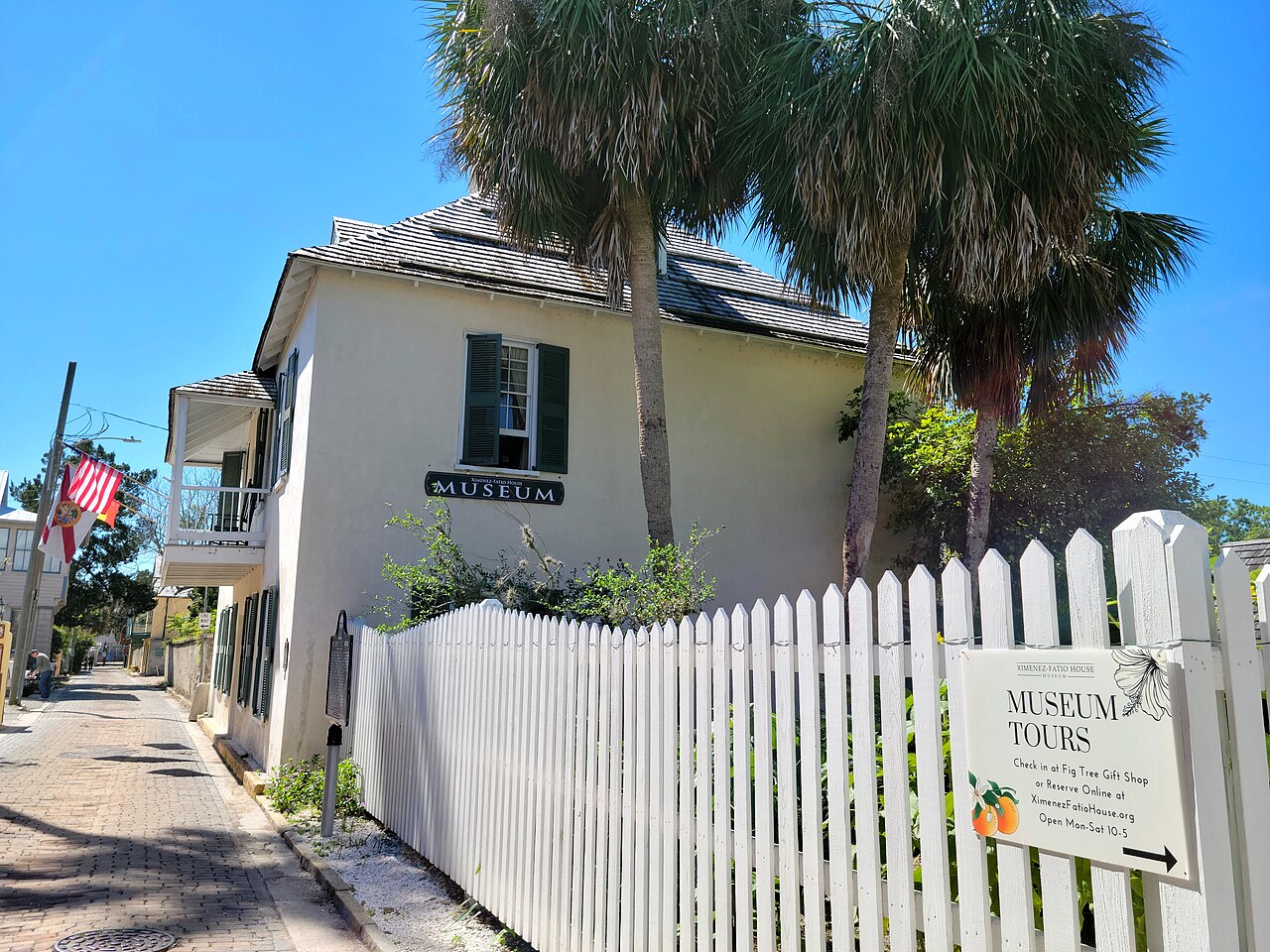
The Ximenez-Fatio House is the most intimate historic-house tour in St. Augustine and the best place to understand how the town first became a destination. A Spanish merchant, Andrés Ximénez, built it in 1798 as a home, store and tavern, in coquina with a second story, a balcony over the street and a walled yard behind, on what is now Aviles Street, the oldest street in the city. After Florida became American in 1821 the house took on a new life: invalids and the merely curious began arriving from the North for the winter climate, and a series of women ran it as a boarding house, most famously Louisa Fatio, whose name the house carries. That chapter is the heart of the tour. The rooms are furnished to show the house as a nineteenth-century inn — the parlor where guests gathered, bedrooms dressed for long winter stays, the dining room — while the separate kitchen building in the yard, a rare surviving detached kitchen, shows the labor that kept it all running, including the enslaved and free workers whose stories the museum tells plainly. The National Society of the Colonial Dames of America in the State of Florida has owned and cared for the house since the 1930s, and it is a careful, scholarly restoration rather than a dress-up attraction. Docent-led tours run at set times through the day, and an audio tour lets you explore on your own schedule.
Practicalities: the house is at 20 Aviles Street, just south of the Plaza de la Constitución, and is open Monday through Saturday and closed on Sundays. Admission is modest, with an audio-tour option a little cheaper than the docent-led tour and reduced prices for seniors, students, military, teachers, first responders and children; St. Johns County residents and Flagler College students get deep discounts. Docent tours run at set hours, typically late morning, early afternoon and mid-afternoon, weather permitting, and the self-guided audio tour is available whenever the house is open. Check in at the Fig Tree gift shop through the courtyard. There is a small free gravel lot for visitors on Cadiz Street for the length of your tour, paid parking behind the house and some street parking nearby.
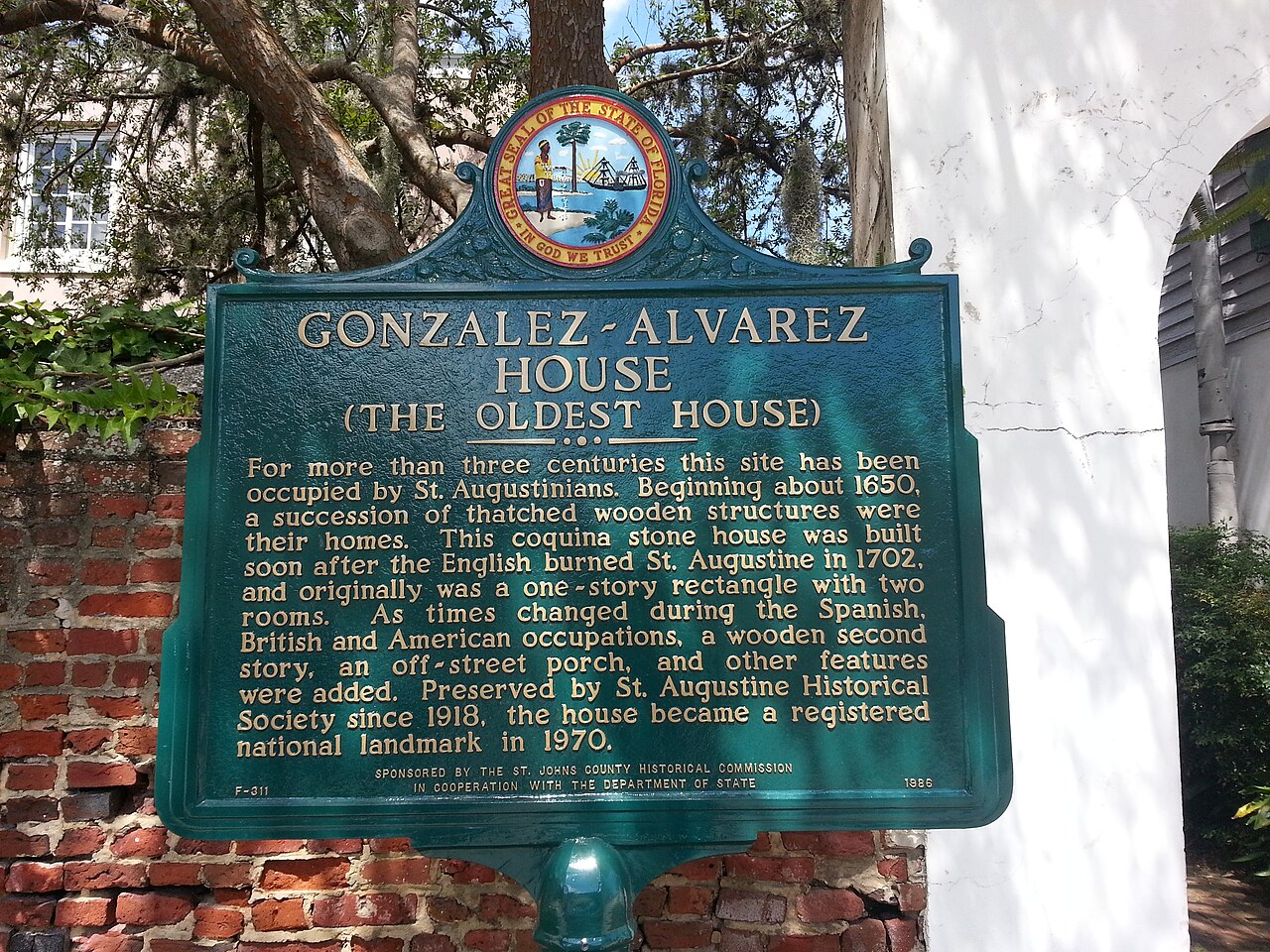
Why choose it: if you only have time for one historic house, this and the Oldest House are the two to weigh. The Oldest House tells the longer colonial story; the Ximenez-Fatio House tells the transition from Spanish outpost to American winter resort, which explains so much of what came next, from Flagler’s hotels to the inns you might be sleeping in. Docents here are knowledgeable and unhurried, and groups are small. The house hosts special programs through the year, including holiday events during Nights of Lights, so check the calendar if you are in town from the weekend before Thanksgiving into January.
How to fit it in: build a southern-old-town morning around Aviles Street — the Ximenez-Fatio House, the galleries and cafes along the lane, the Oldest House on St. Francis Street — and finish on the bayfront seawall by the Bridge of Lions. It is a ten-minute walk from the Castillo and a pleasant contrast to the busier northern blocks of St. George Street.
What to expect
The experience
A docent-led or self-guided audio tour of a 1798 coquina house interpreted as a nineteenth-century boarding house, with a detached kitchen and walled courtyard.
Best time
Late morning, timed to a docent tour; closed Sundays.
How long
About an hour.
Tips
Check in at the Fig Tree gift shop through the courtyard. Use the small free lot on Cadiz Street for the length of your visit. Pair with the Oldest House a few minutes south.
Quick picks
- Best for
- History lovers who want a small-group, thoughtful house tour.
- Families
- Best for older children; the kitchen building and the boarding-house stories work better than the parlors for kids.
- Couples
- A quiet, absorbing hour on Aviles Street before lunch in the galleries-and-cafes lane outside.
- Pair with
- The Oldest House Museum Complex and an Aviles Street walk to the bayfront.
- Time needed
- About an hour.
Good questions
When was the Ximenez-Fatio House built?+
In 1798, by the Spanish merchant Andrés Ximénez, as a home, store and tavern. It later became a boarding house for winter visitors.
Is it open every day?+
It is open Monday through Saturday and closed on Sundays. Docent tours run at set times, and an audio tour is available during open hours.
Who owns the house?+
The National Society of the Colonial Dames of America in the State of Florida, which has cared for it since the 1930s.
Where do I park?+
There is a small free gravel lot on Cadiz Street for the length of your tour, paid parking behind the museum and some street parking nearby.
Docent or audio tour?+
The docent tour if your timing allows; groups are small and the guides are excellent. The audio tour costs a little less and suits a flexible schedule.