St. Augustine’s history is long, layered, and often misunderstood. It is not just old; it is the place where the first chapters of the American story were written in Spanish, where Native, African, European, and Caribbean lives intersected for centuries before the United States existed. Visit the sites in historical order and the city reads like a book. This is the sequence.
Chapter one: Seloy and the landing (before and in 1565)
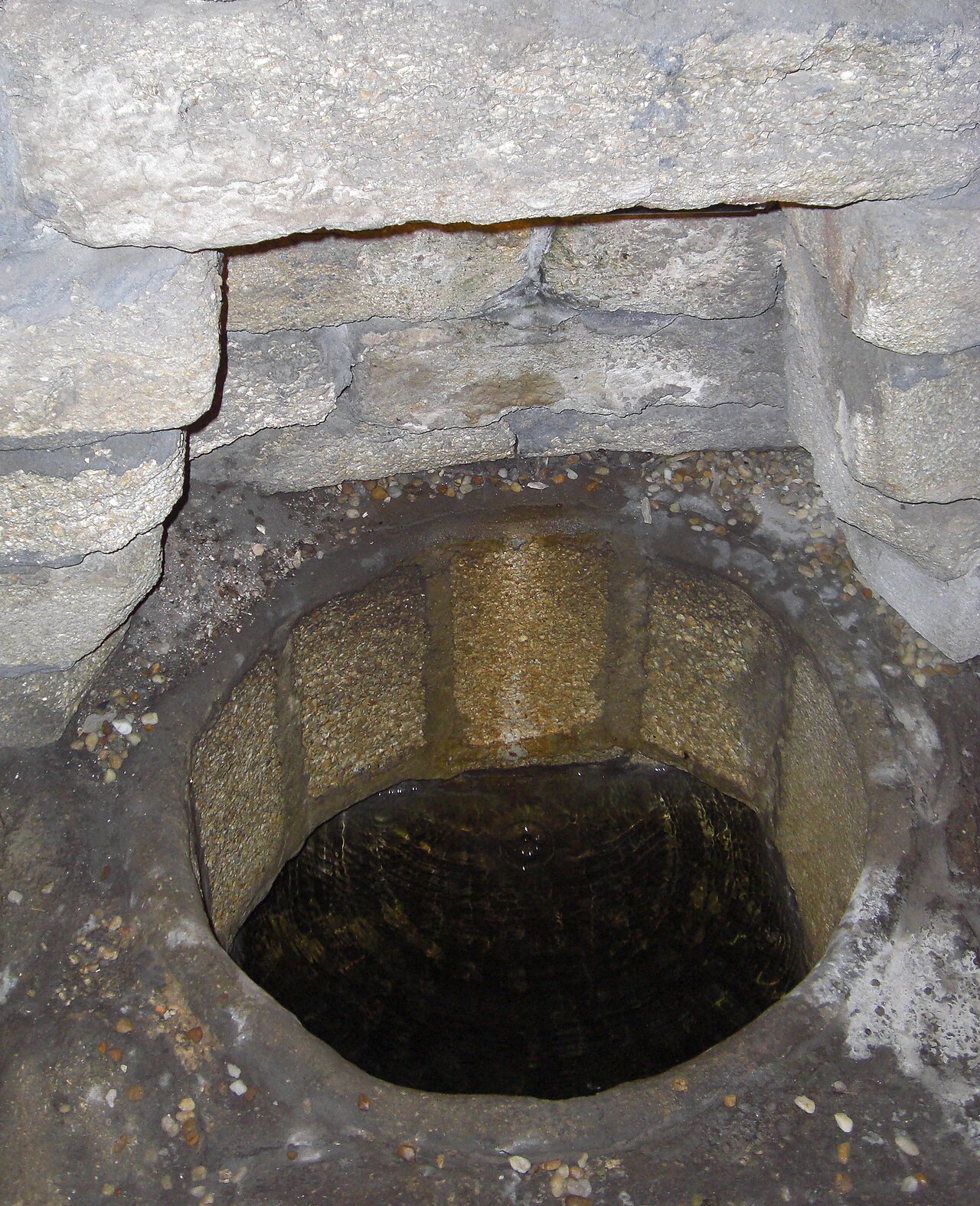
Long before Spain, the Timucua people lived along this coast, and the village of Seloy stood on the waterfront north of the present-day historic district. In September 1565, Pedro Menéndez de Avilés came ashore here with soldiers and settlers, founding St. Augustine, the oldest continuously occupied European-founded city in the continental United States, decades before the English settled Jamestown. Start at the Fountain of Youth Archaeological Park, where archaeologists have identified the site of that first settlement beside the Timucua village; the recreated village, the settlement markers, and the waterfront itself tell the founding story. Next door, the Mission Nombre de Dios marks where the first Mass was said, with its towering cross and small chapel.
Chapter two: the massacre at the inlet (1565)
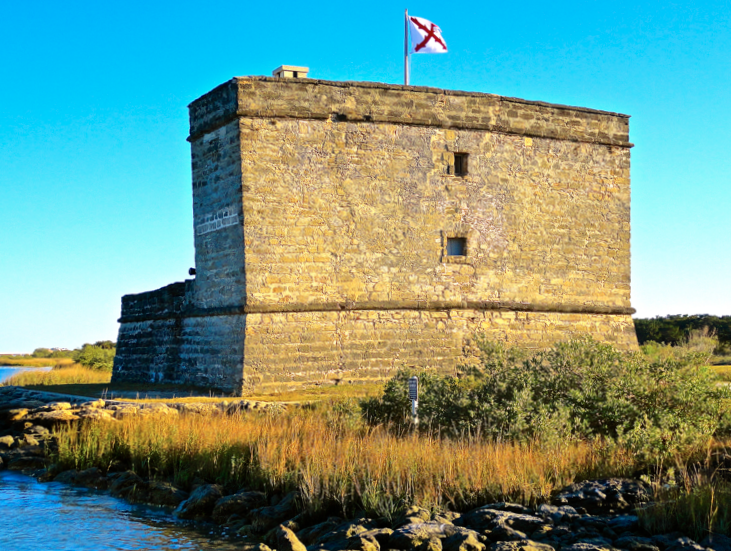
The founding was immediately followed by violence. France had established Fort Caroline near present-day Jacksonville, and Menéndez moved to destroy the French presence. When French ships wrecked in a storm, Menéndez captured the survivors near the southern inlet and executed several hundred of them; the place has been called Matanzas, slaughters, ever since. Fort Matanzas National Monument, reached by a free Park Service ferry, sits on that inlet, and the rangers tell the story on the crossing.
Chapter three: the fort that held (1672-1740s)
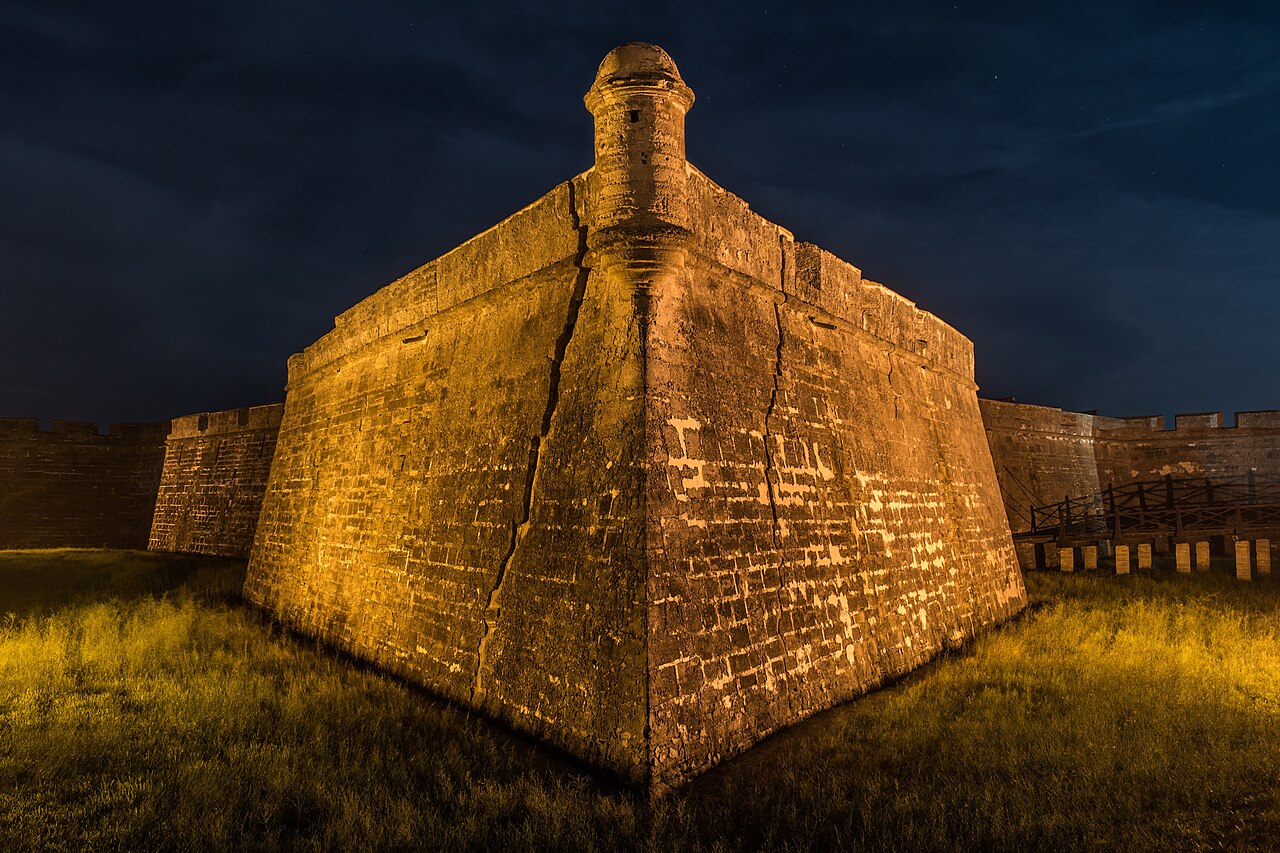
For a century St. Augustine was a struggling military outpost defended by a series of wooden forts, burned by Francis Drake in 1586 and sacked by the buccaneer Robert Searles in 1668. That last raid, together with the founding of English Charleston, pushed Spain to build in stone. The Castillo de San Marcos, begun in 1672 and finished in 1695 from coquina quarried on Anastasia Island, withstood English sieges in 1702 and 1740. Visit the Castillo, then see where its stone came from at the Old Spanish Quarries in Anastasia State Park. Fort Matanzas itself was built in the 1740s to close the back door that the 1740 siege exposed.
Chapter four: Fort Mose and freedom (1738)
One of the most important sites in early American history lies just north of town. Spanish Florida offered freedom to enslaved people who escaped from the English colonies and accepted Catholicism, and in 1738 the governor established Gracia Real de Santa Teresa de Mose, a fortified town for free Black people — the first legally sanctioned free Black settlement in what became the United States. Fort Mose Historic State Park preserves the site, with a museum and a boardwalk over the marsh.
Chapter five: the colonial town (1700s)
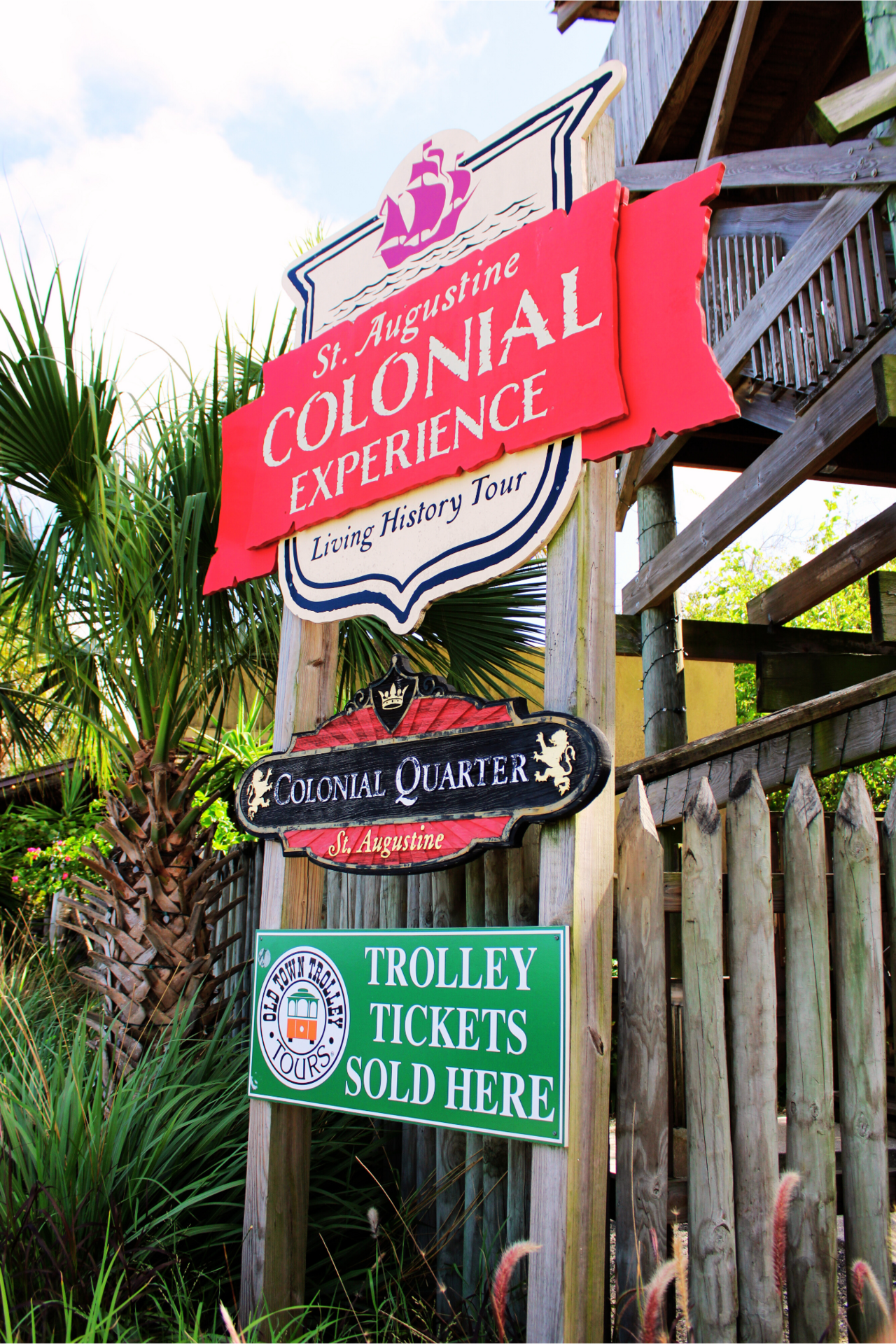
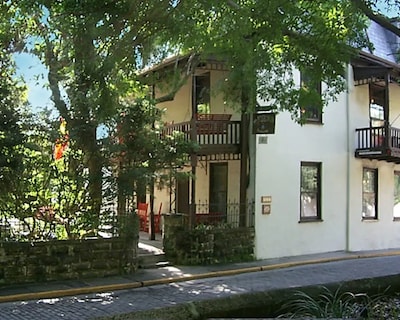
Walk St. George Street and the side lanes to see the town that grew up in the fort’s shadow — coquina and wooden houses set on the street with walled gardens behind. In 1763 Spain traded Florida to Britain, and for twenty years St. Augustine was a British colonial capital, loyal to the Crown during the American Revolution; Spain regained it in 1784. The Colonial Quarter’s living-history village brings these centuries to life, and historic houses such as the González-Alvarez House, known as the Oldest House, and the Ximenez-Fatio House show how people actually lived.
Chapter six: Florida becomes American (1821 onward)
Spain ceded Florida to the United States in 1821. The Castillo became Fort Marion and, during the Seminole Wars and after, a prison for Native American captives, a chapter told inside the fort. In the 1870s, a new St. Augustine Lighthouse rose on Anastasia Island to guide shipping into the inlet; climb it for a view across all of this history.
Chapter seven: Flagler’s Gilded Age (1880s)
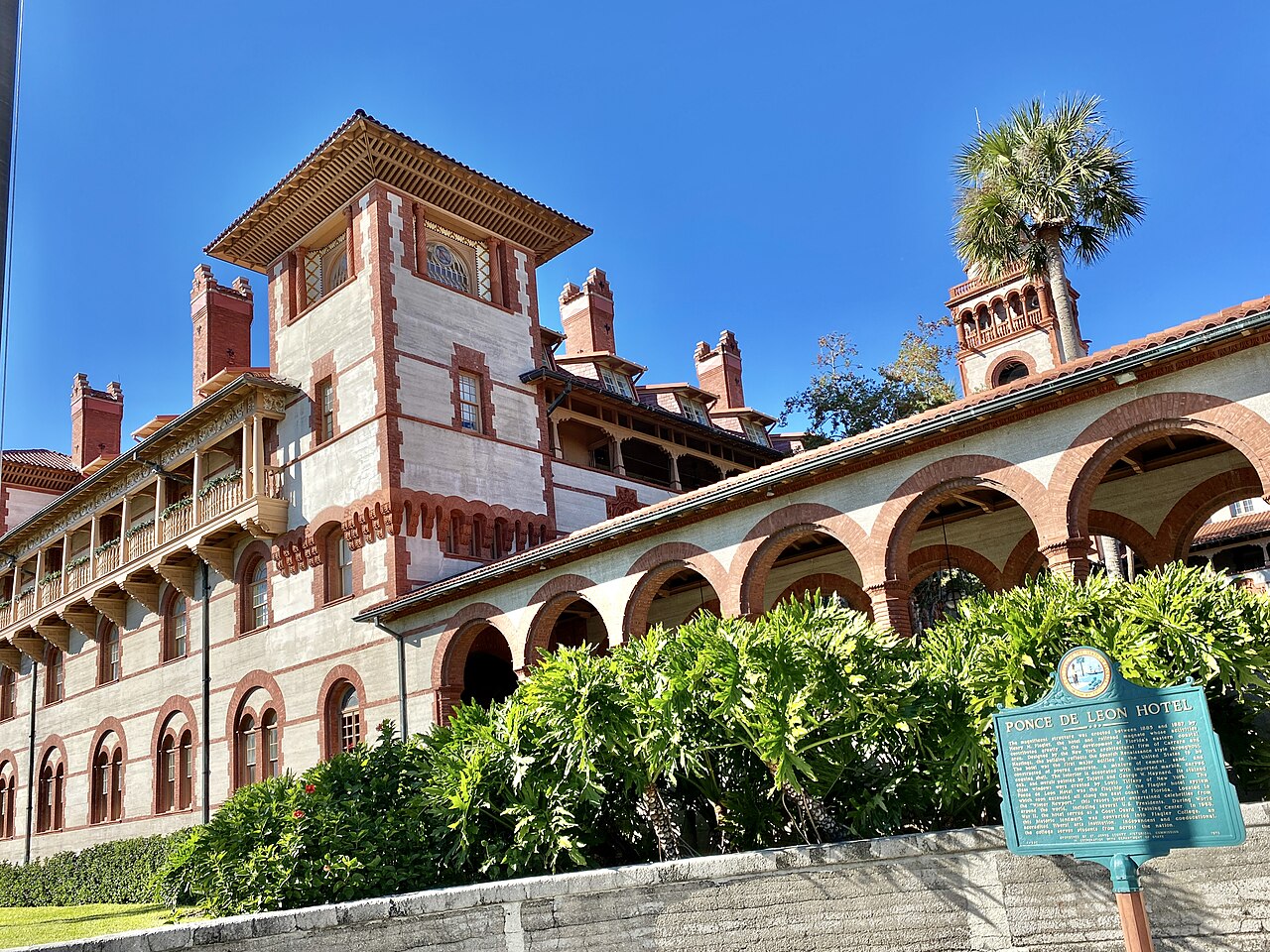
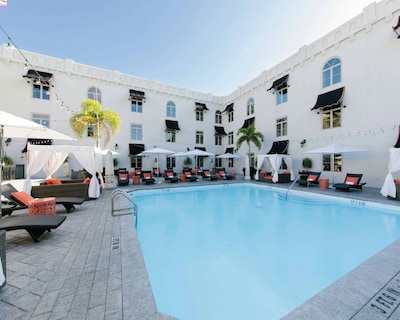
Henry Flagler, partner of John D. Rockefeller, transformed the sleepy town into a winter resort for the rich, opening the Hotel Ponce de Leon in 1888 alongside the Alcazar and buying the Casa Monica. Take the Flagler College tour of the Ponce de Leon, visit the Lightner Museum in the old Alcazar, and step into the Casa Monica’s lobby. Flagler’s railroad then carried the resort idea down the coast, shaping modern Florida.
Chapter eight: the civil rights movement (1960s)
In 1964 St. Augustine became a pivotal battleground of the civil rights movement. Local activists, joined by Martin Luther King Jr., held demonstrations, wade-ins at the beaches, and sit-ins that met violent resistance and helped build momentum for the Civil Rights Act of 1964. The Lincolnville neighborhood, the city’s historic African American community, holds the stories, and markers along a freedom trail commemorate the events.
How to do it
Over two days: day one for chapters one, three, and five (Fountain of Youth, Castillo, St. George Street, Colonial Quarter); day two for chapters two, four, six, seven, and eight (Fort Matanzas in the morning, Fort Mose and Lincolnville in the afternoon, Flagler College late in the day). Visit during Nights of Lights, from the weekend before Thanksgiving into January, and you will see the whole layered city glowing at night.
Reading and context
The rangers at the Castillo and Fort Matanzas are the best free historians in the city, and their talks and the park bookstores are good places to deepen the story. Remember that the city’s history includes difficult chapters — conquest, slavery, imprisonment, and segregation — and that the best sites, from the Fountain of Youth’s Timucua village to Fort Mose and Lincolnville, now tell those stories alongside the triumphs.